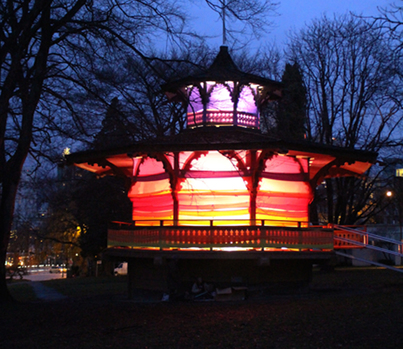
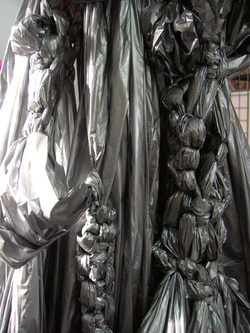
 'Lighthouse', commissioned by the Burrard Arts Foundation for Lumiere Festival 2015. Carlyn Yandle photo
 As I was wrapping bolts of fabric around the Haywood Bandstand across from English Bay last Friday, a few intrepid dog-walkers approached me, shouting over the gale-force winds and all basically asking the same question: Why?
As much as I wanted to reply, 'Why not?' that's a bit glib. There's no why involved; it came about by asking the question, "What if?" Instead I told the dog-walkers, "It's for the Lumiere Festival." Some seemed relieved to learn that I wasn't mothballing the bandstand forever.
By the end of the day, and despite the hot colours and textures created in that dark park, I could detect some distrust in this project. Public art raises more questions than answers, and in this corner of the world, that can lead to some unease.
The 'why' response to public art always interests me. People need reasons, answers.
As much as I wanted to reply, 'Why not?' that's a bit glib. There's no why involved; it came about by asking the question, "What if?" Instead I told the dog-walkers, "It's for the Lumiere Festival." Some seemed relieved to learn that I wasn't mothballing the bandstand forever.
By the end of the day, and despite the hot colours and textures created in that dark park, I could detect some distrust in this project. Public art raises more questions than answers, and in this corner of the world, that can lead to some unease.
The 'why' response to public art always interests me. People need reasons, answers.
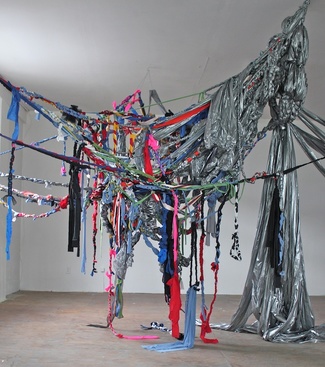
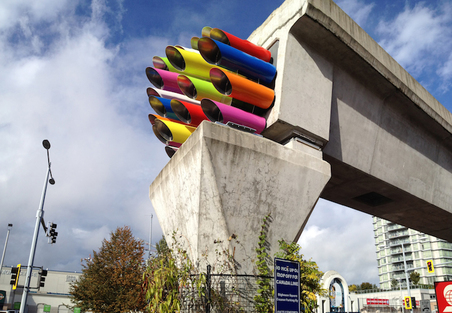 Cluster, for the City of Richmond, 2014. Carlyn Yandle photo
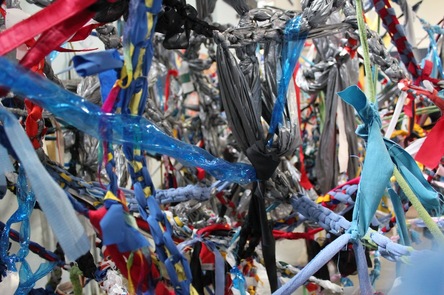
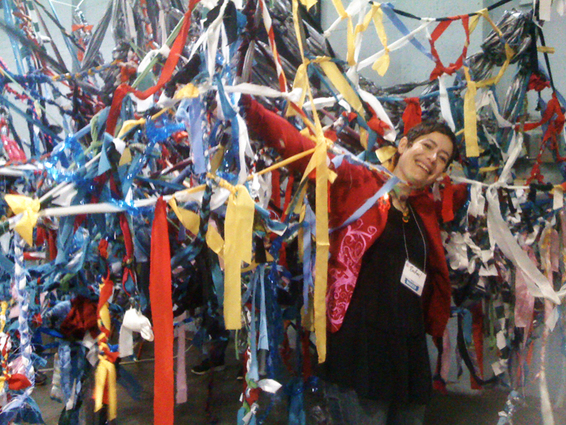
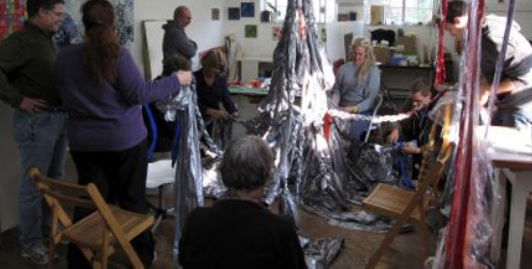
 When I designed Cluster, the bright aluminum tubes that seem to extrude from the last guideway of the Canada Line in downtown Richmond, there was a lot of 'why's. There was even a chorus of 'why's' following the installation of the Network social-engagement project (below) at the Vancouver Art Gallery earlier this month.
I have to pick my replies carefully. Answers like, "Because it made you look", "Because it made you feel different" or "Because it made you ask questions" are greeted with annoyance. But that's the truth of the matter. These are not decorations or marketing tools but objects that hopefully lead to new ideas, new conversations.
We are a young city in the middle of a growing spurt and we're not comfortable with all the changes. But already we are beginning to shed our adolescent awkwardness and at some point we will mature into a great, well-rounded metropolis that embraces our ever-changing, diverse cultural landscape and points of view.
What if I was part of it?
I have to pick my replies carefully. Answers like, "Because it made you look", "Because it made you feel different" or "Because it made you ask questions" are greeted with annoyance. But that's the truth of the matter. These are not decorations or marketing tools but objects that hopefully lead to new ideas, new conversations.
We are a young city in the middle of a growing spurt and we're not comfortable with all the changes. But already we are beginning to shed our adolescent awkwardness and at some point we will mature into a great, well-rounded metropolis that embraces our ever-changing, diverse cultural landscape and points of view.
What if I was part of it?
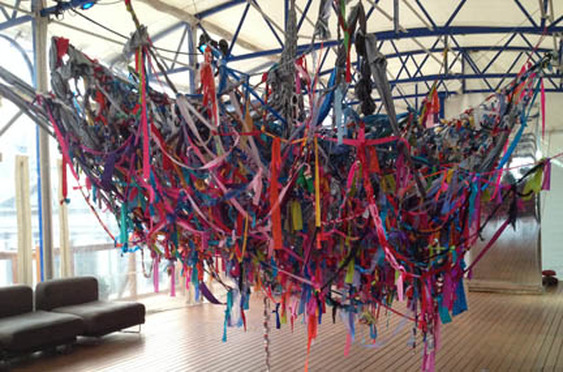
'Network', created with Debbie Tuepah, at the Vancouver Art Gallery, December 2015. Carlyn Yandle photo
 RSS Feed