carlyn yandle
  • about
  • the creative process
  • crafted objects
  • public art
  • painting
  • exhibitions
  • contact

Home isn't someone else's investment unit

9/17/2024

 
New modular building blocks create a visual for more humane density
​

I blame my dream-home fantasies on that OG influencer Martha Stewart.
​
When the thick, slick Martha Stewart Living was queen of the magazine racks I was there for the Crafts: the rustic doorstop animals made of French linen tea towels; the velvet lavender sachets for drawers and for gifts. Soon I was sucked into the glossy paper vortex of step-by-step tableaux of Martha — in cropped jeans and crisp Oxford shirt — engaged in various Good Things like washing her paned windows using vinegar from a glass sprayer or sweeping her freshly-painted porch with a birch-twig broom. I was led to believe that people who weren’t already trained pastry chefs or architects could create the Halloween gingerbread haunted mansion, and that one day I too would have a fireplace mantle to display handmade snowglobes nestled between mason jars of glittered cedar boughs dangling with tiny crocheted snowflakes. Never mind that my wreath of pinecones tied with tartan ribbon and tacked to my apartment door wasn’t adding any rustic Christmas vibes to the purple-and-teal common hallways. This was all temporary.
Picture
By the time Martha finished doing her five months for fraud, I was half way through 20 years in the same apartment, engaged in the more practical project of trying to live a creative life in a small space (sprawling in comparison to the majority of new builds in Vancouver). I ended up writing a weekly newspaper column on the subject and even partnered in a home re-vamp service that funded four years of art school. Dwelling design remains one of my Special Topics so when I heard first thing this morning (at the time of this writing) that the provincial government had released some free modular plans for small-scale multi-unit housing, I jumped onto the site for a look-see.
Picture
Streetscape concept of multi-unit integration with single-family homes, Standardized Housing Catalogue, BC Ministry of Housing
Because when it comes to affordable housing in this town, things can’t get worse (barring, of course, the imminent earthquake a.k.a. “The Big One”). According to one report, last year Vancouver’s median home price was more than 12 times the median household income, making it the third most expensive housing market in 94 cities around the world. Many of the investment units in Vancouver’s soaring glass towers are now languishing on the market, because even if they were affordable, “home” does not conjure up visions of 35 floors of stacked 500-square-foot rectangles with one wall for windows and no outdoor space.
​

The customizable building blocks are an attempt to provide an option to this modern-day warehousing of humans, a step toward addressing the missing middle between standalone houses and condo towers. They were developed following recent zoning changes that allow three or four units on the standard city lot, to the horrors of NIMBY owners in those single-family-home neighbourhoods and to cheers from developers. To curb design and construction costs and expedite the permitting process, the limited options of modular blocks are basic. One shows two bedrooms with a shared bathroom. The common-area block shows a surface that is both dining table and kitchen island with sink, with the rest of the kitchen along one wall. No balconies are indicated and there are not a lot of windows. Every unit shows stairs.
Picture
Placement options on various lot sizes, from the Standardized Housing Catalogue, BC Ministry of Housing
Picture
Common space options, Standardized Housing Catalogue, BC Ministry of Housing
Picture
Multi-family dwellings on a standard city lot, Standardized Housing Catalogue
Picture
On the upside, they are connected to the earth and integrate into established communities. They open up the possibility of having a baby, aging in place, living with or beside other relatives or families of choice. They are the kind of home that might incline a crafty type to collect pinecones from the mature trees in those longstanding neighbourhoods and glue-gun a wreath to hang on the front door. 
​
It’s a Good Thing.

Materials matter, and Those of loved ones gone can live on

5/26/2018

Comments

 
Picture
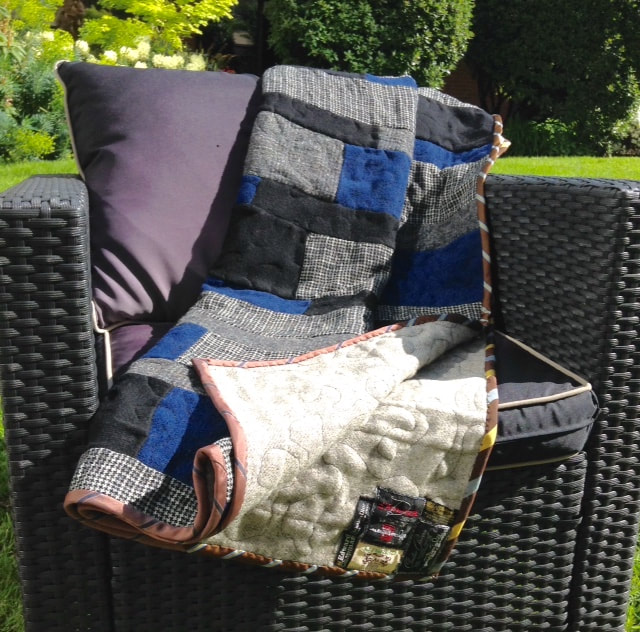
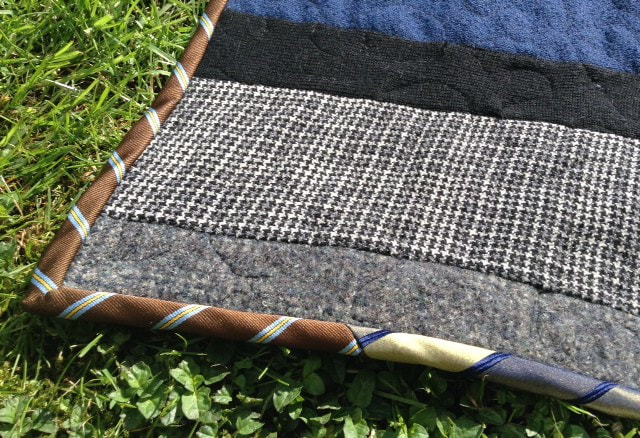
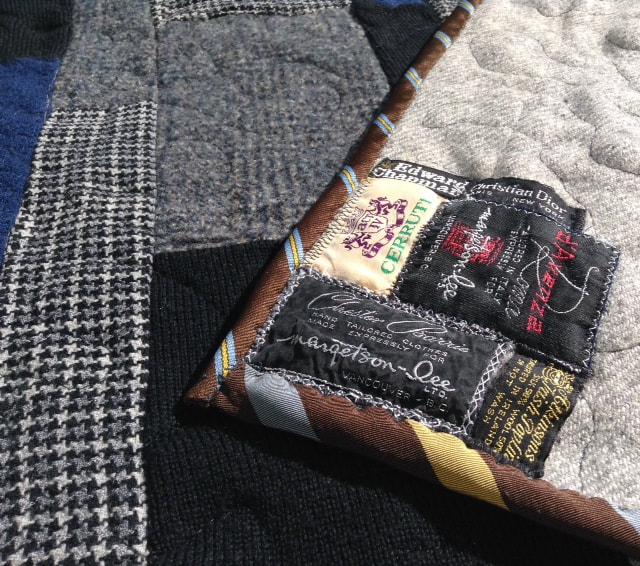
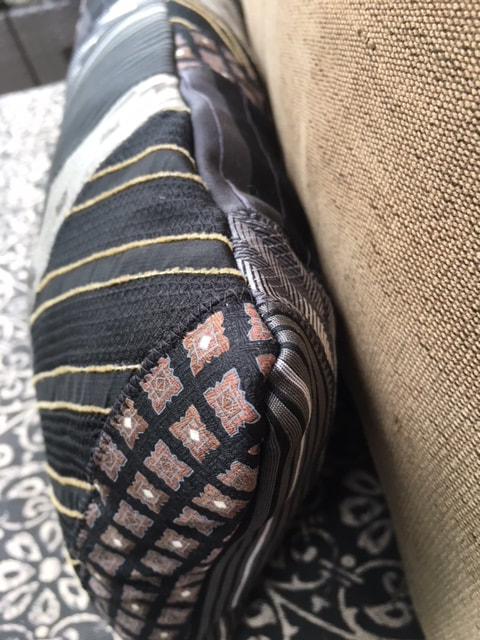
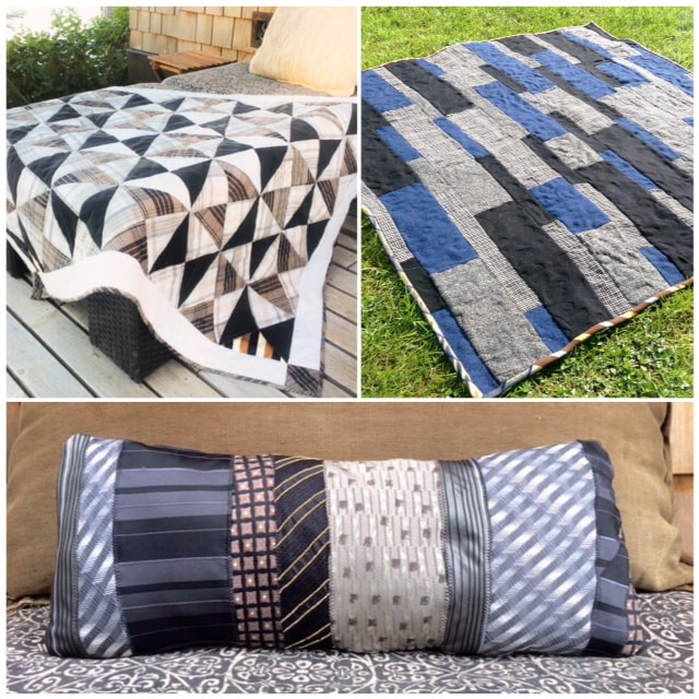
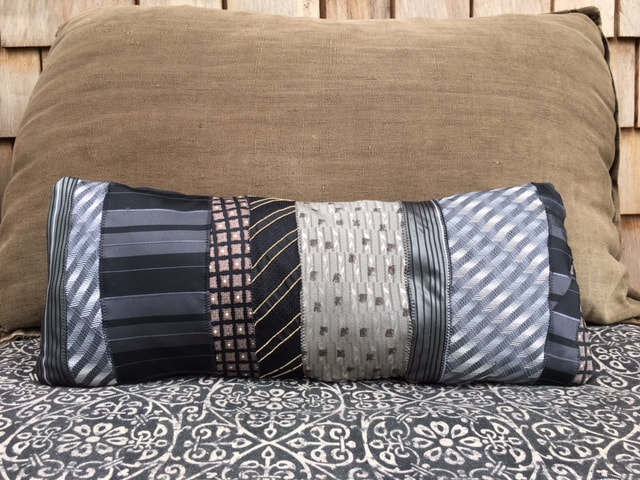
Clockwise from top left: Great-Grandfather Quilt; Dad's Throw; Tie Cushion. (Carlyn Yandle photos)
Materialistic. People say it like it's a bad thing.
But there's not necessarily anything selfish or hoardy or wasteful about feeling deeply connected to materials. If we all started being a little more materialistic we might not be now contending with the Great Pacific Garbage Patch or space junk. I want no part with parting so quickly from one-use-life materials when a meaningful second life is possible.

So when a couple of people dear to my heart were clearly torn about parting with some favourite clothes of their loved ones who recently passed away — one within this year, the other within 18 months — I felt it too.

These bits of cloth are interwoven with the memory of the wearer, his style, the special occasions and the everyday. Just looking at them hanging in the back closet brought the son, the wife, to tears. Some of that emotion is also about feeling at odds with what to do with it all. Yet holding onto useless things, especially in this town where we're so squeezed for space we have to go outside our living spaces just to change our mind, can even bring on some shame or panic that we can't let go, move on.

I felt the potency of the pieces too, and suggested selecting a few items to be repurposed into something that would bring comfort, and in remembrance.
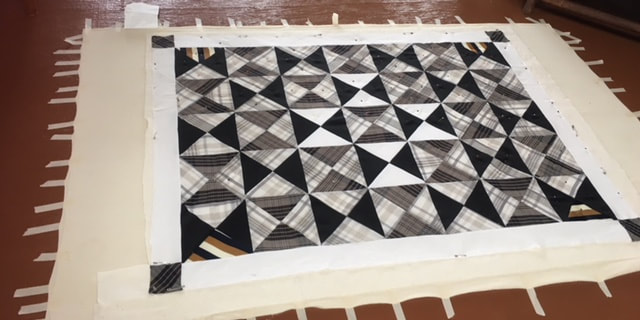
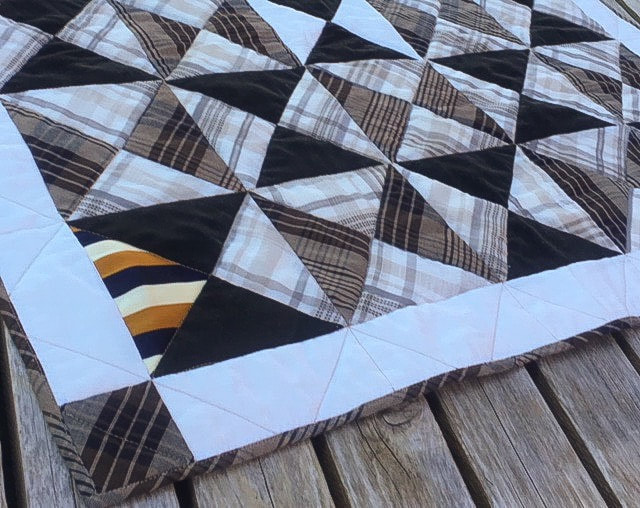
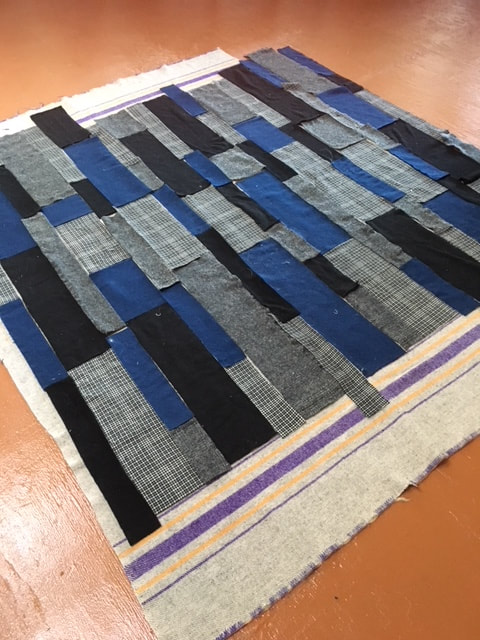
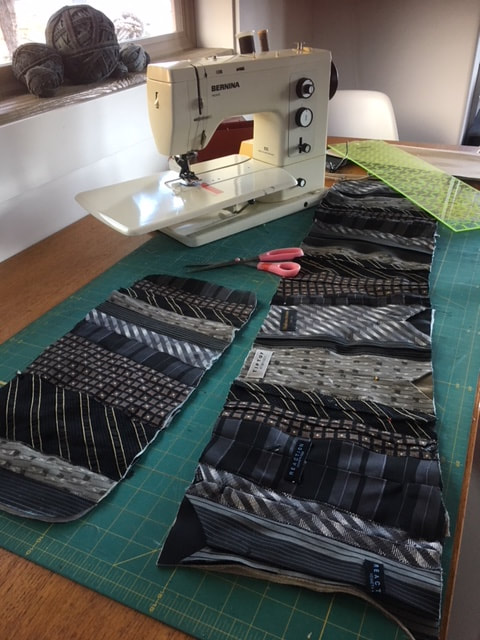
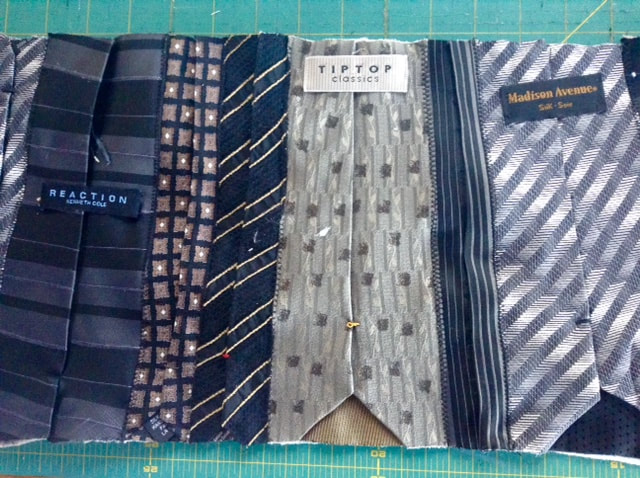
The first project this spring was the Great-Grandfather Quilt, for the first of the next generation who missed meeting his great-grandfather by 9 months. The second was Dad's Blanket, which lives on one of the two matching sofas where father and son watched the baseball in his last three years. The third is a lumbar-support cushion made from silk ties that's parked on his wife's favourite reading chair.

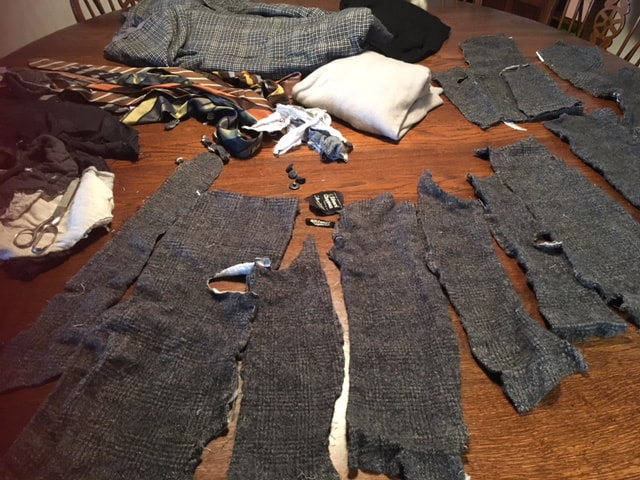
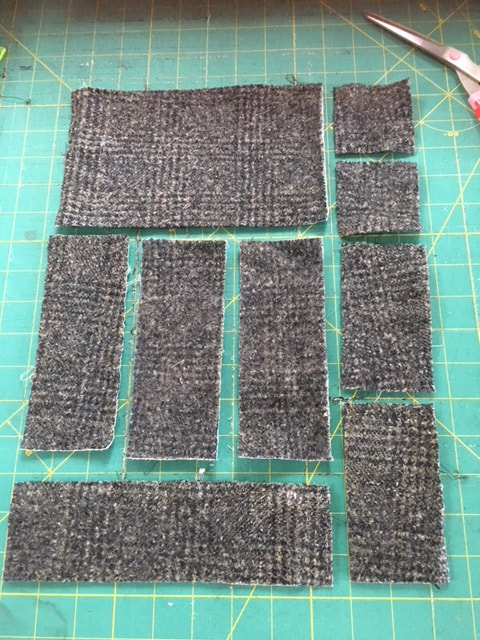
It takes a bit of faith to allow those blazers and sweaters, ties and dress shirts to leave their dark cupboards and be subjected to my fibre-art experiments but I'm grateful they did. It was a little unnerving, plunging wool blazers into a hot-water-wash and tumble-dry, or severing several silk neckties in one swipe of the rotary cutter, but that's the deal with making and innovating: sometimes you have to take a deep breath and boldly go, risking failure.
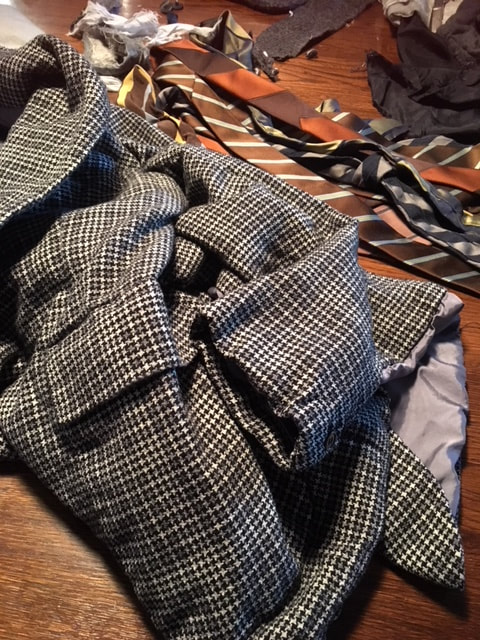
And there is definitely failure in all of this making. Design changes happen on the fly, dictated by odd dimensions of the pieces and unpredictable fabric behaviour. (It's a thing.) Trying to wrestle slippery bias-cut silk, unstable cashmere knit and coat-heavy woven wool into submission enough to lie flat together is a test of one's patience. The trick is to embrace imperfection and keep the big picture in mind. I think about the Gees Bend quilters I saw a few years ago at Granville Island and the gospel spiritual song two of them sang at the start of their talk, and I say a little prayer myself: God I hope this works.

The other challenge is creating works that resonate with the spirit of the original wearer, so it's not just a matter of chopping up the clothing into tiny unidentifiable pieces to be re-fabricated in a generic quilt. You don't want to be too literal either, appliquéing ties into a Ties Quilt or (creepier) using every last button and pocket or (horrors) just sewing all the clothes together into a blanket or something.

Binding the one blanket with necktie fabric and appliquéing the suit labels in one corner of an army blanket backing (for the man who served in the US Army) felt like the right balance.

I post each Remembrance Pieces project on Facebook to inspire other material girls and guys, and to pay my respects to the stuff of life and to those of this life no longer.
Comments

Gritty beauty seen in foundations of this pretty city

2/28/2017

Comments

 
Picture
It feels like the Internet has killed the fun of taking snapshots of beautiful cities and people. So many times over the last four months in Mexico I've raised my camera (phone) to capture an impressive bronze sculpture or some baroque church facade then thought: This is pointless. A Google-image search with a few key words (Guanajuato, musicians, Don Quixote, Pipila) would produce hundreds of better-quality stock photos. We're saturated in instagrammable images. I miss those old pocket travel photo albums.

This might explain all the selfie sticks threatening to take your eye out in the crowded plazas on any given night here; putting yourself in the picture with all the famous stuff behind will guarantee a unique photo.

So I have very little in terms of a photographic record for my time here. Every view of the strolling musicians in the plazas, or the teenage girls decked in ballgowns for their quinceanera (debut) parties, the food vendors, the street singers dressed in Renaissance-style hose and puffed velvet jackets are already done. So done.

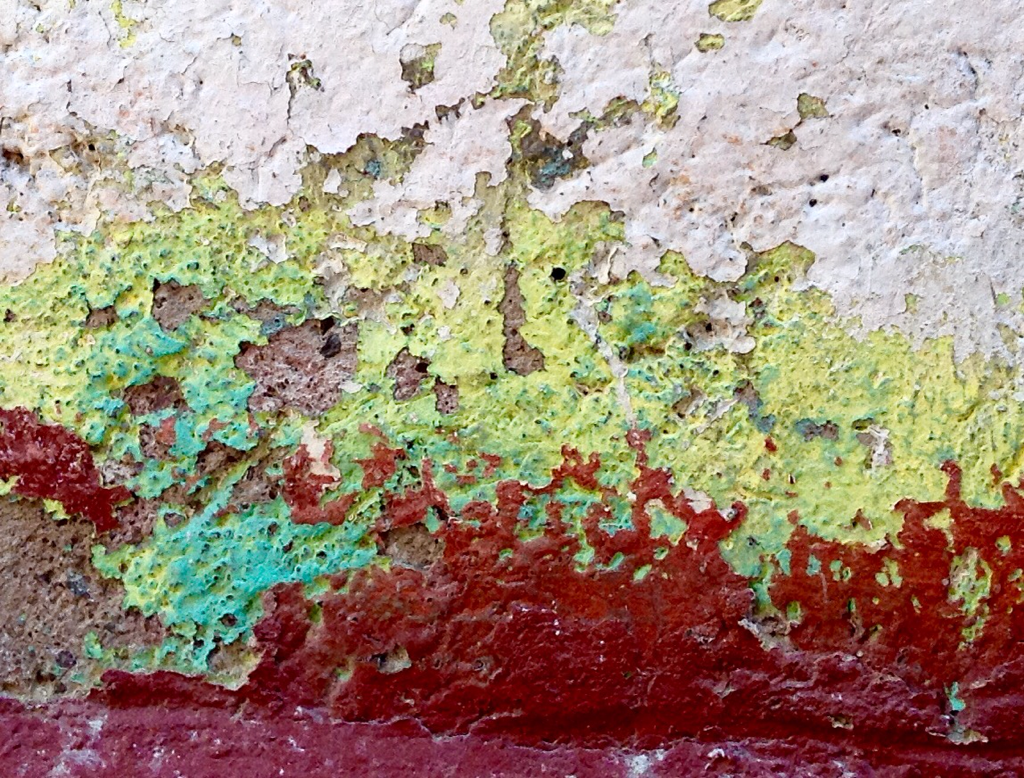
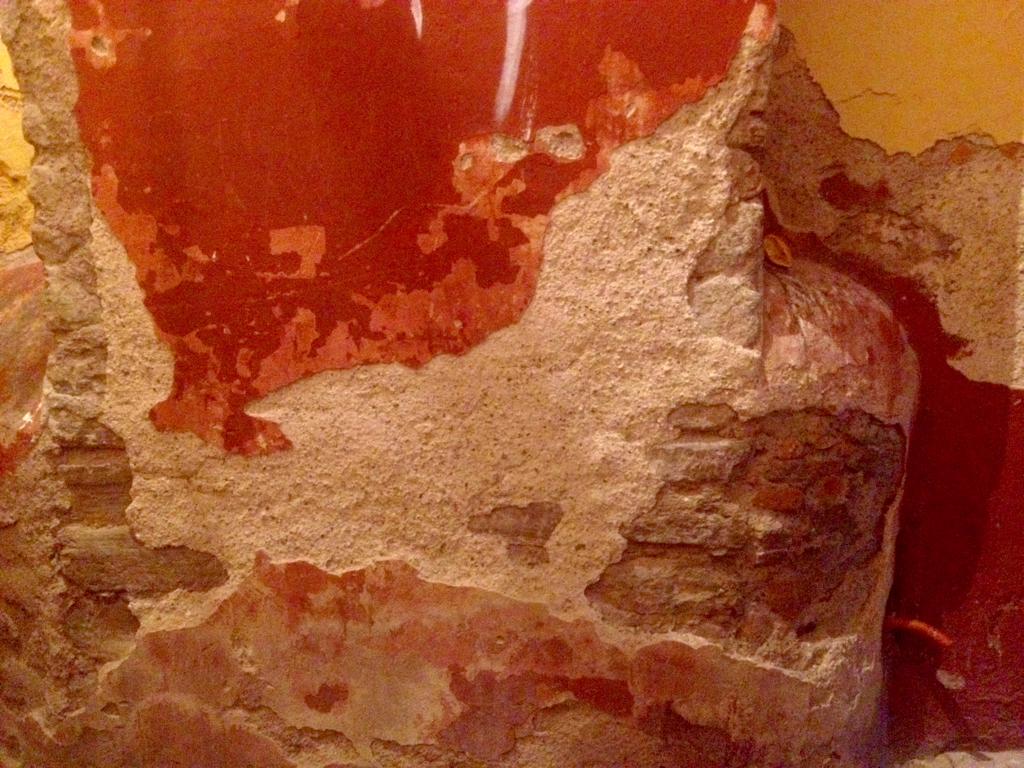
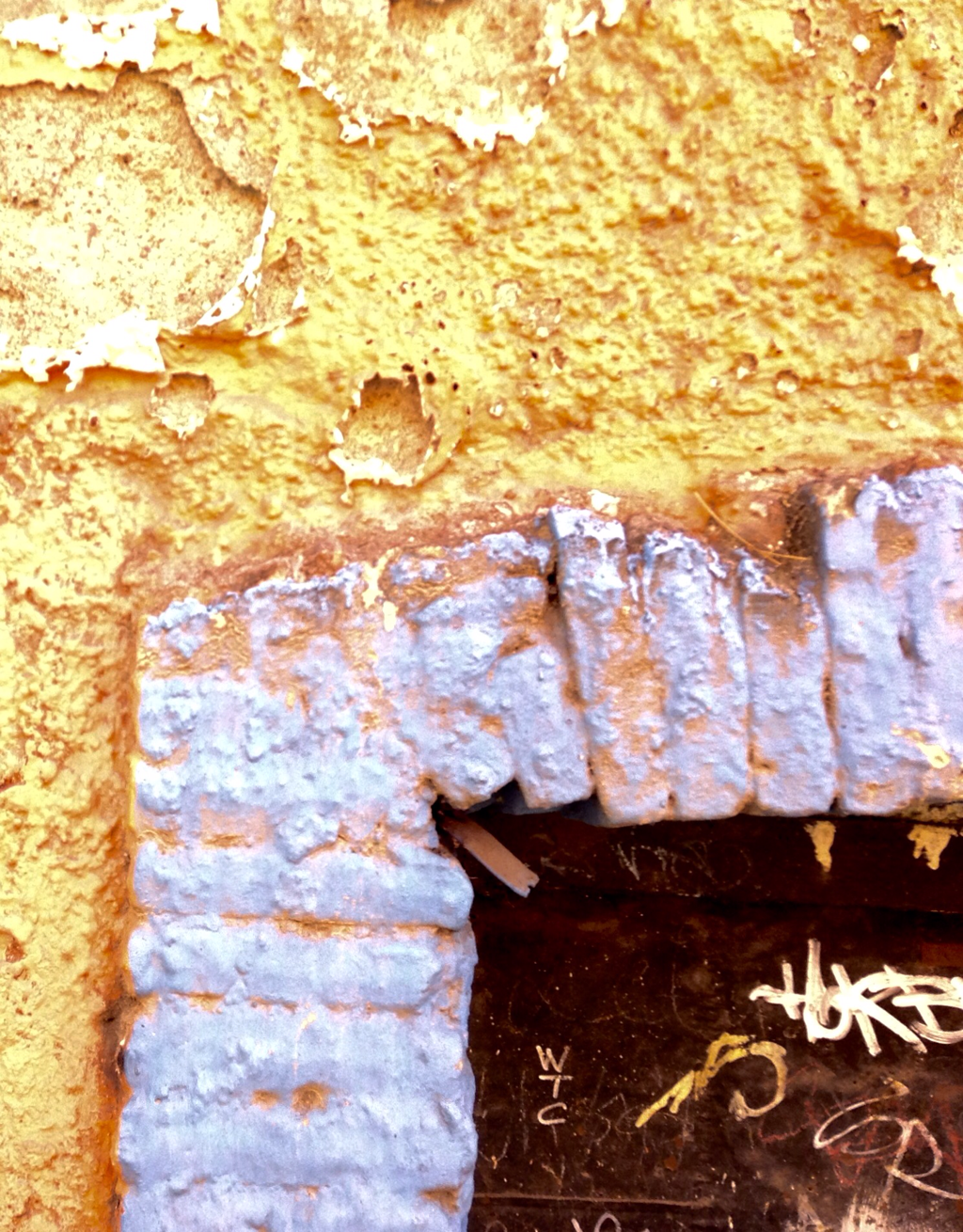
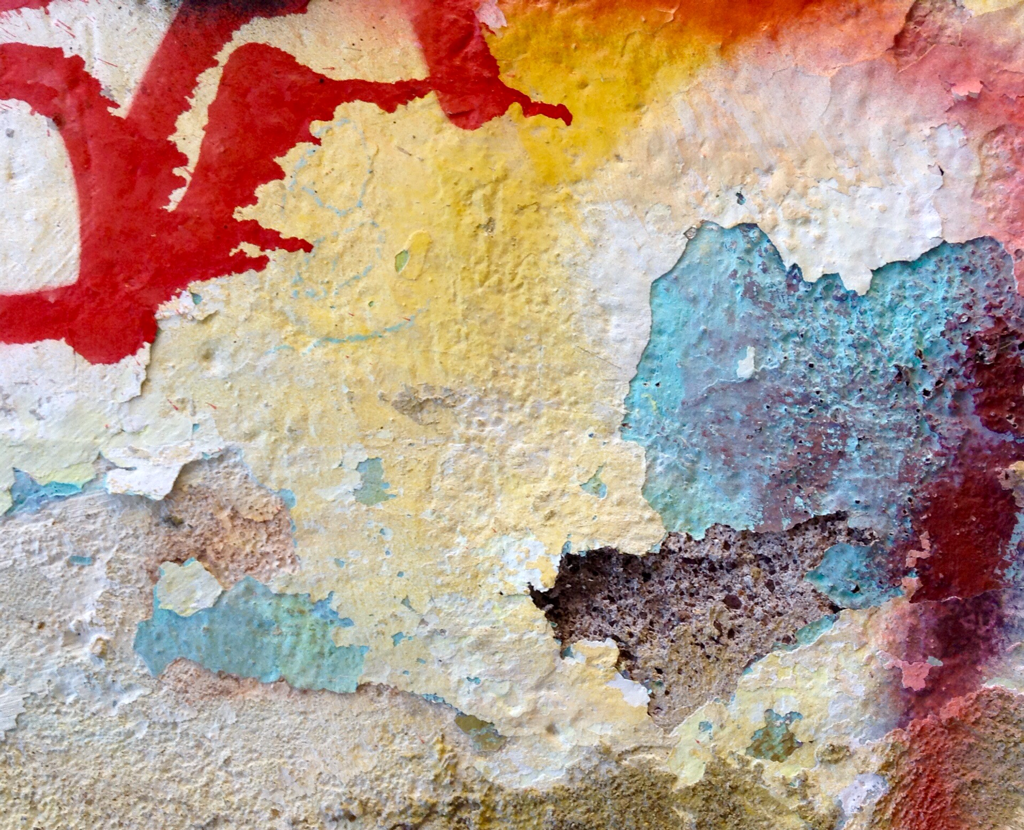
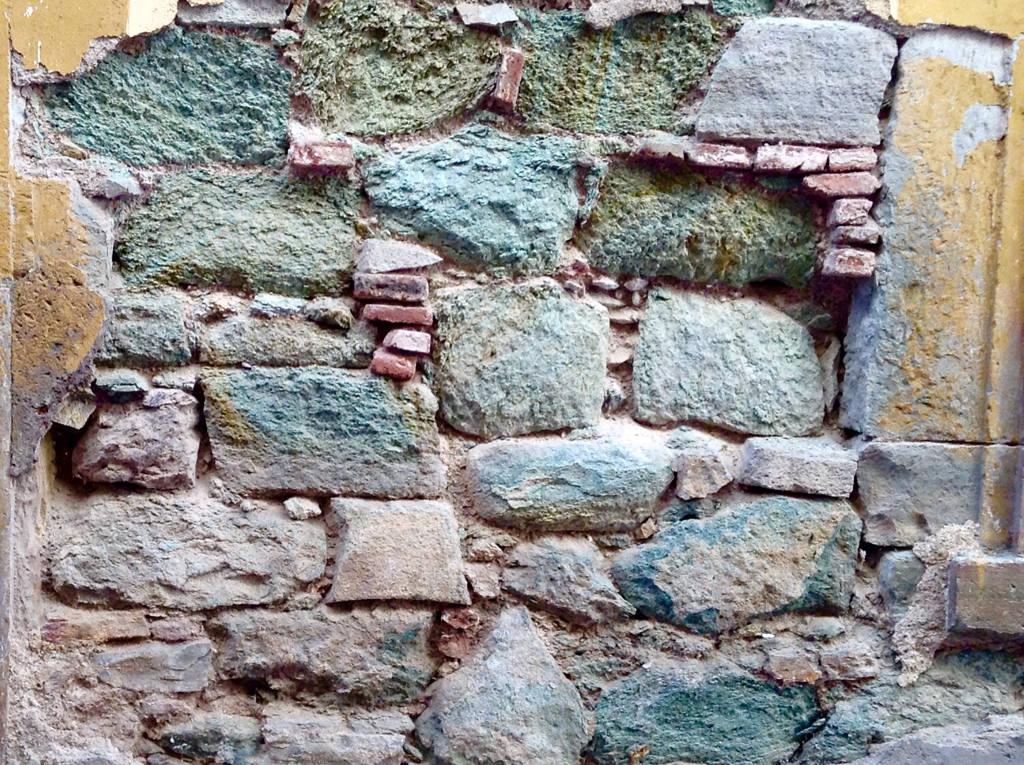
Then last week I finally started to see that the one signature-Guanajuato element that I've been captivated by is actually a worthy photo subject: the retaining walls that barely seem to be holding back the jumble of colourful, cubic houses clinging to the surrounding hills.

There's a compelling visual story in those layers of peeling paint on crumbling plaster on adobe bricks stacked on crudely cut limestone foundations. The traces of human activity in one section of wall speaks to the human habitation in this city that has its roots in the 1500s. It's quite a study in social history and handwork, an unplanned, almost invisible beauty, especially to a tourist whose port town of Vancouver has been replaced by a gleaming, pristine city of glass.

I'm seeing them as found abstracts, images of unintentional collages and mixed-media works by generations of people who work with their hands.
​
Picture
Picture
Picture
Picture
Comments

Big painting shift at little house on the prairie

9/19/2016

Comments

 
PictureDay 12 painting: Embroidered details in a scene of a newly "thrashed" hay field.
I've just returned from a month in the big country of southwest Saskatchewan: big skies, big farming operations, big empty days that were all too much at the start of my artist residency at the Wallace Stegner House.

Suddenly agoraphobic, I pulled down all the blinds and paced around that lovely century-old house, wondering what on earth possessed me to throw myself into this imposing patchwork landscape. I am not a landscape painter; that's my dad's bag.

Plus I came by plane and an eight-hour car ride, so even if I did want to paint, I didn't have my usual large stretched canvases and totes of paints. I did bring a few of my usual travel essentials: embroidery hoops, needles and floss — and an old bed sheet. I knew there was just a couple of stores in town, and none would be selling art supplies so I packed a tiny travel set of liquid acrylics, a few brushes and a pad of mixed-media cardstock.

My sketchy plan involved, well, sketching with my father, who has spent some of every summer in this tiny town of Eastend ever since he filled the Stegner House with his landscape paintings 15 years ago.

We were quite a pair: me, not at all comfortable with the whole plein-air tradition, and him, increasingly unfamiliar with his life's work of painting that involved biking into the country to sketch then returning to his basement to paint in the heat of the day. (Actually we were mostly a trio, his wife acting as facilitator for whatever this was, supplying us with water bottles, sunhats, sketch pads and willow charcoal, and generally getting us on the road.)

We circled around this vague idea of mine as we circled around this dead-quiet, struggling little town every morning. But the awkwardness turned to anguish back at my studio as I undertook the tedious pursuit of finding some interest — or even the point — in painting puffy clouds and dun-coloured hills.

A week later and out of sheer frustration at my lack of landscape-painting prowess, I resorted to dropping diluted paint on a taut scrap of bedsheet in an embroidery hoop just to watch it bleed. I threw the first painted scrap away and did another, with a little more intention, then threw that away too. Within a couple of hours I figured out the right water-to-paint ratio to create a slightly controlled bloom with each stroke. A lot of other distracted behaviour (baking apple crisps, walking by the river, venting via text to my artist friends) meant that each additional stroke was added to a dried layer and by the end of the afternoon, a landscape was emerging on a miniature stretched canvas. That one I didn't throw out. But it was still a little hazy. That's when I thought about using my stash of embroidery floss for final line work. 

I sat in the cool of the front screened porch that evening and embroidered some more information onto the painting. It was a clumsy first effort but soon I was enjoying the daily practice of biking in the morning with my father, painting something inspired by the ride in the afternoon, then embroidering some details in the evening, inviting others to join me for stitching sessions on the front porch.

I did this every day until I had 12 little paintings, each a progression from the last. I saw them as blocks for a future quilt, which led to a well-attended culminating exhibit, "Scenes from a Quilted Landscape."

But now I'm viewing them as something beyond a quilt and beyond the horizon. I'm calling them Points of Interest: something to build on and build with.


As with all creative pursuits, forcing solutions is futile. My original idea of coaxing my father back into his painting studio by getting him to share some of his process with me was a non-starter. These days he finds everyday joy in the moment, whether that is spotting a hawk while biking the backroads, playing a languid rendition of The Girl from Ipanema on piano in the hot afternoons, or watching the town's many cats on the prowl from the front porch of the Stegner House while his wife and I embroidered the summer evenings away.
I'm not sure if he knew it but he passed on to me the most valuable lesson for painting a scene: You have to actually see it.


Picture
My first effort: a clunky rendition of the Wallace Stegner House
Picture
Day 2: Black bridge behind the Stegner House, in black stitches
Picture
Day 3: Fun with architectural detail and embroidered lettering
Picture
Day 4: Sky and hills and embroidered sunflowers facing the morning sun
Picture
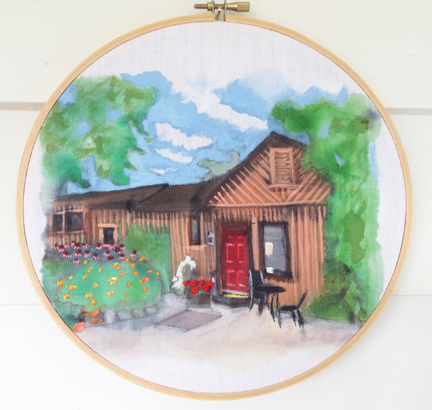
Day 5: Our hangout: coffee shop and pottery studio, surrounded by gardens
Picture
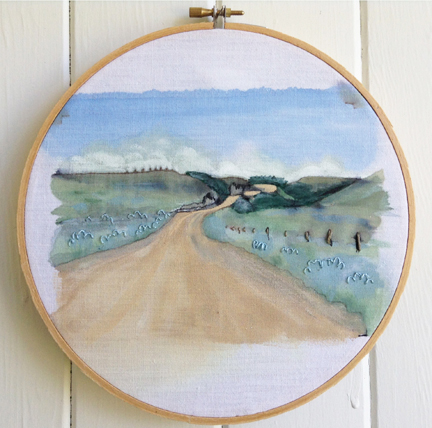
Day 6: The silty back roads, llike biking on velvet. (Wheel-seizing "gumbo" when wet)
Picture
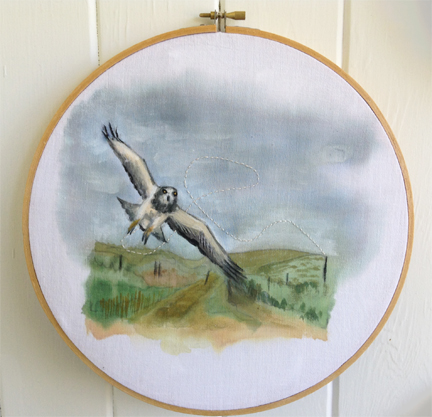
Day 7: Embroidery showing the flight path of a hostile hawk
Picture
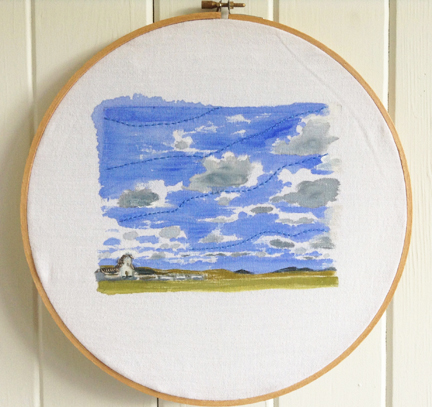
Day 8: Big skies and tiny grain elevator
Picture
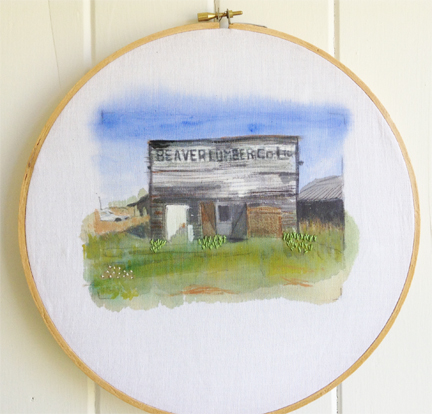
Day 9: Old Beaver Lumber building in the nearby almost-ghost town
Picture
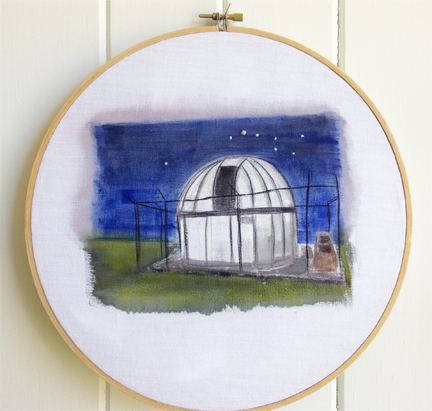
Day 10: The observatory, in some of the darkest skies in Canada
Picture
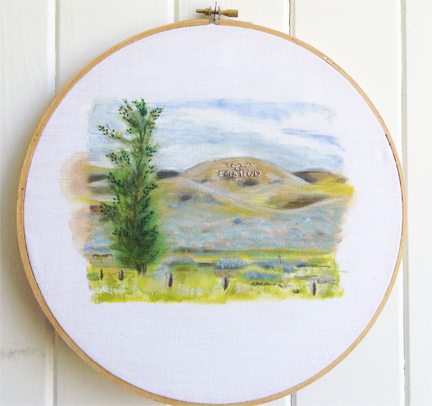
Day 11: "The Town of Eastend" rock formation in the hills, in embroidery

Slide-showing the process:

Comments

One bit, two bits, green bits, black bits

3/13/2015

Comments

 
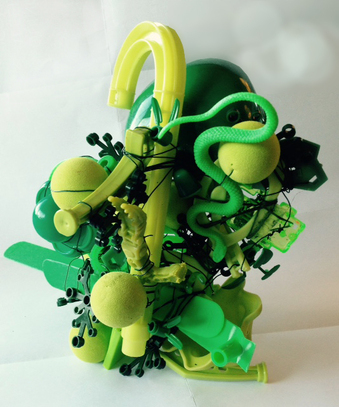
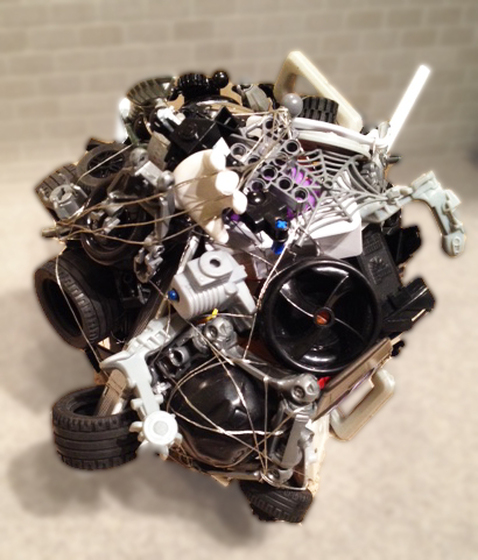
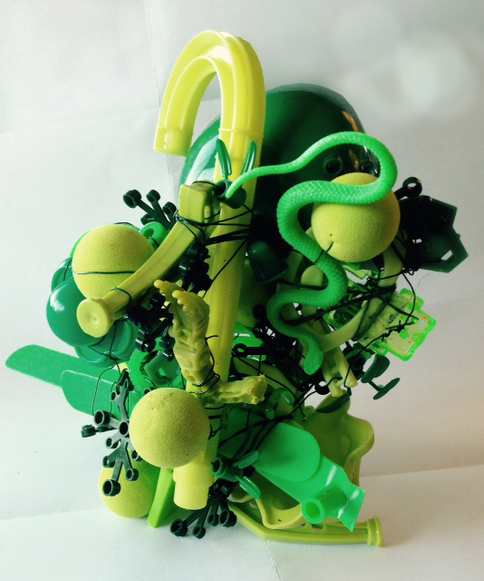
PictureToybits (green) - made from broken toys (Carlyn Yandle photo)
This may be the third or fourth column/post I've written that could come under the headline, 'Overthinking will be the death of me.' There is definitely a book in there somewhere about the power of overthinking to sabotage the creative process.

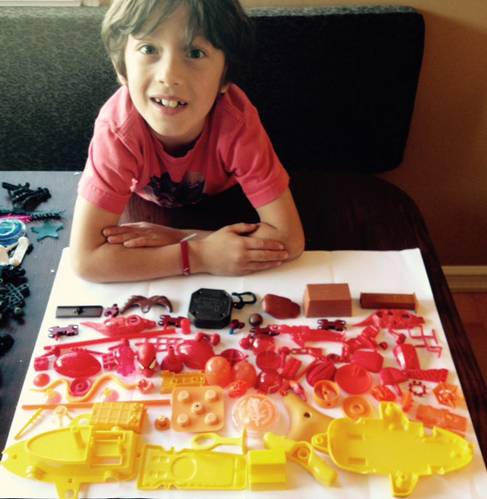
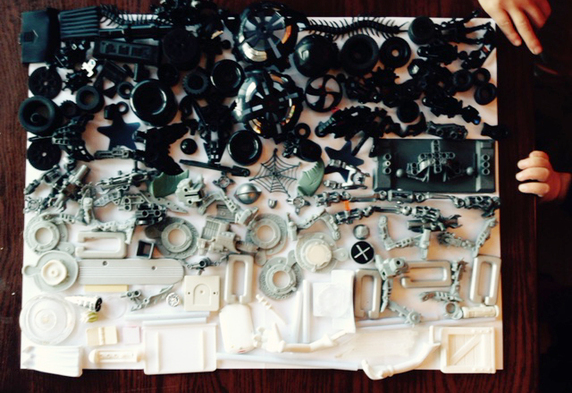
My latest overthinking sabotage occurred as I was experimenting with binding up broken toy bits (consciously not overthinking why).

I was taking care of my sister's kids while idly binding one green toy remnant to another. At some point, the curious object appeared to be done. And it was good.
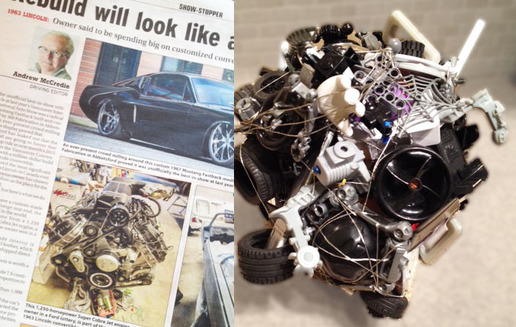
It's an intriguing object but when photographed is also a visually absorbing abstract. It has richness in its ability to conflate the second and third dimensions. It is heavy with cultural reference yet lightly humorous.

I was onto something.

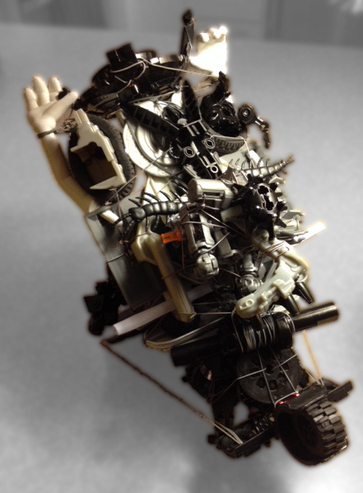
PictureToybits (black) - final version (Carlyn Yandle photo)
After a couple of hours I quit because it clearly would have no logical endpoint. But if there's one thing I've learned about the creative process it's to let the failures hang around and stink up the joint for a while. In my experience, the only way to get to the source of the stench is to keep it in the periphery. And a couple of days later it came to me: I was so hell-bent on the outcome I had completely negated the making, which, when referring back to the green toy-bits cluster, was the essence of the thing: play. 

I took it all apart, then started over, finding the fit between one bit to another bit, then adding one bit where it fit. (Maybe the book should be in Dr. Seuss language).

It had a beginning and an end, and the entire process was an adventure without a map. The result is a sculptural object with implied power that appears as part engine, part vehicle, part robot. It has composition, balance, architecture, intriguing sight lines and varying perspectives. It has something to tell me: Your instincts are good, keep going.

From the junk of life emerges new life.

You can see it in the above photo; it's a mess. Even as I was binding it I thought, This is not working, this is not working. Why is this not working? It has no balance, no composition. it is artless. And it was a chore from the get-go.
PictureToybits (black): first attempt (Carlyn Yandle photo)
So, like every creative I know,  the ol' mental processor starting whirring away in the background, rolling over this concept. Friends and I talk about this slightly obsessive stage when developing a new work. You're still functional in your daily routine but that whirring puts you in a slightly distracted state. It's sort of like falling in love; there's always something there to remind you of that growing passion. And when I fall in love with an idea, I fall hard. I'm consumed by the topic like the Paul Rudd character in The 40-Year-Old Virgin who can't stop talking about Amy or The Big Lebowski's John Goodman character who links any conversation to his days in 'Nam.

I've been seeing toy-bits inspiration everywhere, including in a car column in the morning newspaper. The picture of an engine reminded me of the toy-bits clusters and suddenly I was shoving aside breakfast dishes and breakfasting people and dumping my hoard of broken toys onto the table.

I will make that engine-y thing, I said. And therein lies the fatal flaw.

Comments

Exhibit of a great mistake was just the push I needed

2/27/2015

Comments

 
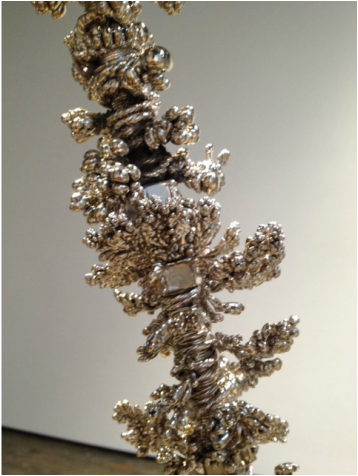
PictureVancouver-based creative force Omer Arbel and Monte Clark teamed up to embrace the power of happy accidents (Carlyn Yandle photo)
Last week Monte Clark gave four of us some insight into how an experiment by Omer Arbel went awry and ended up as a dazzling installation in his newish Monte Clark Gallery. 

The heavy, glittering swags appear as silver-dipped coral or precious Crown hardware retrieved after a palace inferno. The hardened bits of chaos are a dazzling example of why failure is vital in the push for new ideas and materials.

"Failure is a constant companion," says  Vancouver-based creative force Arbel, in Vancouver Magazine.

It was the perfect preface for my '3 artworks a day for five days' challenge that bounced over to me on Facebook. 

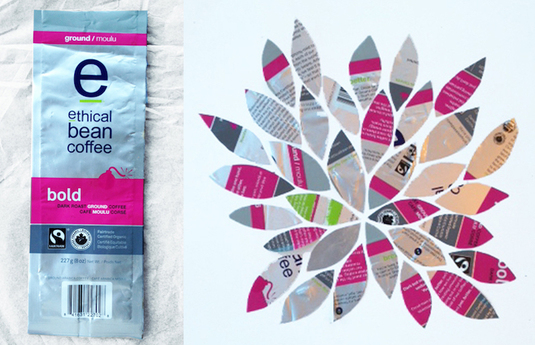
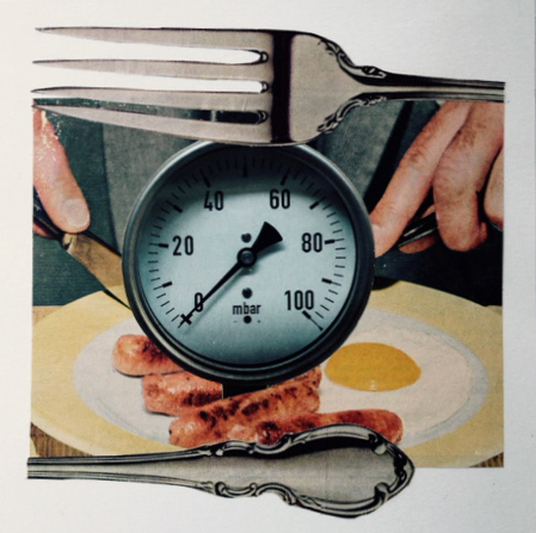
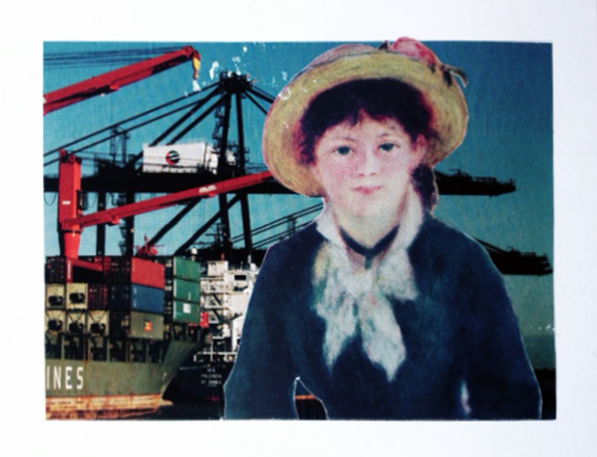
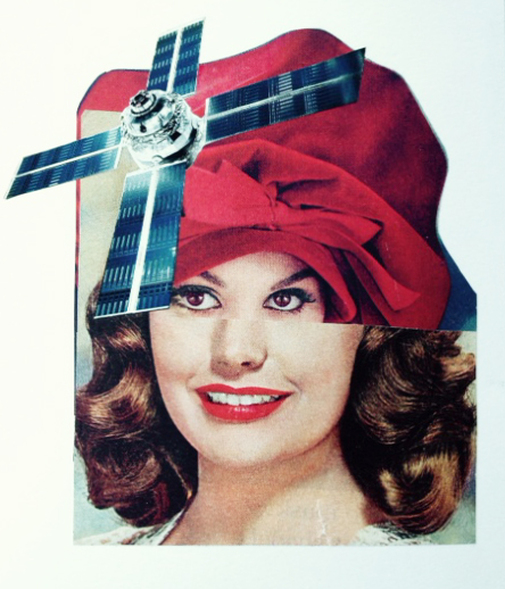
Risk is essential in my work but I don't have Arbel's creative empire to absorb expensive failures, so I turned to stuff lying around the house (a.k.a. Found Domestic Materials) in my thrice-daily experiments. The way I see it, the materials used below were already deemed waste, so if the tests didn't work out, so what? At least no new materials were harmed in the making.

Picture
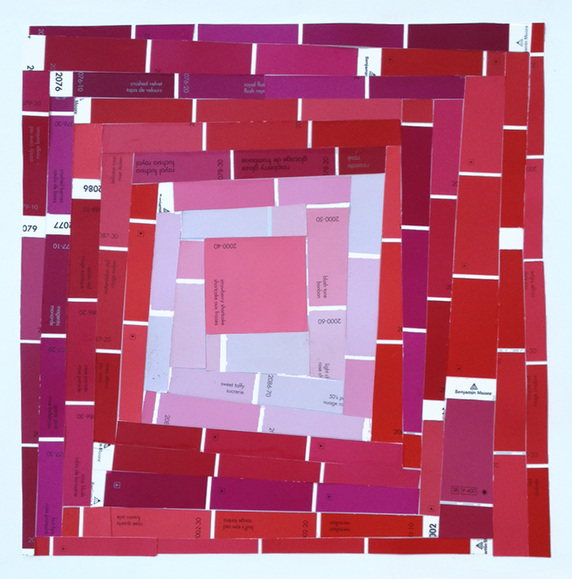
Paint chips as log cabin quilt block (Carlyn Yandle photo)

Day 2:

Picture
"Toybits": cluster of plastic toy fragments. (Carlyn Yandle photo)
Picture
Reorganizing broken toys with kids II (Carlyn Yandle photo)

Day 3:

Day 1:

Picture
Re-organizing broken toy bits with kids (Carlyn Yandle photo)
Picture
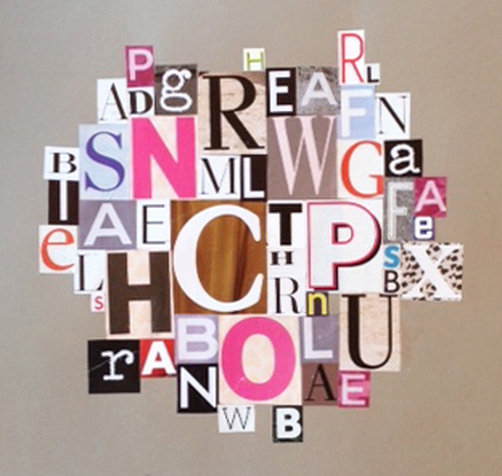
Playing with typography, New York Times Style Magazine (Carlyn Yandle photo)
Picture
Reworking one coffee bag (Carlyn Yandle photo)
Picture
Collages of mid-century women's magazines (Carlyn Yandle photo)
Picture
Collages of mid-century women's magazines (Carlyn Yandle photo)

Day 4:

Picture
Collages of mid-century women's magazines (Carlyn Yandle photo)
Picture
Grid collage from New York Times Style magazine (Carlyn Yandle photo)
Picture
Grid collage from New York Times Style magazine (Carlyn Yandle photo)
Picture
Exhausted from doing grid collage using NYT magazine (Carlyn Yandle photo)

Day 5:

Picture
Broken toy amalgam inspired by morning newspaper (Carlyn Yandle photo)
Picture
Idea for a feature wall or screen, using inserts from wine bottle wood crates (Carlyn Yandle photo)
Picture
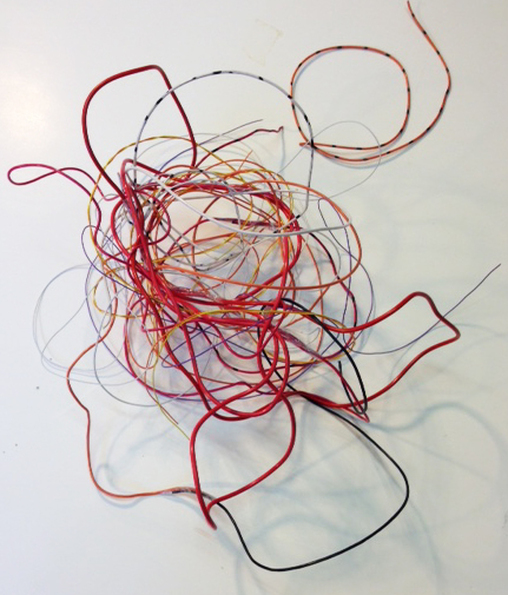
'Girl with Hole in her Head' possible title of random wire-as-drawing play (Carlyn Yandle photo)
Comments

Words are not enough to capture the seduction of distraction

6/6/2014

Comments

 
PictureDistracts #1, 2014, acrylic on canvas, 33"W x 27"H.
To me, the easiest part about carving out a place in the visual arts world is writing something about it. Yet most of my artist colleagues don't know how I make myself do it on a weekly basis. Easy. It only took 20 years of deadline writing for newspapers.

'Easiest' isn't quite the right word; it's more like 'reliable.' I can rely on the fact that if I sit down at a blank screen, soon words will link into sentences, inspired and connected by images. It's really just a habit at this point. If I don't get the chance to try to make literal sense of the past week, things start to swirl up into a ball of confusion. But once it's out there, it's done and I can move on. 

PictureDistracts #2, 2014, acrylic on canvas, 33"W x 27"H.
If only my days at my shared studio were as reliable. I wish I could start the morning with the same confidence as I stare at the freshly gesso'd blank canvas, and have the same conversation I get from writing a column (okay, blog). The two sides of my brain do not dance together at the studio. I do not enjoy the small eureka moments of understanding, or any great leaps forward in concept. And unlike weekly writing, I can't see that I'm creating any history of my process/progress. 

PictureDistracts #3, 2014, acrylic on canvas, 33"W x 27"H.
Some days I feel like I'm just painting myself into corners, or cycling back to where I started months ago. I often need to call in the reinforcements — artist friends — for a studio visit, when I ask, "Am I flat-lining here?" or "Am I a one-trick pony?"

But words work for me. Letters soon coalesce into strands of ideas and at the moment of this writing I see one taking shape as I type, and drop in these images of my latest paintings. 


PictureDistracts #4, 2014, acrylic on canvas, 33"W x 27"H.
This much I know is true: This is the most distractive time in human history and I live in a neighbourhood that is arguably the nation's capital of everything yoga. As I ride to the studio, I'm generally pre-occupied with this idea of the swelling dedication to personal, meditative practice juxtaposed with the seduction of our screens and the growing realization that our personal identities can be stolen in a click of a button.

PictureDistracts #5, 2014, acrylic on panel, 14"W x 16"H.
 I think about  how we crave peace of mind and heart but are captivated by the fantastic and unfathomable, packaged in high-def or in 3-D, with same-day shipping, something to Like, Share, Tweet, and post to Instagram/Tumblr/Pinterest.

Some days at the studio I just need to retreat, retrace past meditative practices, like lace-making. Other days I need to represent the fracturing of that focus.

If painting really is a conversation the painter has with the materials, surface, technique and image, I'm seeing that this is talking about mapping out an understanding of the here and now, where words fail.

PictureDistracts #6, 2014, acrylic on panel, 16"W x 20"H.
It's somewhere in the uneasy spaces between the digital and the handmade, the personal craft expression and the art and decor industry.

Put into words, it's a little terrifying to be in unexplored territory with no obvious path ahead.

I'm just bush-wacking, looking for a clearing. 

Comments

inspiration found at accountant's office

4/25/2014

Comments

 
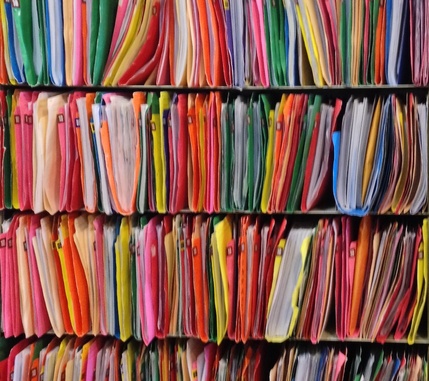
With the same anticipation as a root canal I plopped down in a chair at the accountant's office. Then gasped and pointed, then tried not to point at the adjacent bookcase stuffed with client files. 
The accountant flipped through my own paperwork. I flipped out my phone and hit the camera app while nodding vaguely. 
PictureCarlyn Yandle photo
You can have your heli-skiing, your chemically-enhanced club nights, your YouTubed jack-assery; my exhilaration comes from being confronted by these breathtaking visual moments. The effect is enhanced by the purity of the completely uncontrived art object or visual field in its incongruous environment. 

Never mind this delicious chrome-y palette that is simply a coded filing system; the whole filing...uh, object radiates with the yearly summations of individuals' spending and earnings, losses and gains that mean everything and nothing. Each colour-bound bundle evokes the stress of tax filing, of legitimizing one's existence, of facing up to the obligation of submitting and committing and remitting, of coming clean or engaging in some white-collar-cheating — or of the quiet shame in not managing to do this whole filing thing on one's own. (That can't just be me.)

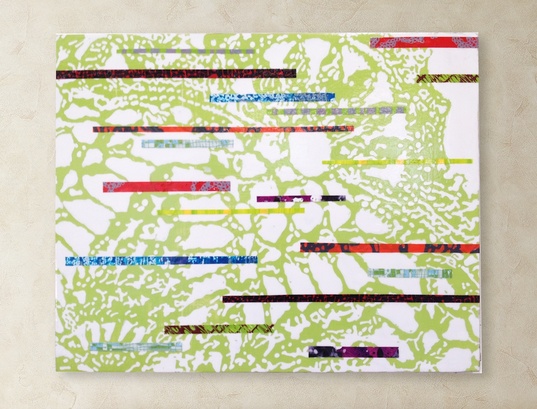
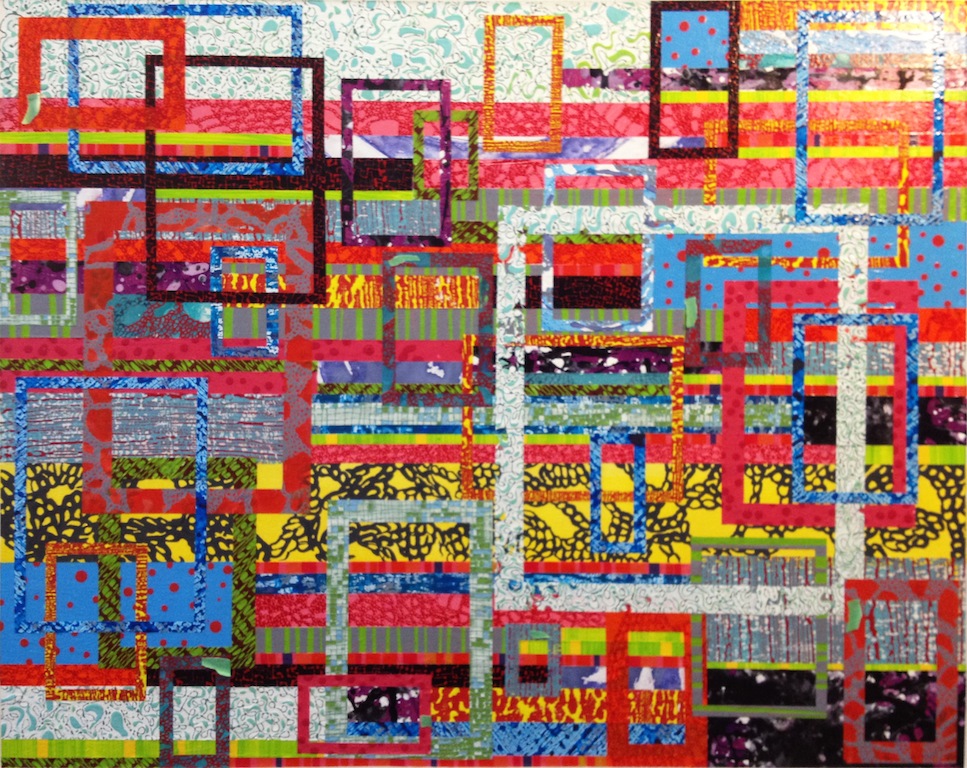
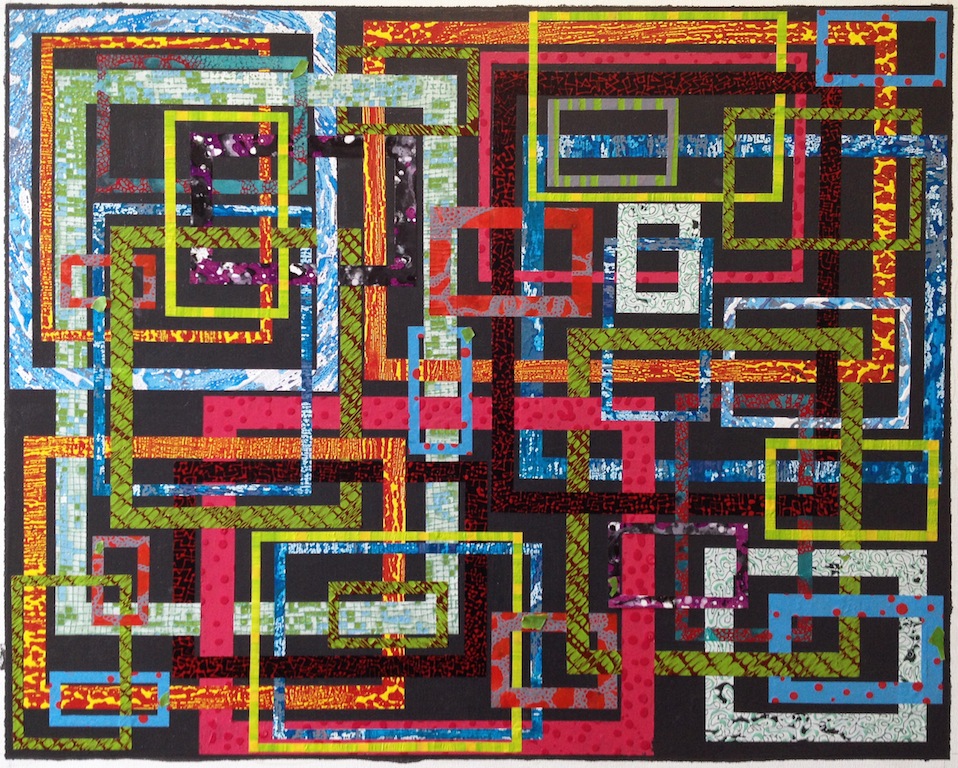
All that emotional intensity bundled and stacked and gridded is powerful stuff, but it also feels old timey, almost nostalgic now that we are squinting at the brightly-coded visual depictions in the dawn of big data. The non-object colour fields of information are persuasive and invasive, even in my own studio work. (Below: two paintings in the developing Fabrications series of acrylic on canvas.)

Digital imagery may boast sophisticated information (and limitless space) but the overstuffed file-pile at the accountant's resonates with heft, weight and compression. It's also heavy with 'the hand': the human activity of handling files, cases, persons.

Everything is awesome, as the kids insist on singing post-Lego Movie. But the relentless data-scene enhances other accidental art objects that are in opposition to lurid digital fields. I get the same visual slam when I see it in the concrete cracks between the glass condo towers, or, below, somehow blooming where they are not planted under an off-ramp and against a sub-station wall.
PictureCarlyn Yandle photo
These filigree moments of respite also manage to infuse their way into my own work, quite unconsciously. It is only in hindsight that I see the impact of these accidental artworks. (See Grey Lace, below and a video documenting the making of this painting.)

Another lesson in the notion that art makes the artist.

Picture
Grey Lace, 2014, Carlyn Yandle, acrylic on canvas, 50" x 40"
Comments

QR button blanket: Epic fail or a larger reading?

3/21/2014

Comments

 
Picture
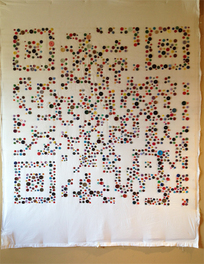
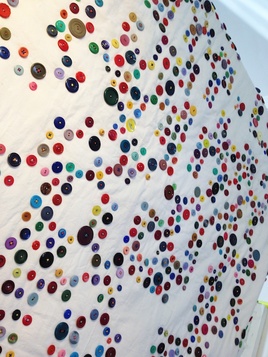
After three months of sewing one donated button after another into a giant QR code, the big moment arrived this week: time to stand back and scan that baby with a reader app, translating this quilt-thing to read, "The devil is in the details."

Except it didn't read. Don't panic!, I thought, then spent the entire next day working with a photo image of the QR Button Blanket, Photoshopping in more buttons and darker buttons and bigger buttons, trying to add the minimum amount of density for the software program to register the pattern and work its magic to produce the punchline. No luck; even a sliver of white in one button cluster puts a wrench in the wholecloth works. I filed this one under the category of Epic Fail, not worth finishing it as intended, framing it in black bias binding. I do not want to create something that is 'still' good; I want the thing to be good, full stop.

Picture
Failure demands confronting the why. Why conceive such a laborious, risky project in the first place?  Why endure the painstaking process when half-way through it was becoming abundantly clear that this was not going to 'read'?

But there is another power here, and that's tied to the process beyond the product. The achievement may lie in the endurance (in an increasingly A.D.D. world) that is not necessarily attached to the product after all. It may be in seeing it through, without the promise of a sure result. The power may lie in the humble, everyday materials and the community of women who contributed all those bits of plastic saved from the waste stream. (There should really be a global ban on production of billions of plastic buttons. Plant-based plastic, bone, wood, and leather- or fabric-wrapped tin buttons eventually return to the earth.)

But what's really starting to click in for me is the cultural reference of this button-grid design. A decade ago, it might have been viewed as an oddly arranged colour field or an abstracted grid but we're so acclimatized to codes that the pattern begs to be 'read.' The fact that this is irresolvable might be annoying. And that's interesting. 

PictureWavy Gravy, marker on synthetic velvet, 58" x 43"
The possible multiple references could be more engaging than the one answer provided by a QR reader app. There's something to be learned in the discomfort of the open-endedness.

Moments like these, I seek out the artists who have embraced what New York artist Polly Apfelbaum calls the 'tough beauty' of visually exciting works that incorporate everyday materials in surprising ways. Apfelbaum, who calls herself a bad crafter, articulates the process of hard work in this video. 

"I work all the time," she says, without a schedule and in a highly experimental way. "You make the work and then you hope for the best." 

 "It's very important to get your fuck-you back."

I'm going with that.

Comments

Just a bad craft? Time and techonology will tell

11/29/2013

Comments

 
Picture
I'm posting this picture because if I don't do it now I might cram this doomed project into a green garbage bag and stuff it where the sun don't shine: in deep storage.

 I've seen through some fraught, laborious projects in my time but I may have met my match. After months of hoarding buttons and hounding others to surrender their button jars "for art's sake" I'm thisclose to admitting this thing is a colossal waste of time.

The plan was to create a companion piece to my QR Quilt: After Douglas Coupland, a scrappy quilt translation of the artist's QR Code Paintings.

This new one will be a 'whole-cloth' quilt, where only the buttons would bind the layers. And of course it will be readable with a QR code reader app. Trouble is, since I designed this coded button blanket last year I'm starting to think that QR codes are a fleeting technology, like the fax machine. The geeky chatter on the interwebs also tells me so . So, in a few years when the industrial marketing complex has made the stampede over to some  other state-of-the-art attention-grabbing software schtick, the whole point of this project will be rendered obsolete. How did I not see the futility of trying to grapple with fleeting technology through a painstakingly slow craft method?

The inner negator has been bullying me throughout week one of sewing one found button after another onto my marked grid. It's not helpful realizing that in the unlikely event that I have selected the correct colours to read black, and have sewn in enough button-density to create a readable pattern, I'm still left with an unwashable, lead-apron-heavy quilt. I can't even dedicate it as a shroud in my final wish for a sustainable green burial, as my corpse would be cocooned in all that non-biodegradable plastic poundage.

This is normally the time when I call for reinforcements in the form of artist friends, who will invoke the usual mantra: 'Trust the process, trust the process.'

I get it and I'm going with it. See it through. One button at a time, one day at a time. The week-one picture is posted. There's no pretending it's all still just a concept. This matter of time, technology and endurance matters.


Comments
<<Previous
    Cross-posted at
    carlynyandle.substack.com

    browse by topic:

    All
    Abject
    Abstract
    Abstract Embroidery
    Abstraction
    Abstract Painting
    Abundance
    Accumulations
    Acrylic
    Activism
    Additive
    Aesthetics
    Agency
    AgentC Gallery
    Aging
    Alison Woodward
    Aluminum
    Anxiety
    Appropriation
    Arcade Fire
    Architecture
    Arleigh Wood
    Art
    Art Activism
    Art Blog
    Art Business
    Art Discourse
    Art History
    Artifact
    Artist
    Artist Residency
    Artist Statement
    Artist Talk
    Art Marketing
    Art Quilt
    Arts And Crafts
    Art School
    Art Show
    Art Spiegelman
    Assemblage
    Author
    Banksy
    Bauhaus
    Beauty
    Betsy Greer
    Big Data
    Billy Patko
    Binding
    Blogs
    Blog Tour
    Bob Krieger
    Body Of Work
    Books
    Boro
    Braided Rug
    Braiding
    Bruce MacKinnon
    Bruce Mau
    Building
    Bull Kelp
    Burlap
    Business
    Buttons
    Canadian Artist
    Carlyn Yandle
    Caroline Eriksson
    Cartoon
    Ceca Georgieva
    Challenge
    Charley Yandle
    Children
    Christmas
    Cindy Sherman
    Circular Thinking
    Cirque Du Soleil
    City As Site
    City Planning
    Cityspace Gallery
    Clay Yandle
    Climate Change
    Cluster
    Cob
    Cob Oven
    Collaboration
    Collage
    Collection
    Colonialism
    Color
    Colour
    Commission
    Community
    Community Building
    Composition
    Conceptual Art
    Conceptual Craft
    Connection
    Connie Sabo
    Construction
    Coronavirus
    Cosplay
    Costume
    Counter Culture
    Counter-culture
    Cover
    Cover-19
    Covid
    Craft
    Craft Blogs
    Craft Camp
    Craftivism
    Crafts
    Craftsmanship
    Creative Process
    Critique
    Crochet
    Cross-stitch
    Cultural Hub
    Cultural Studies
    Culture
    Culture Jamming
    Culturejammingc9d75664fd
    Current Conditions
    Cycling
    Dafen Village
    Dallas-duobaitis
    Dance
    Data-graphic
    Data-graphic
    David Weir
    Dear Human
    Decorations
    Deep Craft
    Denim
    Denyse Thomasos
    Design
    Digital Art
    Discomforter
    Display
    Dissent
    Distraction
    Distracts
    DIY
    Doilies
    Doily
    Domestic
    Domestic Interventions
    Douglas-coupland
    Draw Down
    Drawing
    Dressed
    Drip By Drip
    DSquared2
    Dude-chilling-park
    Dyeing
    Dystopia
    Eastend
    Eastside Culture Crawl
    ECUAD
    ECUAD MFA
    Editorial
    Edward Burtynsky
    Eggbeater Creative
    Embellishment
    Embroidery
    Emily Blincoe
    Emily Carr Cozy
    Emily Carr University
    Entanglements
    Environment
    Environmental Art
    Exhibit
    Exhibition
    Expanded Painting
    Experimentation
    Exploration
    Expression
    Fabric
    Fabricating
    Fabrication
    Facebook
    Failure
    Fashion
    Fashion Revolution
    Fast Fashion
    Feminisim
    Feminist
    Feminist Art
    Festival
    Fiber
    Fiber Artist
    Fiber Arts
    Fibre
    Fibre Arts
    Film
    First Saturday Open Studios
    Flo
    Flow
    Forage
    Foraging
    Form
    Form And Function
    Foundlings
    Found Materials
    Found Objects
    Fractal
    Free Store
    Fuckwit
    Fuzzy Logic
    Gallery
    Gallery-row
    Garden
    Gardening
    Garment
    Gathering
    Gentrification
    Geometric Art
    Gill Benzion
    Gingerbread
    Globalization
    Glue
    Goblin Core
    Grad 2020
    Graffiti
    Grannycore
    Granny Square
    Granville-island
    Green Space
    Grid
    Grief
    Guanajuato
    Guerrilla Art
    Guerrilla Girls
    Halloween
    Handmade
    Handmaking
    Hand Stitching
    Hand-stitching
    Handwork
    Hashtags
    Haywood Bandstand
    Healing
    Health
    Hearth
    Heirloom
    Hideki-kuwajima
    Hoarding
    Homelessness
    Homemade
    Hot Art Wet City
    Housing
    Hybrid Thinking
    Ian Reid
    Ian Wallace
    Ideas
    Identity
    Images
    Imagination
    Immersive Art
    Improvisation
    Incomplete Manifesto For Growth
    Industrial Design
    Industry
    Innovation
    Inspiration
    Instagram
    Installation
    Installation Art
    Intervention
    Intrusive Thoughts
    Invention
    Irena Werning
    Ironing
    Janet Wang
    Jeans
    Jeff Wilson
    Joel Bakan
    Joseph Beuys
    Joseph-wu
    Journalism
    Joyful Making In Perilous Times
    Joyfulmakinginperiloustimes
    Judith Scott
    Kamala Harris
    Kids Art
    Kim Piper Werker
    Kimsooja
    Kintsugi
    Knitting
    Knots
    Knotting
    Kyoto
    Labor
    Labour
    LA Fires
    Landon Mackenzie
    Landscape
    Leanne Prain
    Lecture
    Lighthouse
    Linen
    Liz Magor
    Log Cabin
    Logo Sweater
    LOoW
    Lost Painting
    Lumiere Festival
    Lynda Barry
    Macrame
    Maker
    Making
    Making Is Connecting
    MakingIsConnecting
    Malcolm Gladwell
    Male Gaze
    Mapping
    Maquette
    Marie Kondo
    Marketing
    Mark Lewis
    Martha Rosler
    Martha Stewart
    Masks
    Material Exploration
    Mathematics
    Maya
    Media
    Meditation
    Meditative
    Mending
    Mend In Public Day
    Mental Health
    Metalworker
    MFA
    Mister Rogers
    Mixed Media
    Mobile Art Practice
    Monique Motut-Firth
    Monster
    Monte Clark
    Mosaic
    Motivation
    Mt. Pleasant Community Centre
    Mud Girls
    Mural
    Mushroom
    Mycelium
    Narrative
    Natalie Jeremijenko
    Nature
    Needlework
    Neon
    Net
    Network
    Networking
    Neuroplasticity
    New Forms Festival
    Newspapers
    Nick Cave
    Noah Goodis
    North Vancouver
    Obtrusive Thoughts
    Omer Arbel
    Online Talk
    Openings
    Organization
    Origami
    Overabundance
    #overthinking
    Paint
    Painting
    Pandemic
    Paper
    Paper Sculpture
    Papier Mache
    Parkade Quilt
    Patchwork
    Patriarchy
    Pattern
    Pecha Kucha
    Pechakucha
    Perception
    Perfectionism
    Performance
    Performance Art
    Personalispolitical
    Photography
    Playing
    Political Art
    Political Satire
    Polly-apfelbaum
    Pompidou
    Poodle
    Pop-Up
    PopUp
    Port Coquitlam
    Portrait
    Practice
    Process
    Production
    Profession
    Project
    Protest
    Protest Art
    Psychedelic
    Public Art
    Pussy Hat
    Pussy-hat
    Qr Code
    Quilt
    Quilt Block
    Quilting
    Quilt Painting
    Rachael Ashe
    Rachel Lafo
    Ravages
    Raw Materials
    Rebar
    Recycle
    Recycling
    Reflection
    Reflektor
    Reimagine
    Renewal
    Repairing Is Caring
    RepairingIsCaring
    Repetition
    Research
    Residency
    Resistance
    Resurge
    Retreat
    Re-use
    Rhonda Weppler
    Richard-tetrault
    Richmond Art Gallery
    Right Brain
    Rondle-west
    Roses Against Violence
    Rote Activity
    Rug
    Ryan-mcelhinney
    Safe Supply
    Safety
    Sampler
    Sarah-gee-miller
    Sashiko
    Saskatchewan
    Scaffolds
    Scaffolds I
    Scale
    Scraps
    Sculpture
    Seasonal Decor
    Seattle Art Museum
    Seaweed
    Seismic Rug
    Semiotics
    Sewing
    SharingIsCaring
    Sharon Kallis
    Shawn Hunt
    Shigeru Ban
    Sketchup
    Slow Craft
    Smocking
    Social Art
    Socialart
    Social Distancing
    Social Distancing Hat
    Social Engagement
    Social-engagement
    Social History
    Social Justice
    Social Media
    Soft Sculpture
    South-granville
    Space Craft
    Spore
    Stitching
    Storage
    Street Art
    Studio
    Styrophobe
    Subversive Stitch
    Surrealism
    Surrey
    Tactical Frivolity
    Tactility
    Tagging
    Talking Art
    Tapestry
    Tattoo
    Teamlab
    Technology
    Terry Fox Theatre
    Text
    Textile
    Textile Art
    Textiles
    Thrifting
    Thrift Stores
    @tinypricksproject
    Tiny Pricks Project
    TJ Watt
    TO DO
    Tools
    Toronto Design Offsite
    Toybits
    Trash
    Trash Art
    Travel Art
    Trevor Mahovsky
    Trump
    Typography
    Tyvek
    Unbridled
    Unfixtures
    Upcycle
    Upcycling
    Urban Design
    Use Object
    Use Objects
    Utility
    Value Village
    Vancouver
    Vancouver Art Gallery
    Vancouver International Airport
    Video
    Video Tour
    Visual Field
    Visual-field
    Visual Language
    Wabi-sabi
    Wallace Stegner House
    Wall Hanging
    Waterwork
    Wearable Art
    Weaving
    William Morris
    Women's March
    Wood
    Wool
    Work Wraps
    Wrap I
    Wrap II
    Writing
    Xenobia Bailey
    Yarn Bombing
    YVR
    Zaha Hadid
    Zendoodle
    Zero Waste Art
    Zero-waste Art

    Archives

    January 2026
    December 2025
    November 2025
    September 2025
    May 2025
    April 2025
    March 2025
    January 2025
    December 2024
    November 2024
    October 2024
    September 2024
    August 2024
    July 2024
    June 2024
    October 2022
    August 2022
    June 2022
    November 2021
    April 2021
    September 2020
    April 2020
    December 2019
    November 2019
    September 2019
    August 2019
    July 2019
    June 2019
    April 2019
    November 2018
    July 2018
    May 2018
    November 2017
    September 2017
    June 2017
    April 2017
    March 2017
    February 2017
    December 2016
    November 2016
    September 2016
    July 2016
    March 2016
    February 2016
    January 2016
    December 2015
    November 2015
    October 2015
    September 2015
    June 2015
    May 2015
    April 2015
    March 2015
    February 2015
    January 2015
    December 2014
    November 2014
    October 2014
    September 2014
    August 2014
    July 2014
    June 2014
    May 2014
    April 2014
    March 2014
    February 2014
    January 2014
    December 2013
    November 2013
    October 2013
    September 2013
    August 2013
    July 2013
    June 2013
    May 2013
    April 2013
    March 2013
    February 2013
    January 2013
    December 2012
    November 2012
    October 2012
    September 2012
    August 2012
    July 2012
    June 2012
    May 2012
    April 2012
    March 2012
    February 2012
    January 2012
    December 2011
    November 2011
    October 2011
    September 2011
    August 2011
    June 2011
    May 2011
    April 2011
    March 2011

Powered by Create your own unique website with customizable templates.
Picture