carlyn yandle
  • about
  • the creative process
  • crafted objects
  • public art
  • painting
  • exhibitions
  • contact

Circular thinking can be a flow state too

6/2/2024

 
Picture
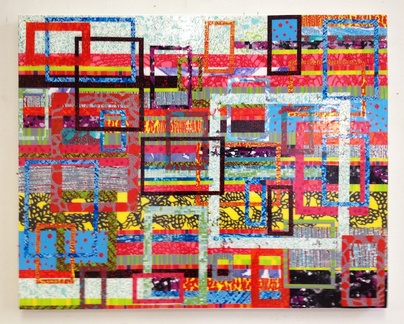
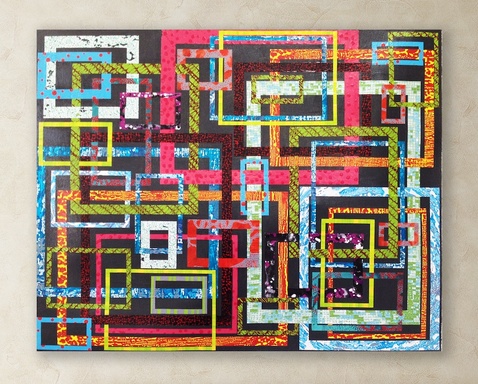
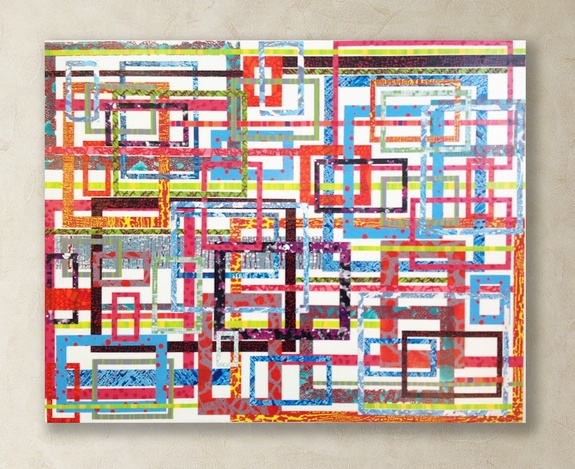
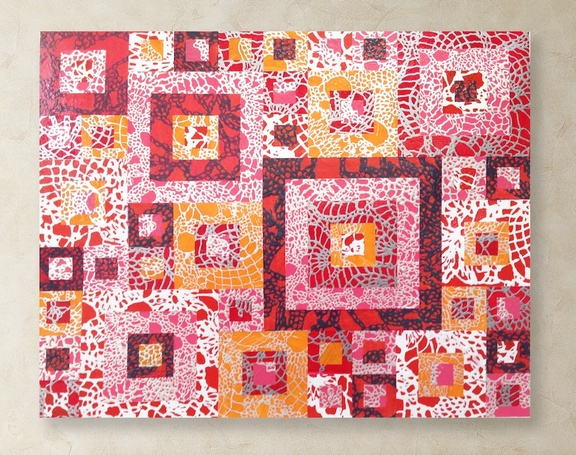
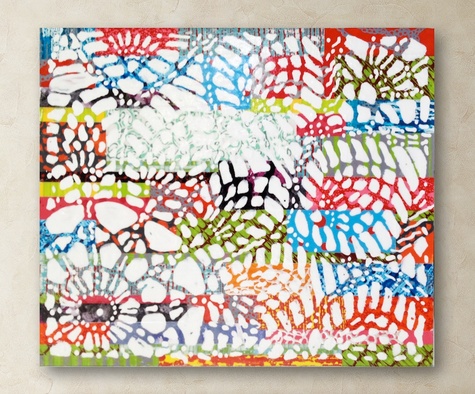
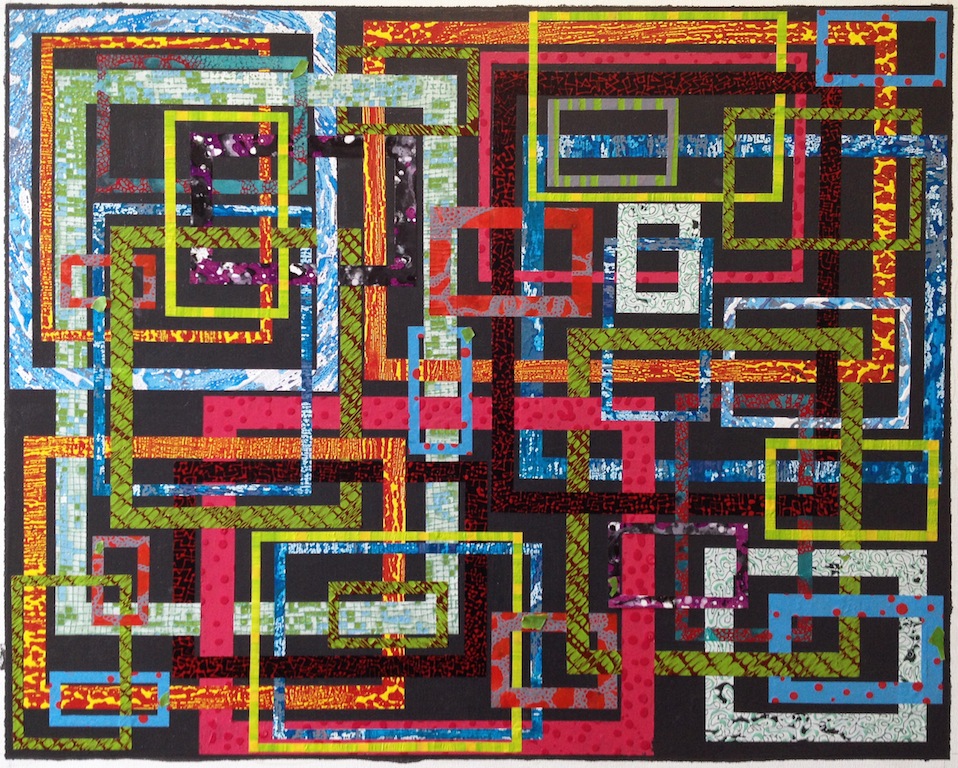
I opened up my studio yesterday to the public to get some general feedback on a new series of paintings. Because even though I’m compelled to keep working on it and even though I’m enjoying a growing proficiency in this mash-up of stitching and painting I’m having trouble articulating why — or if — they’re not just pretty faces. Mostly I've been answering their questions with questions of my own.

“Why” has always been the trouble. Also aggravating: Why ask why?
This is the reason I’ve named this growing collection of paintings that all basically follow my own set of rules of engagement Circular Thinking. The connotation is negative but hear me out.

Asking ourselves existential questions while we create is infuriating (Shut the hell up, Inner Critic) but it’s also part of a process that can guide us to where we want to land. I would like to be settled with the obvious reason that it’s my route into flow, or actual, real fun. (The “so fun” episode of the We Can Do Hard Things podcast here was recommended to me by my sister.) And they do get me there: into the flow of playing with colours and opacities, of focusing on one stitch at a time, watching how each layer of paint or stitching changes perception.

But I can’t settle with just what’s in it for me. Making is my way of connecting with the world. Much of my work is collaborative, so those involved naturally have a stake in the final projects. Often that’s in the gathering of abject materials, or the actual simple hand-working methods that bring folks together. So it’s easy to see the ‘why’ in these crafted objects and fields; beyond their own resonance they stand as an archive of the social interaction, an artifact of the engagement with materials.

The Circular Thinking series has none of that. Each painting is a singular, intimate effort. It does not reveal any agency embedded in unwanted/useless materials and objects. So in the making, despite the flow part, I feel a whisper of guilt and shame that many women of a certain age might also hear when not doing for others: selfish, self-indulgent, self-absorbed.

There is definitely something in the ‘self’ there that is the driving force in these improvisational, unpredictable and unsettling paintings: self-care. I ache for solid, reliable ground in these perilous times so I start with a grid, like the criss-cross of rebar that sets the concrete footings in every new tower crowding the Vancouver skyline, or a typical nine-patch quilt block. Nine eight-inch-diameter circles in a 24" x 24" "block" anchor to that grid and then I’m off, free of all straight lines, off-setting those circles by half in paint, offsetting again with more layers of colour in paint or thread until I arrive at an attractive/distractive done-ness. It is an improvisational process of revealing and concealing (repeat!) petal-like sections of circles, creating unsettling, kaleidoscopic fields. It is the kind of all-consuming process that reduces hours to minutes, that absorbs all attention, a safe space away from the visual onslaught of social media, yet reflective of our ‘everything is awesome’ screen-field of vision.

​It might be easier to eat this elephant one bite at a time by knocking down specific why-questions:
​

Why paint?
Colour-play. Especially important in this watery corner of the world. It can also act as a dye/stain.

Why canvas?
It’s fabric, with so much possibility for exploring its essential characteristics.
​
Why the wood stretcher?
Another fibre product that is a natural with fabric. It's basically a quilt frame or embroidery hoop for painters. Building stretchers and stretching the canvas is an investment in the project ahead (a trick I learned from my father @dennisyandle).

Why the stitching?
I like to needle at the hierarchy of painting over craft processes. Each stitch feels like I’m sticking it to convention. Stitching into painting offers the digestible label of “expanded painting practice.”

Why all the quilt references?
The geometry of quilt designs is fascinating, mesmerizing. I have little aptitude but a lot of respect for the beauty of mathematics. The tactility of that geometry connects to present and past makers of objects that exist as art pieces or as items of comfort, utility and gifts, an expression of love. This is a less-digestible "expanded quilting practice": improvisational, mixed-media works with none of that cushy filling.
Picture
The geometry of circular quilt designs remains a beautiful, captivating mystery.
Why this scale?
24" x 24” is my standard sample-block size. I dream of an exhibit of all my sample blocks blanketing white-cube gallery walls. 

Why two-dimensional?
Closer inspection reveals the third dimension, in the stitching. Also, the aforementioned sample-block dream show is a three-dimensional, immersive space of pattern and colour chaos. (I want to go to there.)
​
Circular Thinking is both the name of this latest series of grid paintings and shorthand for how I approach every new project: 
play, think, write, share, think, research, share, write, repeat.

Through this writing part of that feedback loop I can see I just might stop torturing myself with the existential Why and get back into that flow.

@carlynyandle
Picture

Gritty beauty seen in foundations of this pretty city

2/28/2017

Comments

 
Picture
It feels like the Internet has killed the fun of taking snapshots of beautiful cities and people. So many times over the last four months in Mexico I've raised my camera (phone) to capture an impressive bronze sculpture or some baroque church facade then thought: This is pointless. A Google-image search with a few key words (Guanajuato, musicians, Don Quixote, Pipila) would produce hundreds of better-quality stock photos. We're saturated in instagrammable images. I miss those old pocket travel photo albums.

This might explain all the selfie sticks threatening to take your eye out in the crowded plazas on any given night here; putting yourself in the picture with all the famous stuff behind will guarantee a unique photo.

So I have very little in terms of a photographic record for my time here. Every view of the strolling musicians in the plazas, or the teenage girls decked in ballgowns for their quinceanera (debut) parties, the food vendors, the street singers dressed in Renaissance-style hose and puffed velvet jackets are already done. So done.

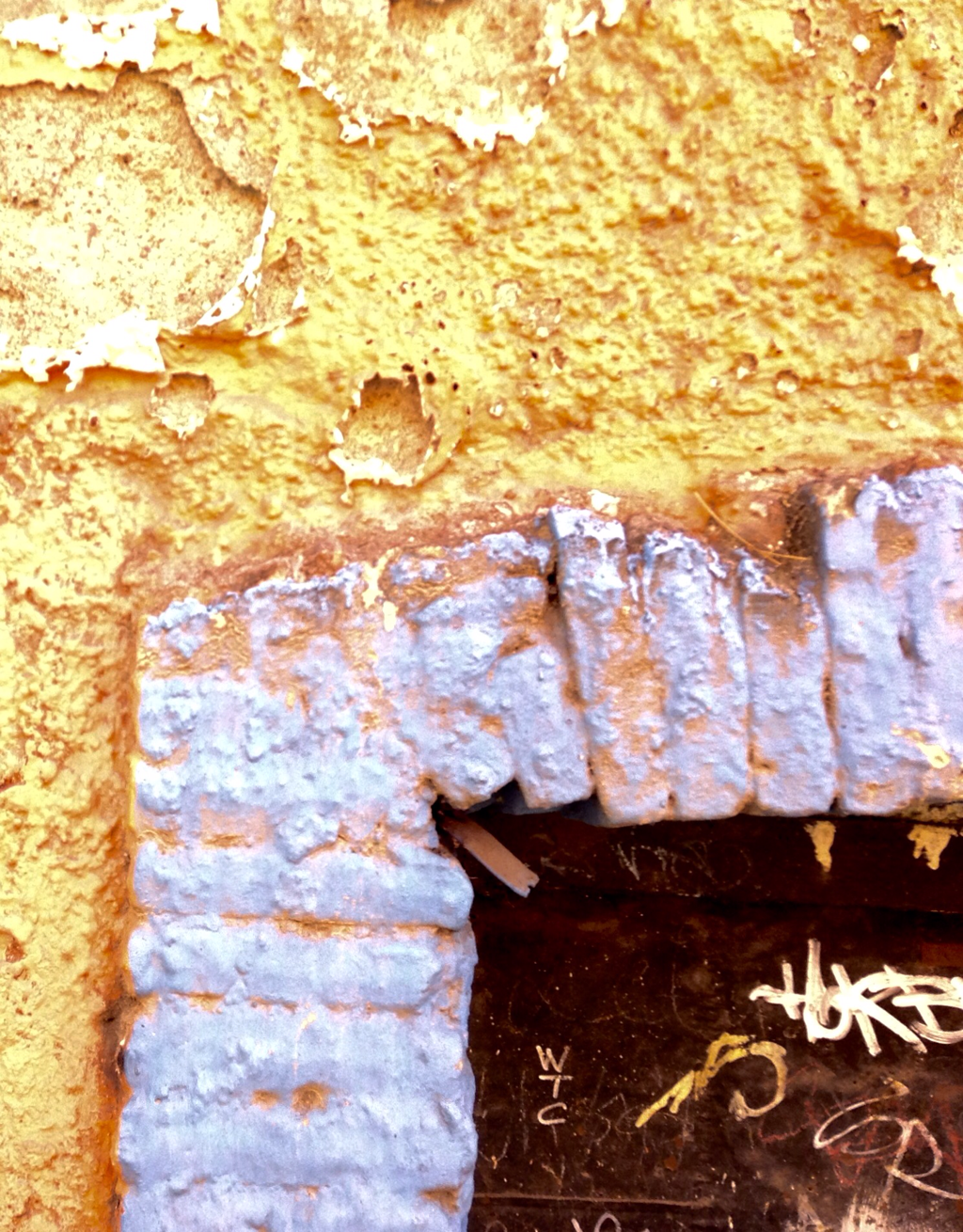
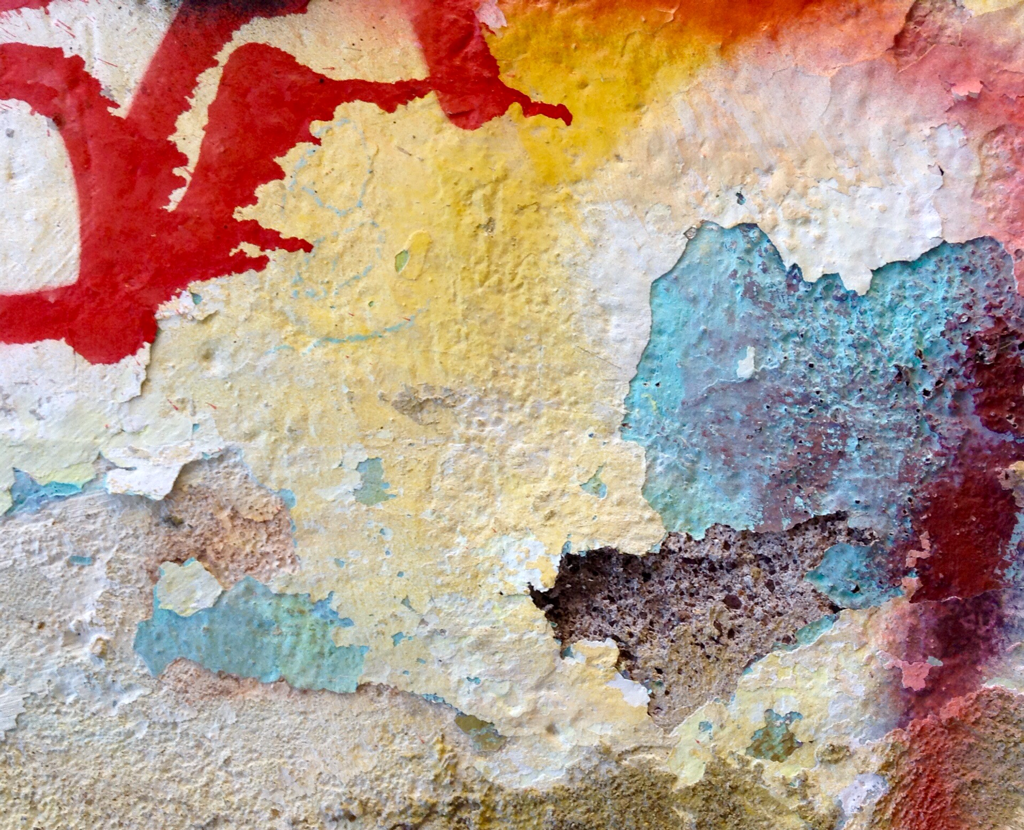
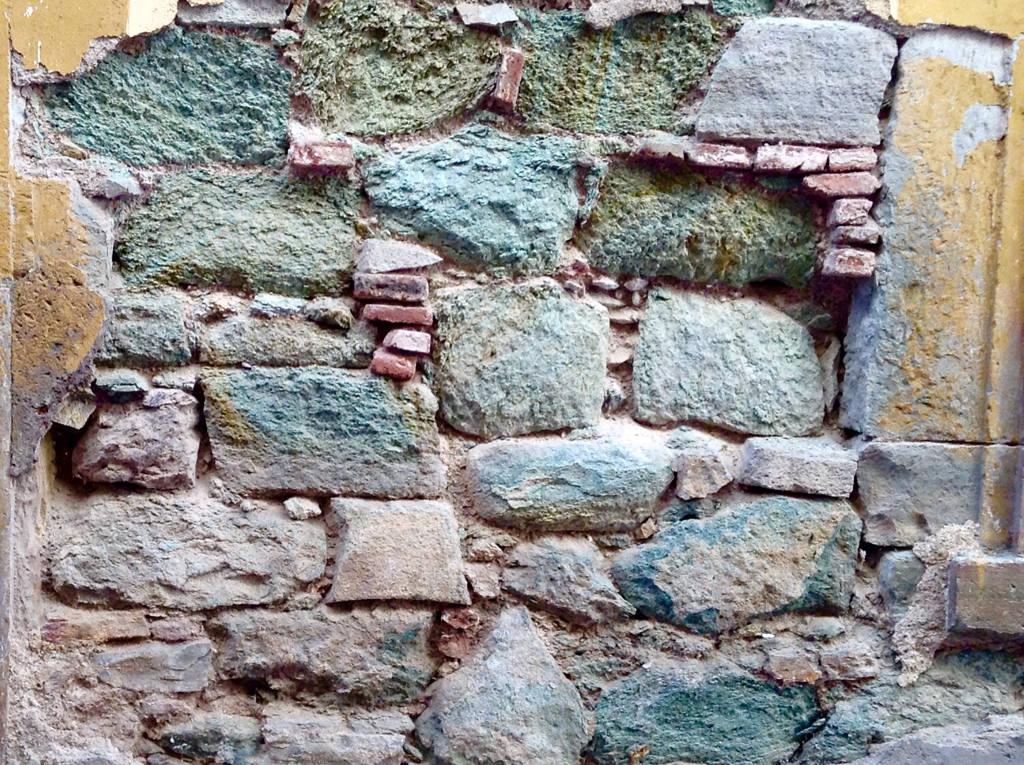
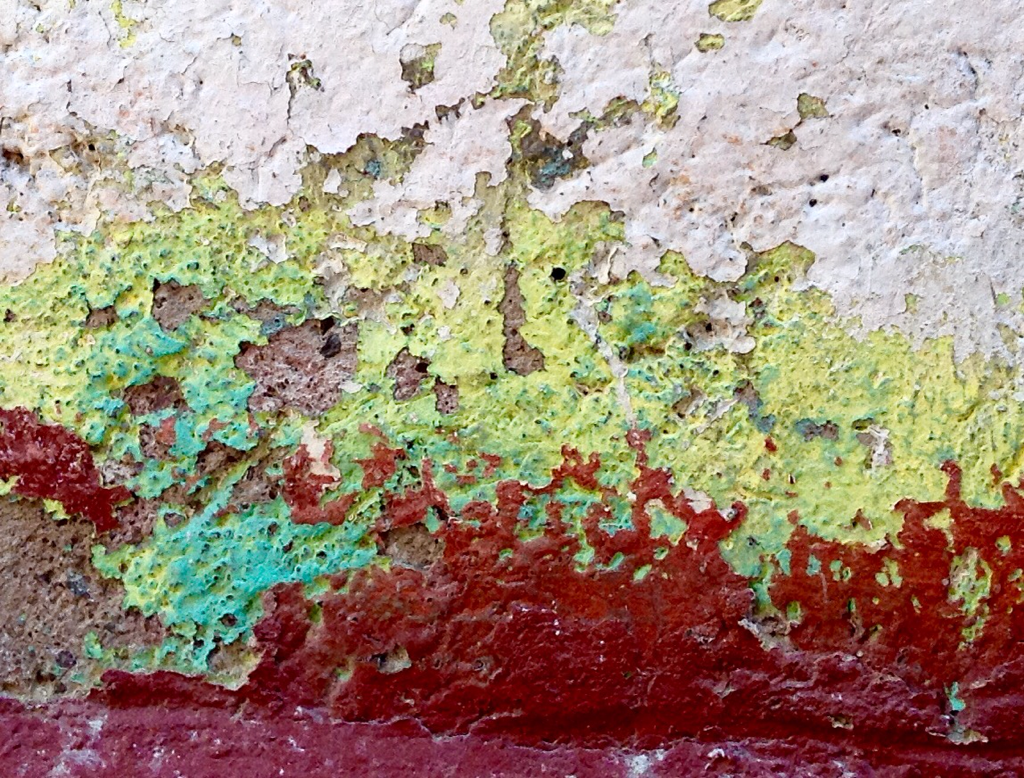
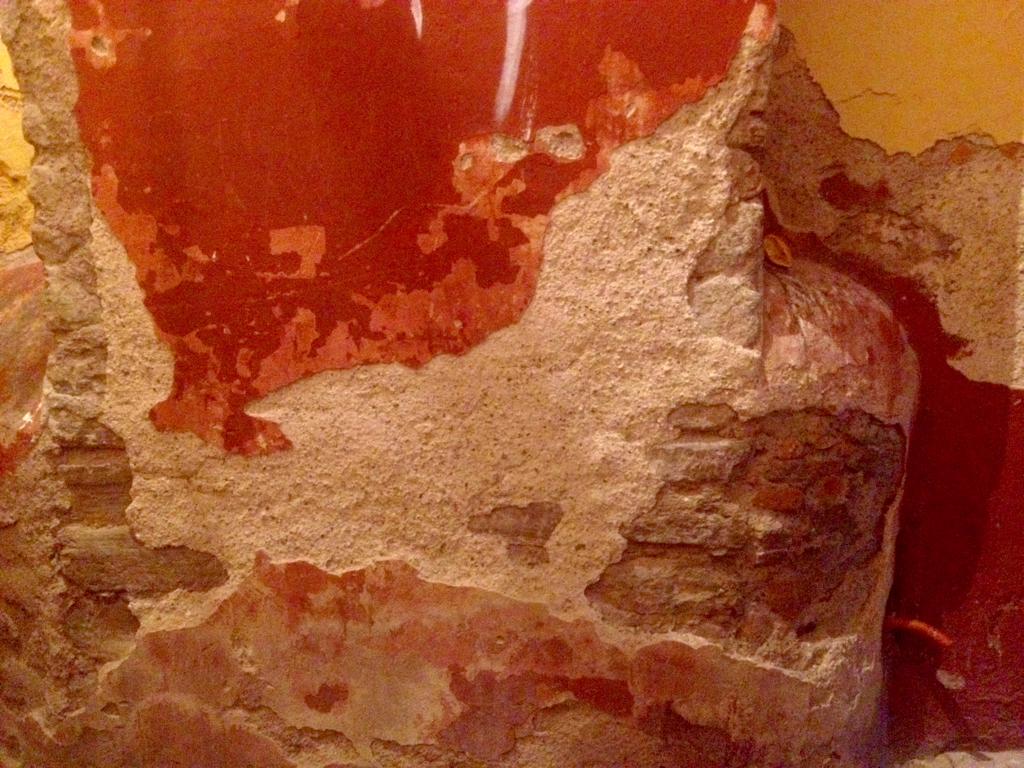
Then last week I finally started to see that the one signature-Guanajuato element that I've been captivated by is actually a worthy photo subject: the retaining walls that barely seem to be holding back the jumble of colourful, cubic houses clinging to the surrounding hills.

There's a compelling visual story in those layers of peeling paint on crumbling plaster on adobe bricks stacked on crudely cut limestone foundations. The traces of human activity in one section of wall speaks to the human habitation in this city that has its roots in the 1500s. It's quite a study in social history and handwork, an unplanned, almost invisible beauty, especially to a tourist whose port town of Vancouver has been replaced by a gleaming, pristine city of glass.

I'm seeing them as found abstracts, images of unintentional collages and mixed-media works by generations of people who work with their hands.
​
Picture
Picture
Picture
Picture
Comments

everyday video footage — with a conceptual twist

7/18/2014

Comments

 
Now that we're all carrying around the equivalent of movie cameras and photo-editing studios in our pockets and purses we are each potential blockbuster or documentary filmmakers, iMovie-ing and uploading all of life's activities that have become performative acts.
YouTube boasts 100 hours of video uploaded every minute but like digital photography devalued the actual, tactile photo album, the bombardment of everyday video footage has reduced the essential beauty of the captured moving image. What was once the miracle of the moving image is now a lot of space-hogging files we fail to manage well.

Shooting video is as easy as a screen swipe, but finding the art in what's being shot has created genres of filmmaking that surely has the Spielbergs, Lucases and Coppolas included in the one billion viewers glued to YouTube every month.

I'm addicted to capturing the cute moments of every kid in my life, but with everyone else filming countless hours of other moments of those same kids, I'm fully aware that my shots of kids at dinner, kids playing catch, kids dressing up, kids watching the World Cup, kids rolling out pizza dough, kids acting in skits, and kids with other kids may carry little value or interest in 20 years. More likely, we'll all be using some new interface model by then and all our .MOV  and M4v files will be too obsolete to translate. Or iCloud and Google Cloud and all the other cloud-like storage systems will crash in a great grid-locking e-storm and I'll have nothing left to show for all my years of hunchy running around the perimeters of play.
Picture
8 Days, 2013, installation at Vancouver Art Gallery Offsite. Photo: Rachel Topham, Vancouver Art Gallery
What will remain is a new way of seeing, understanding and playing with moving images of the everyday. It's why the plastic-bag-in-the-wind scene from American Beauty still sticks in the head. It's why Mark Lewis' real-time videos of landmarks and laundromats  resonated with the public when they were screened over the winter at the Vancouver Art Gallery's Offsite (top).

For me, it's a new kind of sketching (see above) that is not made for public viewing but for my own reference. For what remains to be seen. (YouTube vid, above)

Below, some other inspiring videos of the everyday seen with a fresh and critical eye:
Comments

Words are not enough to capture the seduction of distraction

6/6/2014

Comments

 
PictureDistracts #1, 2014, acrylic on canvas, 33"W x 27"H.
To me, the easiest part about carving out a place in the visual arts world is writing something about it. Yet most of my artist colleagues don't know how I make myself do it on a weekly basis. Easy. It only took 20 years of deadline writing for newspapers.

'Easiest' isn't quite the right word; it's more like 'reliable.' I can rely on the fact that if I sit down at a blank screen, soon words will link into sentences, inspired and connected by images. It's really just a habit at this point. If I don't get the chance to try to make literal sense of the past week, things start to swirl up into a ball of confusion. But once it's out there, it's done and I can move on. 

PictureDistracts #2, 2014, acrylic on canvas, 33"W x 27"H.
If only my days at my shared studio were as reliable. I wish I could start the morning with the same confidence as I stare at the freshly gesso'd blank canvas, and have the same conversation I get from writing a column (okay, blog). The two sides of my brain do not dance together at the studio. I do not enjoy the small eureka moments of understanding, or any great leaps forward in concept. And unlike weekly writing, I can't see that I'm creating any history of my process/progress. 

PictureDistracts #3, 2014, acrylic on canvas, 33"W x 27"H.
Some days I feel like I'm just painting myself into corners, or cycling back to where I started months ago. I often need to call in the reinforcements — artist friends — for a studio visit, when I ask, "Am I flat-lining here?" or "Am I a one-trick pony?"

But words work for me. Letters soon coalesce into strands of ideas and at the moment of this writing I see one taking shape as I type, and drop in these images of my latest paintings. 


PictureDistracts #4, 2014, acrylic on canvas, 33"W x 27"H.
This much I know is true: This is the most distractive time in human history and I live in a neighbourhood that is arguably the nation's capital of everything yoga. As I ride to the studio, I'm generally pre-occupied with this idea of the swelling dedication to personal, meditative practice juxtaposed with the seduction of our screens and the growing realization that our personal identities can be stolen in a click of a button.

PictureDistracts #5, 2014, acrylic on panel, 14"W x 16"H.
 I think about  how we crave peace of mind and heart but are captivated by the fantastic and unfathomable, packaged in high-def or in 3-D, with same-day shipping, something to Like, Share, Tweet, and post to Instagram/Tumblr/Pinterest.

Some days at the studio I just need to retreat, retrace past meditative practices, like lace-making. Other days I need to represent the fracturing of that focus.

If painting really is a conversation the painter has with the materials, surface, technique and image, I'm seeing that this is talking about mapping out an understanding of the here and now, where words fail.

PictureDistracts #6, 2014, acrylic on panel, 16"W x 20"H.
It's somewhere in the uneasy spaces between the digital and the handmade, the personal craft expression and the art and decor industry.

Put into words, it's a little terrifying to be in unexplored territory with no obvious path ahead.

I'm just bush-wacking, looking for a clearing. 

Comments

inspiration found at accountant's office

4/25/2014

Comments

 
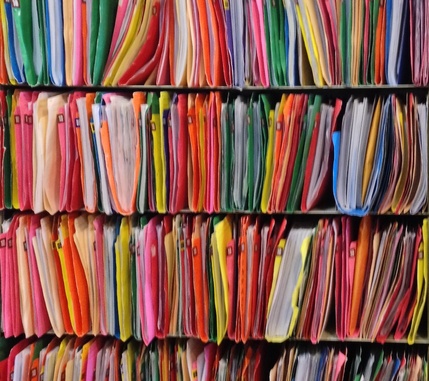
With the same anticipation as a root canal I plopped down in a chair at the accountant's office. Then gasped and pointed, then tried not to point at the adjacent bookcase stuffed with client files. 
The accountant flipped through my own paperwork. I flipped out my phone and hit the camera app while nodding vaguely. 
PictureCarlyn Yandle photo
You can have your heli-skiing, your chemically-enhanced club nights, your YouTubed jack-assery; my exhilaration comes from being confronted by these breathtaking visual moments. The effect is enhanced by the purity of the completely uncontrived art object or visual field in its incongruous environment. 

Never mind this delicious chrome-y palette that is simply a coded filing system; the whole filing...uh, object radiates with the yearly summations of individuals' spending and earnings, losses and gains that mean everything and nothing. Each colour-bound bundle evokes the stress of tax filing, of legitimizing one's existence, of facing up to the obligation of submitting and committing and remitting, of coming clean or engaging in some white-collar-cheating — or of the quiet shame in not managing to do this whole filing thing on one's own. (That can't just be me.)

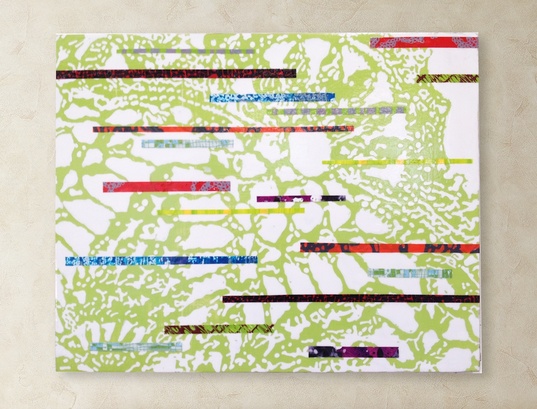
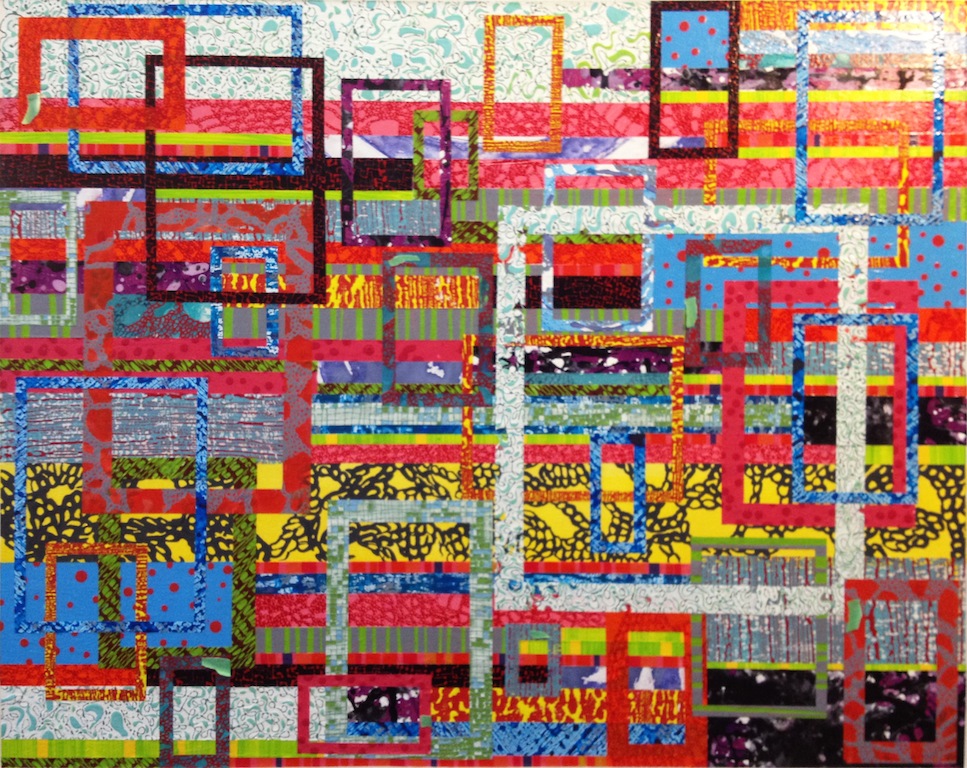
All that emotional intensity bundled and stacked and gridded is powerful stuff, but it also feels old timey, almost nostalgic now that we are squinting at the brightly-coded visual depictions in the dawn of big data. The non-object colour fields of information are persuasive and invasive, even in my own studio work. (Below: two paintings in the developing Fabrications series of acrylic on canvas.)

Digital imagery may boast sophisticated information (and limitless space) but the overstuffed file-pile at the accountant's resonates with heft, weight and compression. It's also heavy with 'the hand': the human activity of handling files, cases, persons.

Everything is awesome, as the kids insist on singing post-Lego Movie. But the relentless data-scene enhances other accidental art objects that are in opposition to lurid digital fields. I get the same visual slam when I see it in the concrete cracks between the glass condo towers, or, below, somehow blooming where they are not planted under an off-ramp and against a sub-station wall.
PictureCarlyn Yandle photo
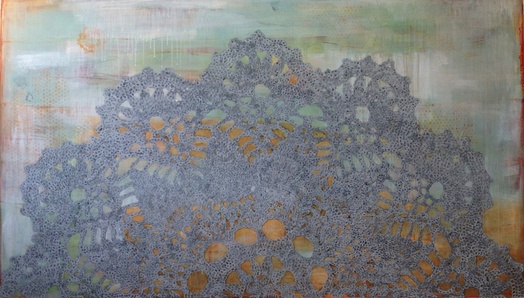
These filigree moments of respite also manage to infuse their way into my own work, quite unconsciously. It is only in hindsight that I see the impact of these accidental artworks. (See Grey Lace, below and a video documenting the making of this painting.)

Another lesson in the notion that art makes the artist.

Picture
Grey Lace, 2014, Carlyn Yandle, acrylic on canvas, 50" x 40"
Comments

QR button blanket: Epic fail or a larger reading?

3/21/2014

Comments

 
Picture
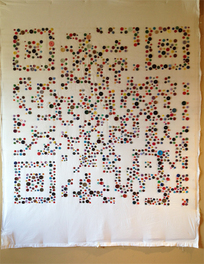
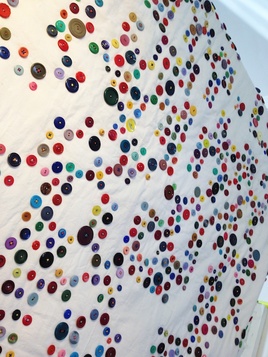
After three months of sewing one donated button after another into a giant QR code, the big moment arrived this week: time to stand back and scan that baby with a reader app, translating this quilt-thing to read, "The devil is in the details."

Except it didn't read. Don't panic!, I thought, then spent the entire next day working with a photo image of the QR Button Blanket, Photoshopping in more buttons and darker buttons and bigger buttons, trying to add the minimum amount of density for the software program to register the pattern and work its magic to produce the punchline. No luck; even a sliver of white in one button cluster puts a wrench in the wholecloth works. I filed this one under the category of Epic Fail, not worth finishing it as intended, framing it in black bias binding. I do not want to create something that is 'still' good; I want the thing to be good, full stop.

Picture
Failure demands confronting the why. Why conceive such a laborious, risky project in the first place?  Why endure the painstaking process when half-way through it was becoming abundantly clear that this was not going to 'read'?

But there is another power here, and that's tied to the process beyond the product. The achievement may lie in the endurance (in an increasingly A.D.D. world) that is not necessarily attached to the product after all. It may be in seeing it through, without the promise of a sure result. The power may lie in the humble, everyday materials and the community of women who contributed all those bits of plastic saved from the waste stream. (There should really be a global ban on production of billions of plastic buttons. Plant-based plastic, bone, wood, and leather- or fabric-wrapped tin buttons eventually return to the earth.)

But what's really starting to click in for me is the cultural reference of this button-grid design. A decade ago, it might have been viewed as an oddly arranged colour field or an abstracted grid but we're so acclimatized to codes that the pattern begs to be 'read.' The fact that this is irresolvable might be annoying. And that's interesting. 

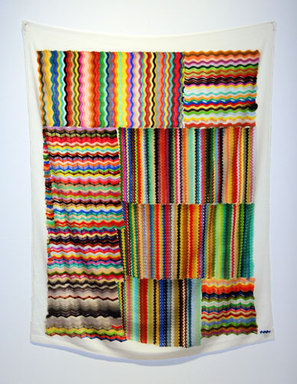
PictureWavy Gravy, marker on synthetic velvet, 58" x 43"
The possible multiple references could be more engaging than the one answer provided by a QR reader app. There's something to be learned in the discomfort of the open-endedness.

Moments like these, I seek out the artists who have embraced what New York artist Polly Apfelbaum calls the 'tough beauty' of visually exciting works that incorporate everyday materials in surprising ways. Apfelbaum, who calls herself a bad crafter, articulates the process of hard work in this video. 

"I work all the time," she says, without a schedule and in a highly experimental way. "You make the work and then you hope for the best." 

 "It's very important to get your fuck-you back."

I'm going with that.

Comments

when dress-up becomes an artform

10/18/2013

Comments

 
Picture
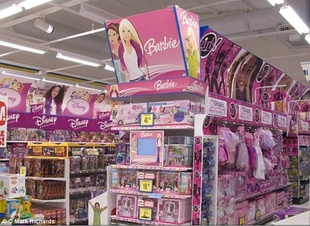
Thank god for The Walking Dead. It is the one force that has the power to kill off the overpopulation of pink princesses.

All that Pepto-Bismol-hued froth and glitter kicks in my gag reflex but I'm no censor; I've indulged in the princess fantasy of those little girls (and, shockingly, some grown women) for too many years to mention. But there is hope. Pink fatigue appears to have set in this year, at least for Halloween, due, no doubt, to the craze for the undead.

Next battle: the pink aisle.

Princesses and stupid Sexy costumes (popular YouTube clip at the end of this rant) are a waste of a great fantasy opportunity — and an art opportunity.

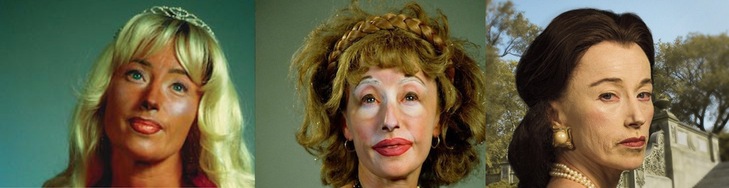
American photographer Cindy Sherman's long and rich career dedicated to using her body as a blank canvas on which to apply various female personas, makes her an artist of an ever-changing body-sculpture, earning her an important position in conceptual art, performance art, and gender studies.

Picture


There's a lot of concept to be mined when altering one's appearance, whether for art or undercover information. Former New York Times restaurant reviewer Ruth Reichl, who donned disguises to ensure she would be treated as a regular restaurant patron, discovered that her different range of personas garnered different reaction from the wait staff. That body effect became equally as interesting as her reviews, and even more so to many of her readers.

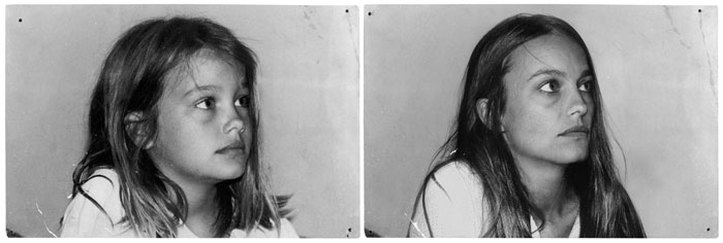
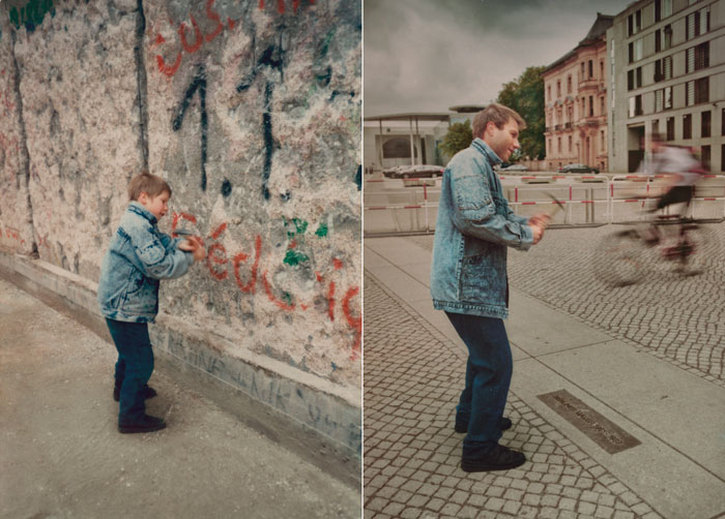
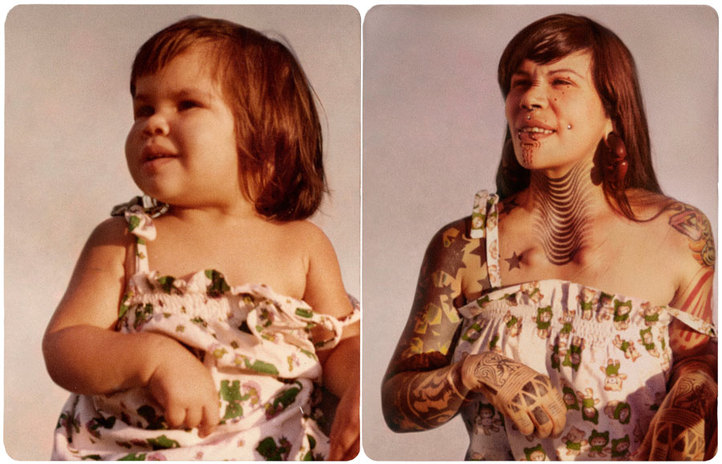
Buenos Aires photographer Irena Werning explores the persona of the past, recreating photos of subjects using their own childhood images. She not only recreates the pose and garments, but goes to great lengths to mimic the backdrops and particular photo quality of the original image. Werning insists she has no arching concept in mind in her two-part series, but the effect is there in black and white or colour: a riveting time-based visual study in changes in body and persona.

Picture
 

Picture
Above: Christoph 1990 and 2011, Berlin Wall.

Picture
 

Comments

From a five-year-old's paintbrush to my soul

9/20/2013

Comments

 
Picture
What movie first rocked your world?, someone asked during a recent dinner with friends. Easy: 2001: A Space Odyssey, said one. Looking for Mr. Goodbar, said another, clearly remembering her fear.
Mine was The Wizard of Oz. Never mind the munchkins and the flying monkeys; I was captivated by the black-and-white horror of the dustbowl twister, the gleaming-gold yellow brick road, the brilliant glassy cluster on the horizon that was the first glimpse of Emerald City.

So when my nearly-six nephew, also a bit of an obsessive Wizard of Oz movie fan, showed me his latest paintings, all I could think of is: I feel you.

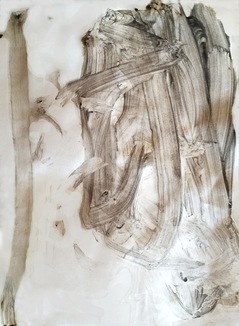
I look at the thick column of furious grey strokes going in all directions and immediately zone into his own fearful recollections of that part in the movie as he attacked the paper. That ability to connect the intensity of feeling by the maker to the viewer is the basis of successful art. Wow, I said. I can really feel that. 

Picture
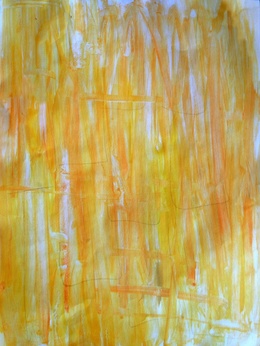
I was thinking how great it would be to feel the twister myself, using ink on hand-pressed paper and maybe actual dust, while he trotted back to the kitchen and retrieved Yellow Brick Road. The field was filled entirely with almost mechanical vertical strokes in different shades of orange, yellow and gold, with intersecting strokes to form a grid that ran off the paper, suggesting an endlessness. 
Wow, I said again, thinking already how it might look actual road-size, using rollers on stretched canvas.
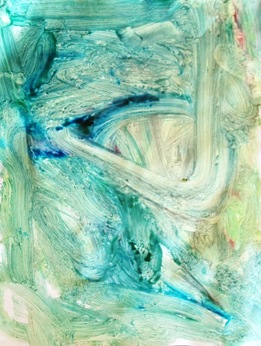
Back he went, returning with Emerald City, and by then I knew this kid was really onto something. Unlike his drawings, which are these days more narratives involving figures and recalled landscapes, or — my current favourite: a bird's eye view of a baseball game — this series was expressed feeling-first. Not so much on telling the story but recalling the feeling, through colour and stroke. 

Picture
Kids have so much to tell us about what not to do when staring at a blank canvas. Maybe not so much with the analysis, the second-guessing, the pre-planning, the systemization. 

Just attack. Jump right in. Look at each stroke as it's going down and  do not bother yourself with committing to spending more than a few minutes on it. You may not feel the urge to let a puppet take over the paintbrush or let your inner Scurvy Pirate out for a song but it's good to wrap it all up in play. Like another friend, a modest but gifted artist likes to say, "I'm just playing."

My nephew's paintings remind me not to be so precious about the results. It's about the making, not the amassing. Only the adults care about keeping them.

I can see some auntie-nephew collaborations down the yellow brick road.

Picture
American illustrator and graphic artist Mica Angela Hendricks writes about the world that opened up for her with she began collaborating with her four-year-old.

Her blog updates her creative process that is challenged by her daughter with her own ideas. 


Comments

Getting ready to scream 'Woo!' with the rest of you

9/13/2013

Comments

 
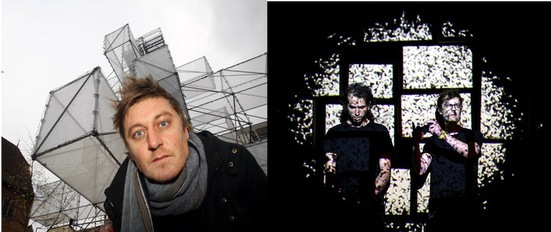
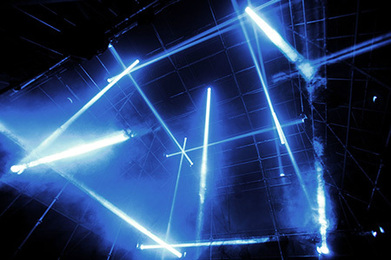
You can thank Europeans’ dwindling Christian faith for a sensory bombardment that's taking over Europe. The poor attendance at all the churches and cathedrals has been a boon to a new totally immersive art-architecture experience of sound and image, artist-architect Francois Wunschel said in a lecture at Emily Carr University Wednesday night, while fellow Frenchman musician Fernando Favier manipulated the audio. 
PictureFrom left: Pierre Schneider, in front of a scaffolding support; Fernando Favier and Francois Wunschel.
All these old, underused stone edifices became opportunities to develop new forms of public engagement, said Wunschel. Pierre Schneider, his colleague at the Paris-based 1024 Architecture firm, shared with the audience some video examples: building facades visually distort and morph into faces; public squares transform into pulsating spaces of light and sound, all controlled by simple devices like a public microphone or a joystick.

Using MadMapping — AutoCad-like building-design software that overlays the spaces on actual architecture — Wunschel and Schneider are innovators in the growing artform that turns hard surfaces into an embodied experience that has become a signature European urban festival experience.

Picture
Tonight Vancouverites will get a (free) taste of all that at 10 p.m., behind Emily Carr’s digital media building on Great Northern Way, when the Paris team joins forces with some local artists as they premiere Live/Work, a 10-metre cube of scaffolding that promises to be a “manifestation of interdisciplinarity, collaboration and an exploration of the contemporary landscape in relation to changing cultural and economic conditions.” Gotta love that artspeak. (Translation: A bombardment of lights and sound that will have the locals yelling, “Woooooo!”)

Hypercube is all part of the New Forms Festival 13.

Below: Two videos of distinctive, immersive physical experience of sound, light: A voice-activated setup allows the public to animate a building in Lyons, France. At bottom:  Transporting a dance club crowd through light and sound.
Comments

Stumped again by basic rules of composition

6/14/2013

Comments

 
It's funny how some learning moments can be instantly locked into your hard drive forever while others will keep smacking you in the face, like Sideshow Bob stepping on rakes.

I look forward to the day when basic rules of composition come naturally, but until then I will continue to waste a lot of time and materials creating visual fields that are uncomfortable, underwhelming and just... wrong, somehow.

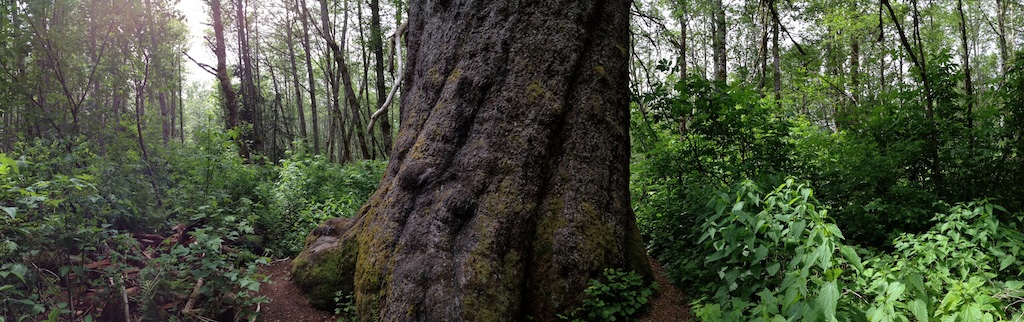
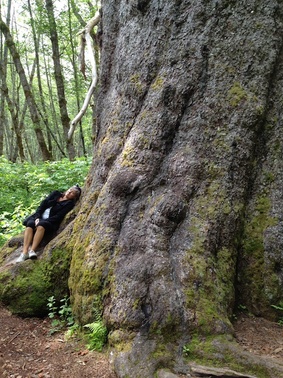
Take this photo I took a couple of weeks ago. (Please!) Why do I insist on hacking up the space with a dead-centre subject? I literally can't see the forest for the trees here. It takes this special kind of inability to reduce this giant 500-year-old living Sitka spruce to just another stump. 
Picture
Picture
But the bigger problem here is lack of scale. I may have felt insignificant beside this ancient giant organism, but it sure doesn't show it. I'd like to blame my basic lack of compositional abilities on my focus on patterns over subjects, but that's pretty much a cop-out.

Meanwhile, Mr. I Don't Take The Photos managed to capture all the scale and detail in one take, and was clearly not fixated on including the whole trunk in the view-finder.

Scale can be critical in an art practice. It's everything to Ontario photographer and artist Edward Burtynsky, who captured China's massive scale in Manufactured Landscapes (Burtynsky talks about the Canadian landscape inspired him, in this Ted Talk.)

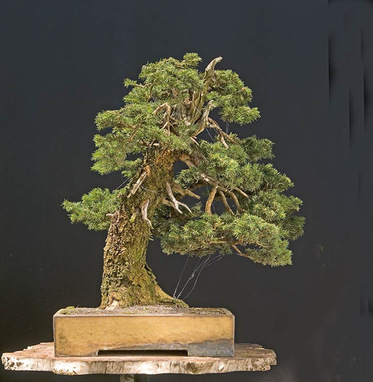
I have to remind myself that scale is not about size, but size differential. This 20-year old table-top spruce bonsai "developed" by a German bonsai master (below) possesses its own tiny might. But here again I'm a little lost. Would including the hand of the grower (stunter?) emphasize the scale or reduce the potency of the image?

Picture


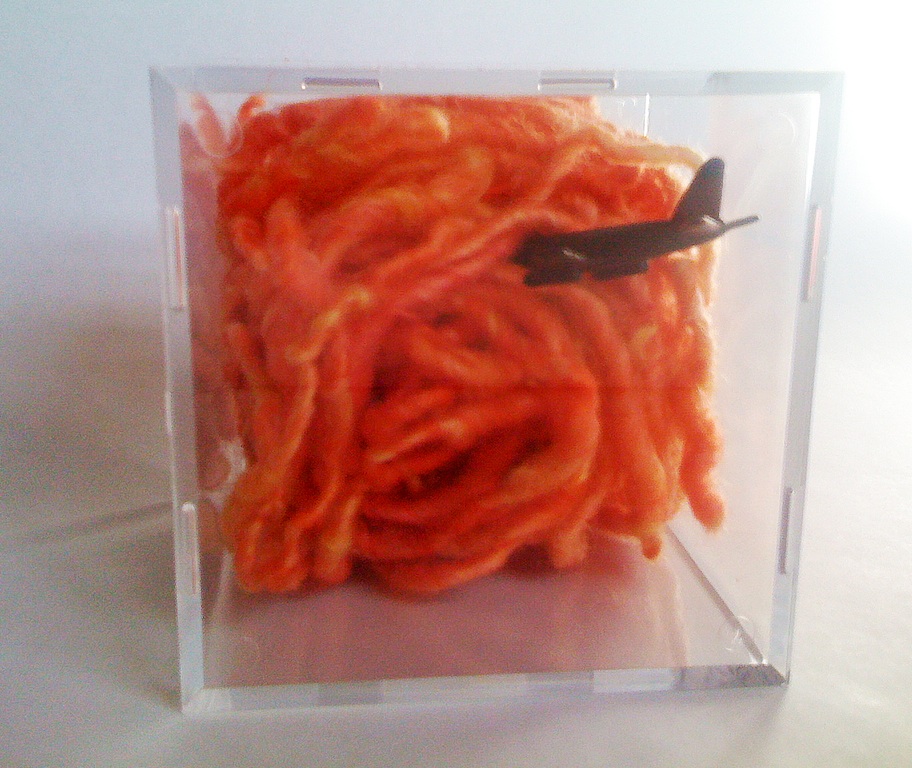
As an exercise, I've been wrestling with scale using four-inch acrylic cubes. In this one, a toy airplane gives a mass of orange wool gains scale — and narrative.
Picture
Does understanding scale take some innate way of seeing the world, as in Burtynsky's work? Or is it just about learning to avoid the usual mistakes, like getting sucked into iPhone's panorama camera feature? 

Or scribbling 18" instead of 18' on the back of napkin that resulted in an underwhelming Stonehenge prop:
Comments
<<Previous
    Cross-posted at
    carlynyandle.substack.com

    browse by topic:

    All
    Abject
    Abstract
    Abstract Embroidery
    Abstraction
    Abstract Painting
    Abundance
    Accumulations
    Acrylic
    Activism
    Additive
    Aesthetics
    Agency
    AgentC Gallery
    Aging
    Alison Woodward
    Aluminum
    Anxiety
    Appropriation
    Arcade Fire
    Architecture
    Arleigh Wood
    Art
    Art Activism
    Art Blog
    Art Business
    Art Discourse
    Art History
    Artifact
    Artist
    Artist Residency
    Artist Statement
    Artist Talk
    Art Marketing
    Art Quilt
    Arts And Crafts
    Art School
    Art Show
    Art Spiegelman
    Assemblage
    Author
    Banksy
    Bauhaus
    Beauty
    Betsy Greer
    Big Data
    Billy Patko
    Binding
    Blogs
    Blog Tour
    Bob Krieger
    Body Of Work
    Books
    Boro
    Braided Rug
    Braiding
    Bruce MacKinnon
    Bruce Mau
    Building
    Bull Kelp
    Burlap
    Business
    Buttons
    Canadian Artist
    Carlyn Yandle
    Caroline Eriksson
    Cartoon
    Ceca Georgieva
    Challenge
    Charley Yandle
    Children
    Christmas
    Cindy Sherman
    Circular Thinking
    Cirque Du Soleil
    City As Site
    City Planning
    Cityspace Gallery
    Clay Yandle
    Climate Change
    Cluster
    Cob
    Cob Oven
    Collaboration
    Collage
    Collection
    Colonialism
    Color
    Colour
    Commission
    Community
    Community Building
    Composition
    Conceptual Art
    Conceptual Craft
    Connection
    Connie Sabo
    Construction
    Coronavirus
    Cosplay
    Costume
    Counter Culture
    Counter-culture
    Cover
    Cover-19
    Covid
    Craft
    Craft Blogs
    Craft Camp
    Craftivism
    Crafts
    Craftsmanship
    Creative Process
    Critique
    Crochet
    Cross-stitch
    Cultural Hub
    Cultural Studies
    Culture
    Culture Jamming
    Culturejammingc9d75664fd
    Current Conditions
    Cycling
    Dafen Village
    Dallas-duobaitis
    Dance
    Data-graphic
    Data-graphic
    David Weir
    Dear Human
    Decorations
    Deep Craft
    Denim
    Denyse Thomasos
    Design
    Digital Art
    Discomforter
    Display
    Dissent
    Distraction
    Distracts
    DIY
    Doilies
    Doily
    Domestic
    Domestic Interventions
    Douglas-coupland
    Draw Down
    Drawing
    Dressed
    Drip By Drip
    DSquared2
    Dude-chilling-park
    Dyeing
    Dystopia
    Eastend
    Eastside Culture Crawl
    ECUAD
    ECUAD MFA
    Editorial
    Edward Burtynsky
    Eggbeater Creative
    Embellishment
    Embroidery
    Emily Blincoe
    Emily Carr Cozy
    Emily Carr University
    Entanglements
    Environment
    Environmental Art
    Exhibit
    Exhibition
    Expanded Painting
    Experimentation
    Exploration
    Expression
    Fabric
    Fabricating
    Fabrication
    Facebook
    Failure
    Fashion
    Fashion Revolution
    Fast Fashion
    Feminisim
    Feminist
    Feminist Art
    Festival
    Fiber
    Fiber Artist
    Fiber Arts
    Fibre
    Fibre Arts
    Film
    First Saturday Open Studios
    Flo
    Flow
    Forage
    Foraging
    Form
    Form And Function
    Foundlings
    Found Materials
    Found Objects
    Fractal
    Free Store
    Fuckwit
    Fuzzy Logic
    Gallery
    Gallery-row
    Garden
    Gardening
    Garment
    Gathering
    Gentrification
    Geometric Art
    Gill Benzion
    Gingerbread
    Globalization
    Glue
    Goblin Core
    Grad 2020
    Graffiti
    Grannycore
    Granny Square
    Granville-island
    Green Space
    Grid
    Grief
    Guanajuato
    Guerrilla Art
    Guerrilla Girls
    Halloween
    Handmade
    Handmaking
    Hand Stitching
    Hand-stitching
    Handwork
    Hashtags
    Haywood Bandstand
    Healing
    Health
    Hearth
    Heirloom
    Hideki-kuwajima
    Hoarding
    Homelessness
    Homemade
    Hot Art Wet City
    Housing
    Hybrid Thinking
    Ian Reid
    Ian Wallace
    Ideas
    Identity
    Images
    Imagination
    Immersive Art
    Improvisation
    Incomplete Manifesto For Growth
    Industrial Design
    Industry
    Innovation
    Inspiration
    Instagram
    Installation
    Installation Art
    Intervention
    Intrusive Thoughts
    Invention
    Irena Werning
    Ironing
    Janet Wang
    Jeans
    Jeff Wilson
    Joel Bakan
    Joseph Beuys
    Joseph-wu
    Journalism
    Joyful Making In Perilous Times
    Joyfulmakinginperiloustimes
    Judith Scott
    Kamala Harris
    Kids Art
    Kim Piper Werker
    Kimsooja
    Kintsugi
    Knitting
    Knots
    Knotting
    Kyoto
    Labor
    Labour
    LA Fires
    Landon Mackenzie
    Landscape
    Leanne Prain
    Lecture
    Lighthouse
    Linen
    Liz Magor
    Log Cabin
    Logo Sweater
    LOoW
    Lost Painting
    Lumiere Festival
    Lynda Barry
    Macrame
    Maker
    Making
    Making Is Connecting
    MakingIsConnecting
    Malcolm Gladwell
    Male Gaze
    Mapping
    Maquette
    Marie Kondo
    Marketing
    Mark Lewis
    Martha Rosler
    Martha Stewart
    Masks
    Material Exploration
    Mathematics
    Maya
    Media
    Meditation
    Meditative
    Mending
    Mend In Public Day
    Mental Health
    Metalworker
    MFA
    Mister Rogers
    Mixed Media
    Mobile Art Practice
    Monique Motut-Firth
    Monster
    Monte Clark
    Mosaic
    Motivation
    Mt. Pleasant Community Centre
    Mud Girls
    Mural
    Mushroom
    Mycelium
    Narrative
    Natalie Jeremijenko
    Nature
    Needlework
    Neon
    Net
    Network
    Networking
    Neuroplasticity
    New Forms Festival
    Newspapers
    Nick Cave
    Noah Goodis
    North Vancouver
    Obtrusive Thoughts
    Omer Arbel
    Online Talk
    Openings
    Organization
    Origami
    Overabundance
    #overthinking
    Paint
    Painting
    Pandemic
    Paper
    Paper Sculpture
    Papier Mache
    Parkade Quilt
    Patchwork
    Patriarchy
    Pattern
    Pecha Kucha
    Pechakucha
    Perception
    Perfectionism
    Performance
    Performance Art
    Personalispolitical
    Photography
    Playing
    Political Art
    Political Satire
    Polly-apfelbaum
    Pompidou
    Poodle
    Pop-Up
    PopUp
    Port Coquitlam
    Portrait
    Practice
    Process
    Production
    Profession
    Project
    Protest
    Protest Art
    Psychedelic
    Public Art
    Pussy Hat
    Pussy-hat
    Qr Code
    Quilt
    Quilt Block
    Quilting
    Quilt Painting
    Rachael Ashe
    Rachel Lafo
    Ravages
    Raw Materials
    Rebar
    Recycle
    Recycling
    Reflection
    Reflektor
    Reimagine
    Renewal
    Repairing Is Caring
    RepairingIsCaring
    Repetition
    Research
    Residency
    Resistance
    Resurge
    Retreat
    Re-use
    Rhonda Weppler
    Richard-tetrault
    Richmond Art Gallery
    Right Brain
    Rondle-west
    Roses Against Violence
    Rote Activity
    Rug
    Ryan-mcelhinney
    Safe Supply
    Safety
    Sampler
    Sarah-gee-miller
    Sashiko
    Saskatchewan
    Scaffolds
    Scaffolds I
    Scale
    Scraps
    Sculpture
    Seasonal Decor
    Seattle Art Museum
    Seaweed
    Seismic Rug
    Semiotics
    Sewing
    SharingIsCaring
    Sharon Kallis
    Shawn Hunt
    Shigeru Ban
    Sketchup
    Slow Craft
    Smocking
    Social Art
    Socialart
    Social Distancing
    Social Distancing Hat
    Social Engagement
    Social-engagement
    Social History
    Social Justice
    Social Media
    Soft Sculpture
    South-granville
    Space Craft
    Spore
    Stitching
    Storage
    Street Art
    Studio
    Styrophobe
    Subversive Stitch
    Surrealism
    Surrey
    Tactical Frivolity
    Tactility
    Tagging
    Talking Art
    Tapestry
    Tattoo
    Teamlab
    Technology
    Terry Fox Theatre
    Text
    Textile
    Textile Art
    Textiles
    Thrifting
    Thrift Stores
    @tinypricksproject
    Tiny Pricks Project
    TJ Watt
    TO DO
    Tools
    Toronto Design Offsite
    Toybits
    Trash
    Trash Art
    Travel Art
    Trevor Mahovsky
    Trump
    Typography
    Tyvek
    Unbridled
    Unfixtures
    Upcycle
    Upcycling
    Urban Design
    Use Object
    Use Objects
    Utility
    Value Village
    Vancouver
    Vancouver Art Gallery
    Vancouver International Airport
    Video
    Video Tour
    Visual Field
    Visual-field
    Visual Language
    Wabi-sabi
    Wallace Stegner House
    Wall Hanging
    Waterwork
    Wearable Art
    Weaving
    William Morris
    Women's March
    Wood
    Wool
    Work Wraps
    Wrap I
    Wrap II
    Writing
    Xenobia Bailey
    Yarn Bombing
    YVR
    Zaha Hadid
    Zendoodle
    Zero Waste Art
    Zero-waste Art

    Archives

    January 2026
    December 2025
    November 2025
    September 2025
    May 2025
    April 2025
    March 2025
    January 2025
    December 2024
    November 2024
    October 2024
    September 2024
    August 2024
    July 2024
    June 2024
    October 2022
    August 2022
    June 2022
    November 2021
    April 2021
    September 2020
    April 2020
    December 2019
    November 2019
    September 2019
    August 2019
    July 2019
    June 2019
    April 2019
    November 2018
    July 2018
    May 2018
    November 2017
    September 2017
    June 2017
    April 2017
    March 2017
    February 2017
    December 2016
    November 2016
    September 2016
    July 2016
    March 2016
    February 2016
    January 2016
    December 2015
    November 2015
    October 2015
    September 2015
    June 2015
    May 2015
    April 2015
    March 2015
    February 2015
    January 2015
    December 2014
    November 2014
    October 2014
    September 2014
    August 2014
    July 2014
    June 2014
    May 2014
    April 2014
    March 2014
    February 2014
    January 2014
    December 2013
    November 2013
    October 2013
    September 2013
    August 2013
    July 2013
    June 2013
    May 2013
    April 2013
    March 2013
    February 2013
    January 2013
    December 2012
    November 2012
    October 2012
    September 2012
    August 2012
    July 2012
    June 2012
    May 2012
    April 2012
    March 2012
    February 2012
    January 2012
    December 2011
    November 2011
    October 2011
    September 2011
    August 2011
    June 2011
    May 2011
    April 2011
    March 2011

Powered by Create your own unique website with customizable templates.
Picture