carlyn yandle
  • about
  • the creative process
  • crafted objects
  • public art
  • painting
  • exhibitions
  • contact

A material love-hate relationship

10/12/2024

 
Masks keep our germs to ourselves but I don't have to like them

People! Am I going to have to bring out my Social Distancing Hat again? Everyone I know is either in the grips of one plague or another or sharing stories about a friend with Long Covid or flu or RSV. And that friend is possibly me (cough cough).
Picture
Social Distancing Hat, March 2020
I’m just kidding about the hat; we Westcoast Canadians have umbrellas for that, at least for a solid seven months out of the year (and we wonder why we’re considered a reserved lot). I trashed the hat shortly after parading around in it for a little levity during Lockdown 2020. In retrospect, ridding myself of the wide-brimmed artwork was overly aspirational. I was obviously oblivious to the power of airborne illnesses to return like that damn leak in my studio every time it rains.

The joke’s on me these days. Embracing more social-distancing practices could have saved me from the cold/flu thing that hit Labour Day weekend and settled into my bottom right lung as pneumonia by month’s end. I did take general precautions: stayed home or sequestered in my leaky studio when I was feeling poorly; bowed out from gatherings and even coffee-shop meetings; took four of the reliable at-home COVID-19 tests over the course of this cough, even doing the whole thorough gaggy throat-scrape method. When they came out negative, I went back out into the world. I was sick of the social isolation.

I was so ready to re-gather with friends that I willed myself to not notice that all the women pushing the dim-sum carts were in masks, even as I barrelled past them to go outside for a coughing fit. I did take advantage of courtesy hand-sanitizer pump bottles at the entrance of shops and public buildings but I did not, would not see the masked-up cashiers, receptionists, servers, tellers and baristas as a sign that I should be following suit.
​
For the record, I was an early mask-adopter even before the spring of 2020. I saw more foreign-exchange students at art school masking up as early as January, and by the end of February, many weren’t coming into class at all. Seeing people in masks was normal to me since my 20s when I lived in Japan, where several commuters in any given train car were masked up, even little kids. When I moved back to Vancouver I lived near Chinatown where masks on faces are commonplace. So by the time the mask mandatehit I was already on it.
Picture
Pandemic-era Instagram posts (clockwise from top left): Early mask prototype; Photoshop’d Captain Vancouver statue; the best use of the MFA Class of 2020 graduation regalia; tiny crocheted masks for store-bought bunnies, Easter 2020 gifts.
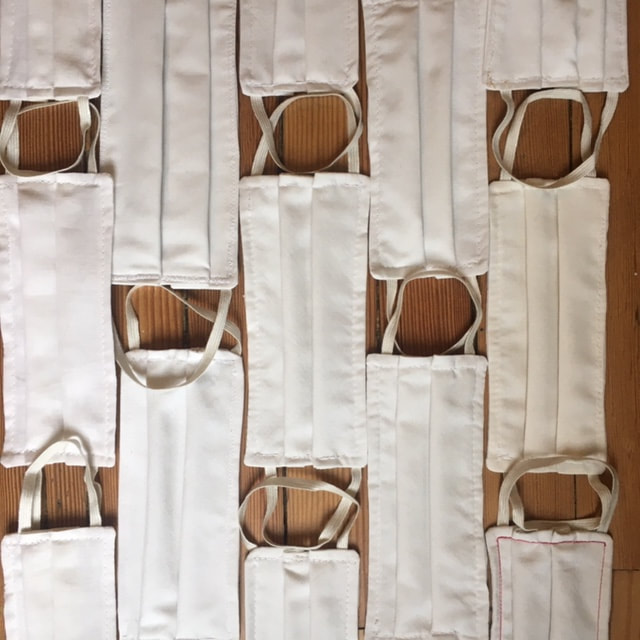
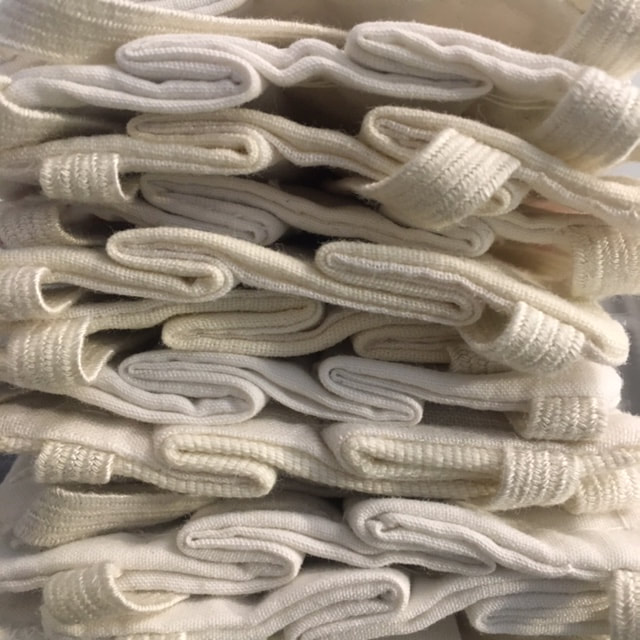
In those first few eerie weeks of lockdown, when many people were wondering if it was safe to venture out of doors at all, I was part of a growing army of makers sewing up three-layer cotton masks, refining my design as I went and sharing the method online and materials in a system of drop-offs and pick-ups. I’ve made dozens on dozens of masks when the scant supply was reserved for frontline workers. I only quit when stockpiles showed up in Dollarama.
Picture
Instagram posts of some of many masks made for the masses in 2020
I don’t like thinking about those dark times, nor the long-term effects of that era of social isolation on ourselves, our kids, our community, our economy, our society. (Even as I write, my father, in long-term care, is being isolated for COVID-19 and he doesn’t understand why.) And I don’t want to consider the import of this:

Picture

Or this:
Picture

My knee-jerk reaction is to just move on from the whole masking-up rigmarole even as we’re all getting ready to hunker down indoors for the winter. Is that my privilege talking? Or is it growing up at a time and place when runny-nosed kids were just a fact of life? What’s it going to take for folks like me to adapt to masks as the norm in elevators, on buses, in Costco, at the dentist waiting room or the coffee shop lineup, even when feeling well?
​

Masking up is practical and courteous but I loathe the loss of any more social connectivity, including our unique ability to absorb facial micro-expressions that convey deeper communication — that one advantage humans have over AI and our future robot overlords (for now).

Repairing is caring

9/21/2024

 
Making things better requires thinking creatively, not throwing it all away

Can you do me a favour, a neighbour-friend asked, and I knew his sweet, destructive dog had done it again.
The pup, bred to herd, over large tracts of land, has made uneven progress adjusting to his home in an inner-city townhouse. Over the past year I’ve patched up a sofa seat cushion he was on his way to destroying; re-stuffed his new, disemboweled dog bed; and fancy-stitched an L-shaped rip on a beloved, specially-ordered Western-style shirt (the friend’s, not the dog’s).

On his most recent visit, his owner held up Exhibit A: a favourite art T-shirt with a bite-shaped chunk out of the edge of the sleeve. And then Exhibit B: the same cherished Western shirt I repaired a while ago, now with gaping hole in the lower back.

Do you think the dog might be trying to tell you something? I asked. He gave me the look of one who’s heard that line a lot. But I kid. It is my pleasure to do these repairs. He knows it and I’m sure he felt just as good about bringing over a slow-cooked pork roast when I was consumed by grief.
​
Making is connecting. I share this no-sew method to inspire others to think twice before chucking a favourite piece of clothing. To me, this twice-repaired shirt is a perfectly imperfect object, now rich with the layer of meaning of That Time the Puppy Ate A Hole In My Shirt, over the previously added layer, Fancy Embroidery Where the Puppy Ripped My Shirt. It all connects with the Japanese idea of kintsugi, the obvious and artful repair of broken objects:
Picture
Making useless stuff like artwork is fine for the gallery but I get more satisfaction making useful things out of material that’s already in the world, items that would otherwise be thrown away because we know there’s no “away.”
​
This week, that satisfaction came from taking a can of flat black spray-paint to a metal filing cabinet (everyone’s dumping them; the local Craigslist listings alone showed 36 for sale and three for free this weekend) and converting it into a bamboo planter on casters.
Picture
Perfectionism is part of a runaway capitalist system of productivity and purchase. It exists as a superlative in a black-and-white worldview. I distrust this fixation on perfection and what some will do to try to get there.

There is no time or space in this system for down-to-earth conservation ideals like “make do and mend” or “use it up, wear it out, make it do, or do without.” Those Great Depression directives feel quaint in this Great Production era of stuff, even in the face of climate catastrophes.

Repairing is caring — for the object or material, for the person who connects with it, for its history and against wastefulness. It’s a wabi-sabi mindset that values time-worn objects and materials in direct opposition to the sterility of perfectionism. Sharing ideas and building on that knowledge knits up community and reinforces our commonality despite divisive political forces.

This is how repairing a shirt for a friend or finding new life for a throwaway thing and sharing those ideas are small political acts of resistance to market forces that see us as individual consumers to be fuelled with desire for luxury and novelty.
​
Living simply, with our imperfections relegates self-identifying artists and makers to the fringes in a perfectionist world. I happily make do with that.

Halloween a reminder of fiery end to a neighbourhood hub

10/22/2022

 
Just a week before Halloween — prime creative costume time — we in these parts are again reminded of the tragic, toxic end to our local Value Village.

The general love-hate relationship came to a fiery finish one summer night four months ago yet I can’t shake thoughts of all the stuff that went up into black, acrid smoke that hung over the East End the next day. Those long aisles thick with petroleum-derived clothing, incinerated. The shelves on top of those aisles crammed with knicknacks, contorting in flames. The baskets would have burst first but would the candles, as accelerants, have melted the glass vases? I would like these images to stop.
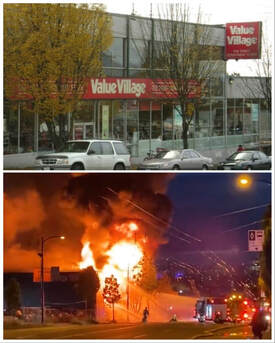
PictureThe Hastings/Victoria Value Village linked the communities of Hastings Sunrise, The Drive, and the Downtown Eastside. Until it didn't. (Found photos)
I’d like to make peace with the fire, seeing it as the ultimate cleanse, a final decluttering. But there’s a bigger hole beyond the charred rubble that remains today; after 40 years we’ve lost a social hub that attracted a colourful congregation of non-conforming fashionistas, DIYers, vintage-hunters and regular folk of all ages and on limited budgets from all over Hastings Sunrise, the Downtown Eastside and The Drive.

Yes, the prices were crazy by the end — you could get the same wine glass for a buck cheaper at the newish dollar stores a few blocks away — and the recent switch-over to self-checkouts led to some comical performance-art moments. But the diverse, unpredictable clientele was generally served well by employees and security guards with the steely nerves of air-traffic controllers.

And yes, this was no mom-and-pop shop but one of more than 300 locations here in Canada, the U.S. and Australia. Savers, Inc. is an international, privately-held company far removed from its original San Francisco thrift shop that opened in an old Mission District theatre in 1954.

To fully appreciate our local loss you would have to go back to 1980 when this Value Village opened, the first one in Canada (near as I can figure; someone please correct me on this). Before that, the only cheap one-stop clothing/housewares store in the vicinity was Zellers, further east up the hill, which used to be Fedco. (Insert Napoleon Dynamite sigh here.) All that changed when the department-sized thrift store opened us up to a whole world of self-expression. We could actually afford to take fashion risks, and they could include long wool coats from the '40s or '50s, '60s glam boots or ’70s caftans — the opposite of the flimsy fast-fashion mall stock that fed the summertime fire. (“I took pride in being alternative,” my youngest sister says. “I was teased by some random teens though.”) It was also an escape of the day, the kids, the worries, where one can mindlessly flip through those racks of clothes like beads on a rosary, with no chance of encountering pushy sales staff.

So I guess this is an overdue obituary, the kind that would be written about someone who was quite the opportunist and just a little creepy but who also opened up the door for us to question the status quo, think creatively, fly our freak flags and mingle with the all-sorts people in the neighbourhood.

Above: The East Hastings Value Village was one of the few hassle-free spots left where a diverse community of regulars could find basics, fun stuff and common ground.  (Found photo)
Joyful Making in Perilous Times

9/10/2020

 
Where is the joy when you’re living in a time of a global coronavirus pandemic and a local toxic-drug epidemic? What is the use of making when your city is seized by global investment-real estate schemes, when there’s too much stuff in a overheated planet and a hateful, superpower president next door?

These questions ricochet around my brain, only abating when this futile, exhausting expenditure of energy hones in on the rote activity of knotting and needleworking. The hand-wringing falls into rhythm as I grasp at lost, tossed threads that I make whole and into whole new ideas.

Making is a very personal physical reaction to perilous times and unstable circumstances but working with found fibre is also an intrinsically social action that weaves in disparate economic circumstances, language, race, age and abilities. Braiding, stitching, knotting, needleworking create resilient connective tissue between one body and another. Strands thicken into solid links between the ancient and the modern, utility and self-expression, the digital and the physical, the personal and the political.

By exploring the inherent qualities of abject manufactured material, the body binds with other bodies and other places, some known, some not. It is work, but outside the tumultuous dominant economic system. It is an experience of the history of production and distribution through the material at hand.

Even in these times, when gathering around a table is a hazardous activity, when our pack species is feeling at loose ends, masked up and reluctantly apart, the tactility of rote hand-making grounds us into the here and now, one stitch, one loop, one knot at a time. We grasp at the tendrils, continuing the work, with the results standing as artifacts of a time, place and our individual and collective states of being.​

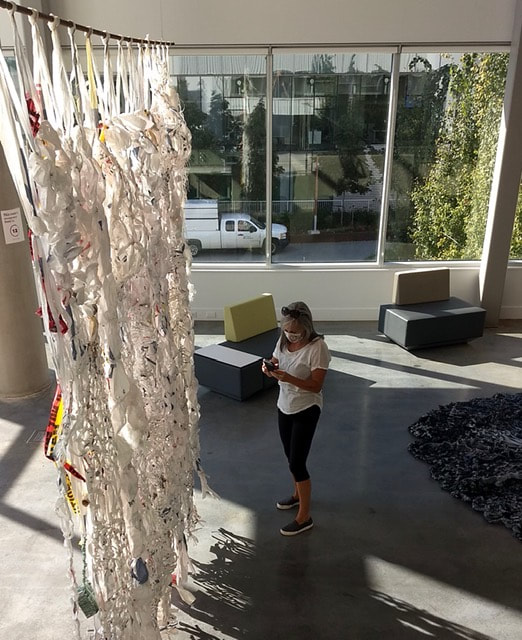
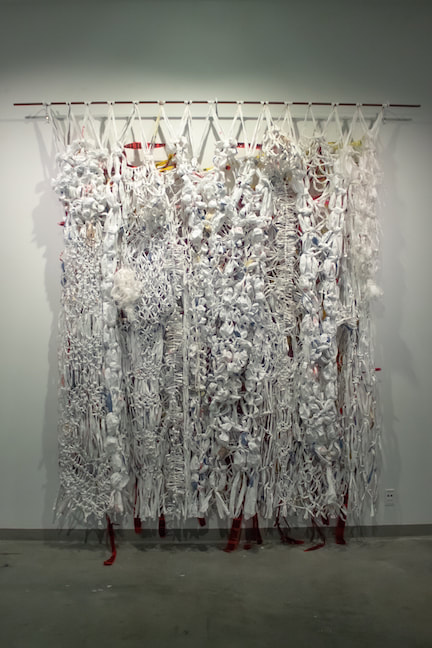
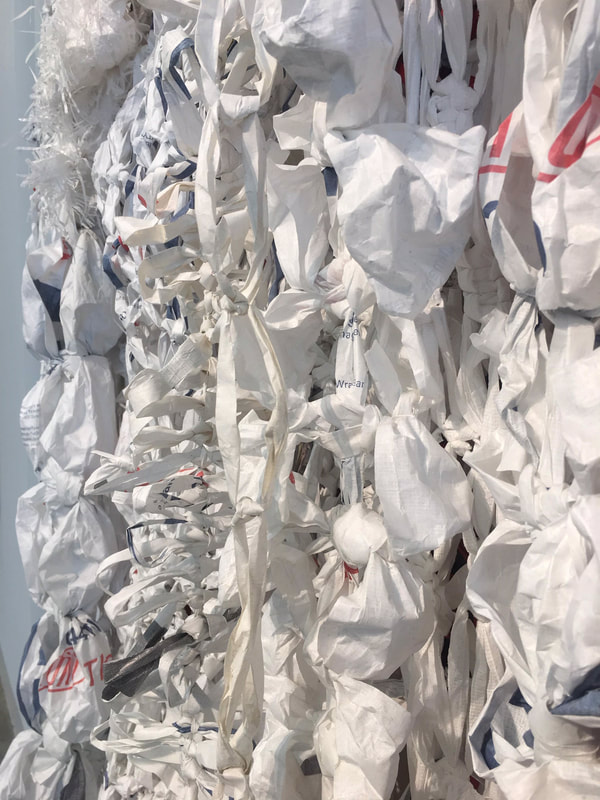
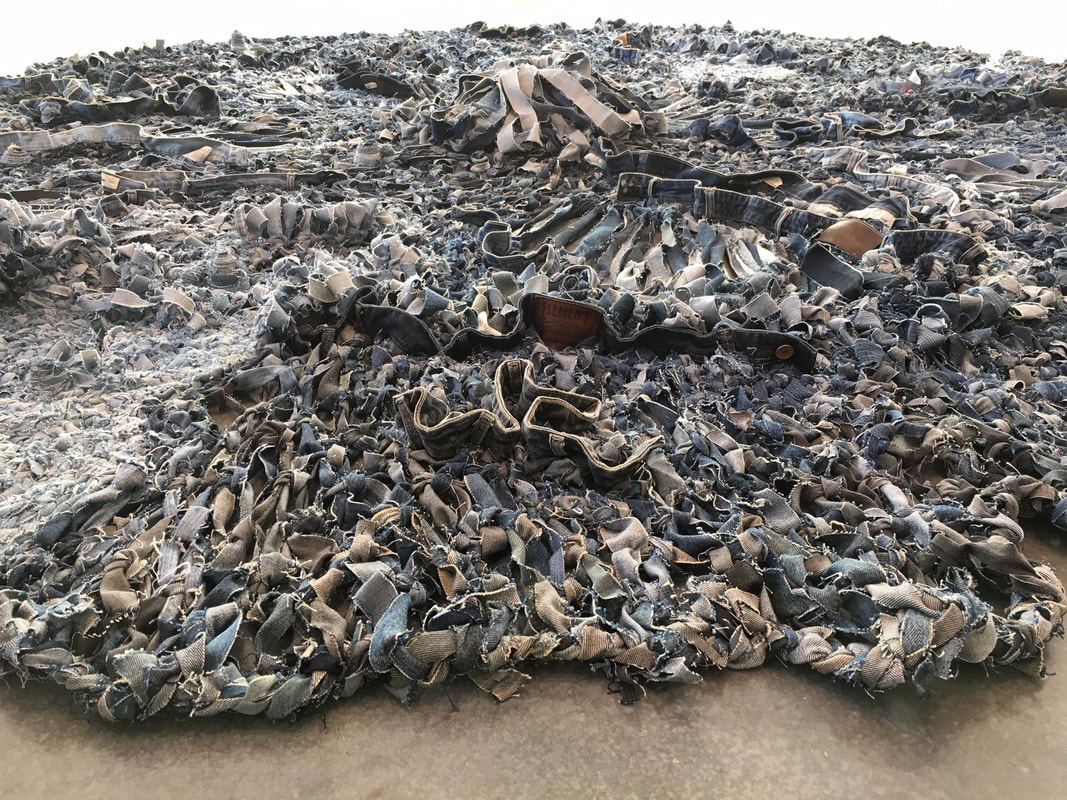
Three major works created over one year remind me of the uncertainty, the panic, the perilousness of these times, and of the solace gained through individual making and the joy of making with others. The three are relics of two years of material research that culminated in a Master of Fine Arts 2020 exhibit set up one day before the university locked down.

1. Scaffolds

Picture
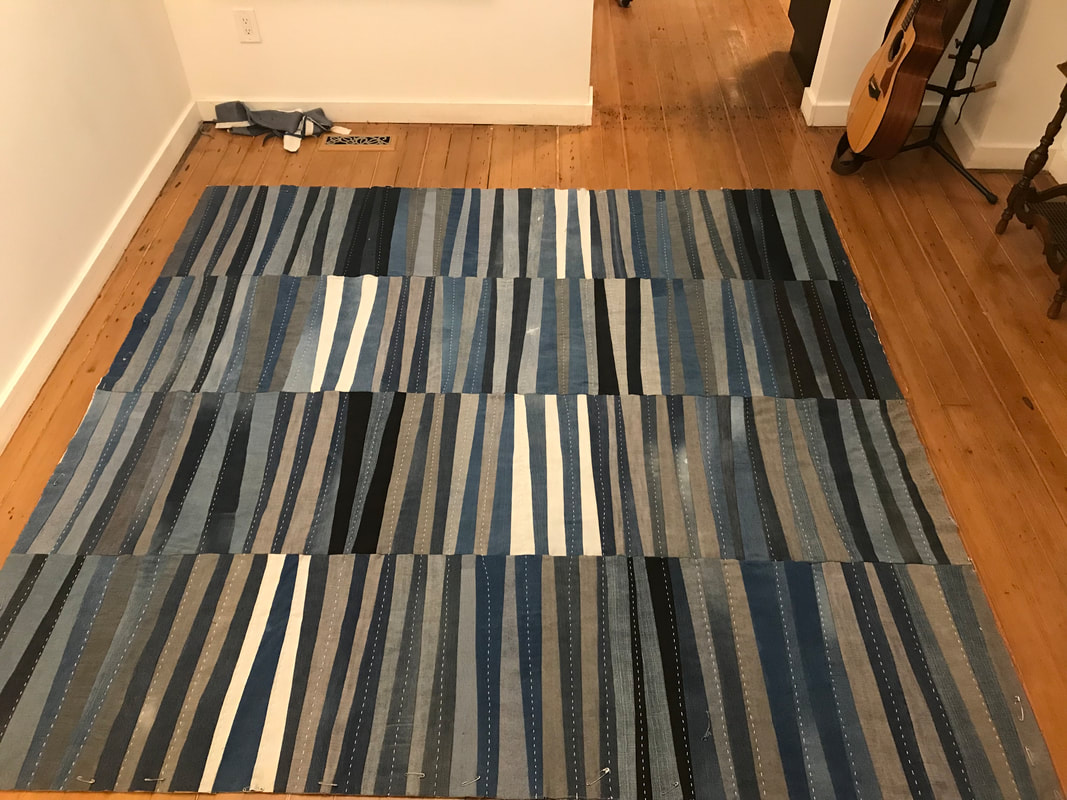
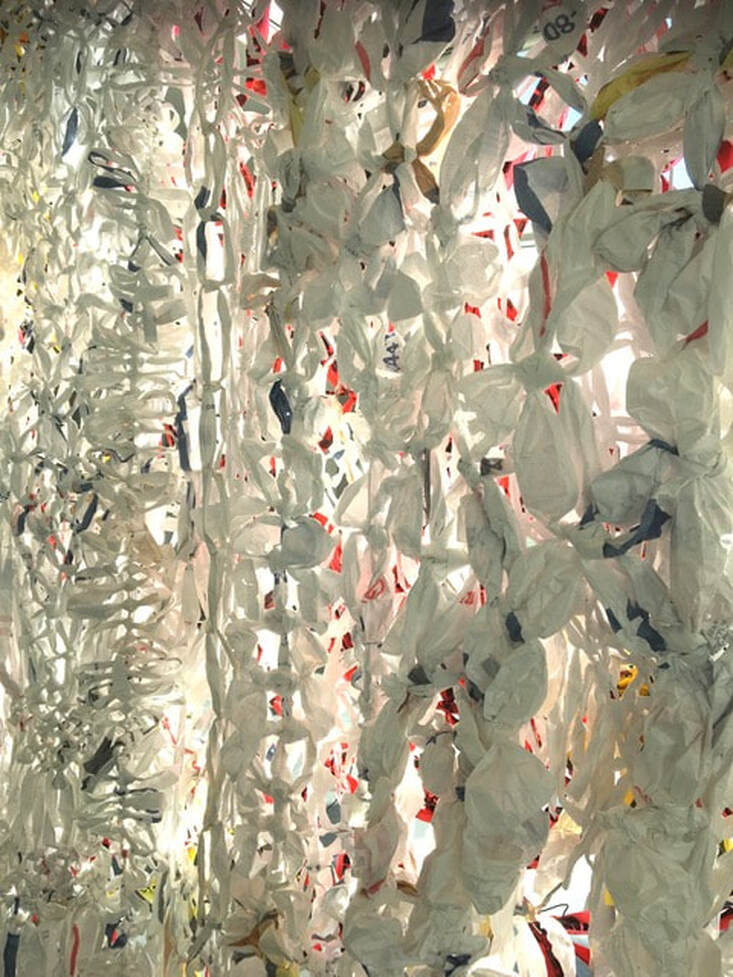
'Scaffolds': 2019, 10' x 10' x 8" All materials gathered by workers at residential tower construction sites in the Vancouver area.

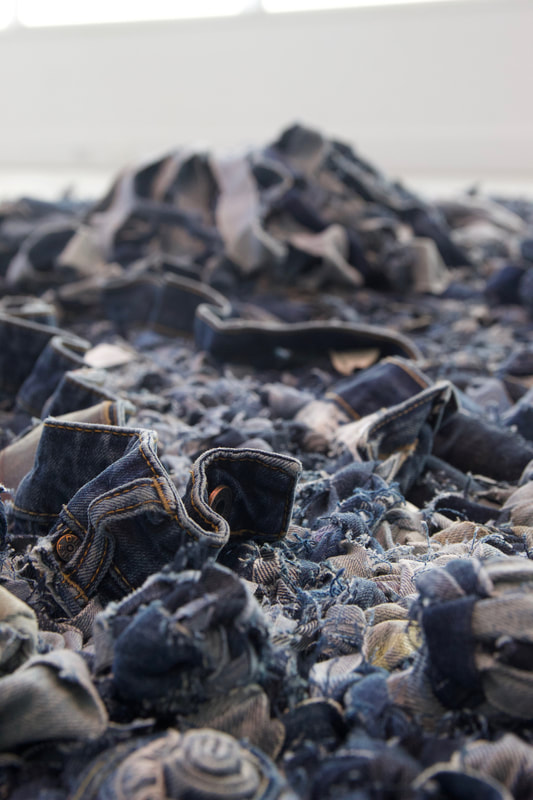
2. Resurge

Picture
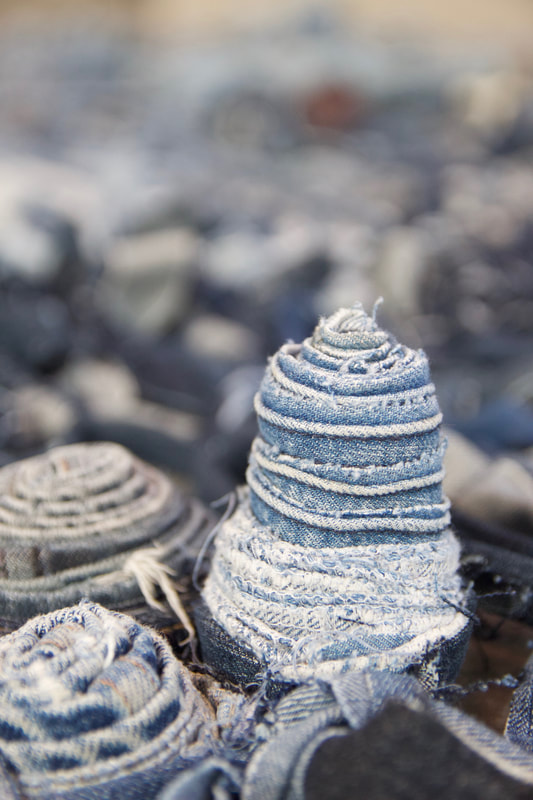
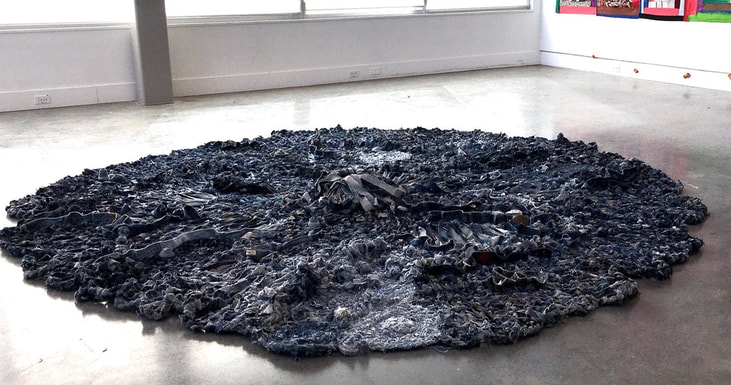
'Resurge' is inspired by the palette of the West Coast foreshore where it began.
Picture
Spanning 12 feet in diameter and grounded to the floor, 'Resurge' troubles distinctions between utility craft and visual art.

3. Hearth

Picture
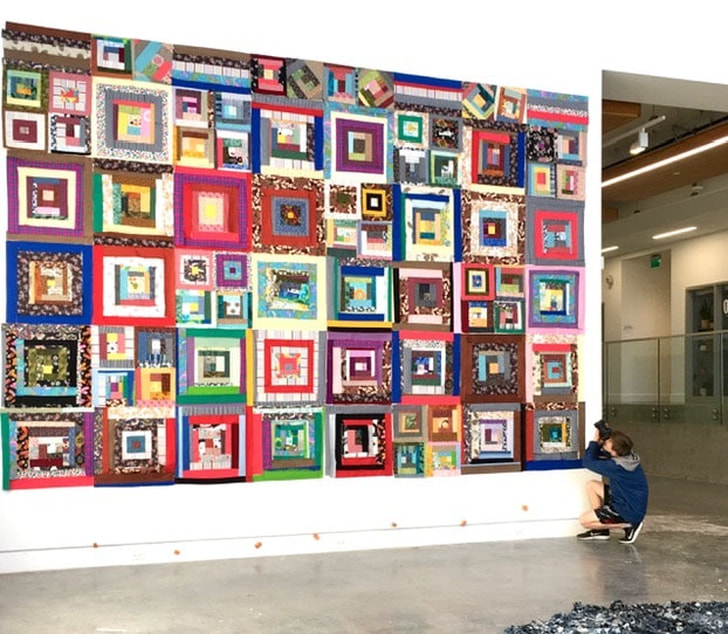
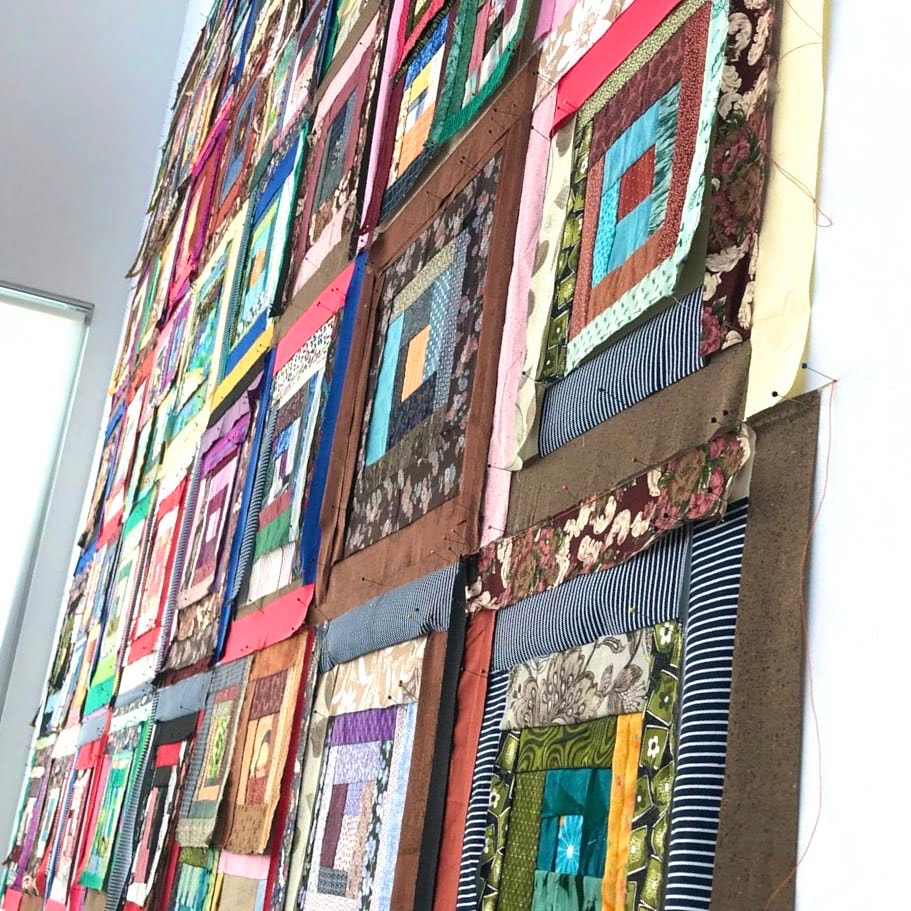
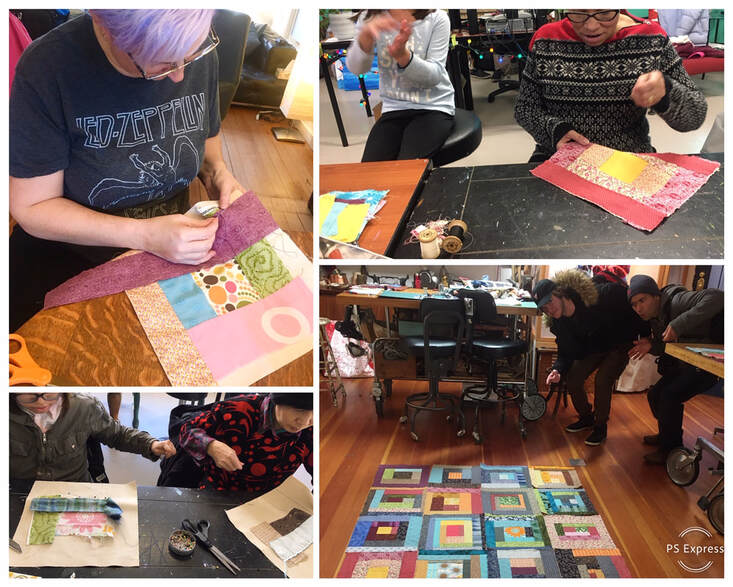
'Hearth' serves as a visual archive of five months of community hand-stitching sessions at kitchen tables and art studios.
Picture
A close-up view of the wall installation reveals provisionally-composed strips of fabric and sewing pins framing the several dozen hand-stitched "log cabin"-style quilt blocks by many hands.
Picture
The simple blocks were made by artists and members of the community at large during five months of open weekly sessions.

Homemade masks are not all about you

4/3/2020

 
We who turn to rote hand-making activity to quell our anxiety have been knitting, sewing, embroidering, crocheting and needleworking up a storm. My go-to, like countless others stuck at home, is making masks. As the death tolls roll in, I am on auto-pilot.​
Picture
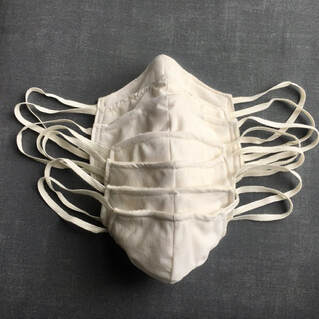
The thing about busying the hands with tiny repetitive motions is that it opens up time to think, to reflect on the incoming: the unfathomable graphs, reports, studies and scandals. What I’ve been reflecting on as I rotary-cut those squares of cloth, feed them into the machine and steam-press in the pleats is the great homemade-mask debate: to wear or not to wear. To that question I have no doubt: it’s a hard ‘wear’ if you are in the vicinity of others.

Sure, there is a tsunami of science that proves that the three-layered, tight-weave cotton reusable mask that I’ve been making won’t protect you — the wearer — from catching the virus but this is not about you and you alone. This is about us, about keeping our own damn germs to ourselves, a civic duty seen in east Asian nations that have been-there-done-that with SARS. As pointed out in today’s (at this writing) article in The Atlantic, a store full of shoppers in masks may be seen by those on this side of the Pacific Rim as a sign of the coming apocalypse but one of assurance on the other side: I’ll protect you if you protect me (Check out #masks4all and #youprotectmeIprotectyou).

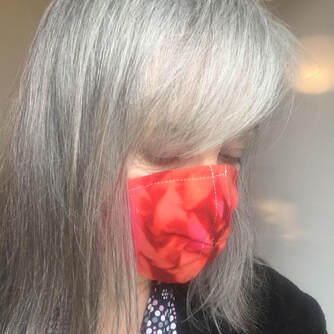
At Emily Carr University of Art + Design, where I’ve spent the last two years, masks suddenly appeared on some student faces as Covid-19 hit the news, far before any social-distancing policies were set. My personal observation is that those taking these early precautions were likely international students from Asian countries where mask-wearing is a norm for anyone contending with even a cold or seasonal allergies. The sudden sight of all these masks in class and corridors may have unsettled the rest of the student body but it inspired me to design something I’d like to wear: reusable, washable, of natural felted fibre, sculpted so it didn’t touch my mouth, infused with my favourite “Panic Button” essential oil blend. 

Picture
I wasn’t always cool with milling around with the masked ones. When I landed in Japan for what would be an 18-month stay in the late-’80s my first snapshots were of all kinds of people in masks in Kyoto, from little kids in black uniforms on their way to school, to teens picnicking under the blooming cherry trees to old ladies in the narrow streets of Gion. I came to appreciate all the masks worn while cheek to jowl in the infamous Midosuji subway in Osaka, starting with the official charged with gently pushing the commuters into the cars. Reflecting on this (now, while I sew), I wonder what those socially-responsible commuters must have thought about being stuck up against these gaping, mouth-breathing, sniffling foreigners.

I’m reflecting on the real, insatiable need for masks in my own vicinity, right now, for those who are jammed into shelters and squalid hotel rooms with shared bathrooms. While I await reports on how this pandemic is hitting the sick and homeless, I’ll assume masks are a basic need. And until I am tested, I’ll assume that I am an asymptomatic carrier.

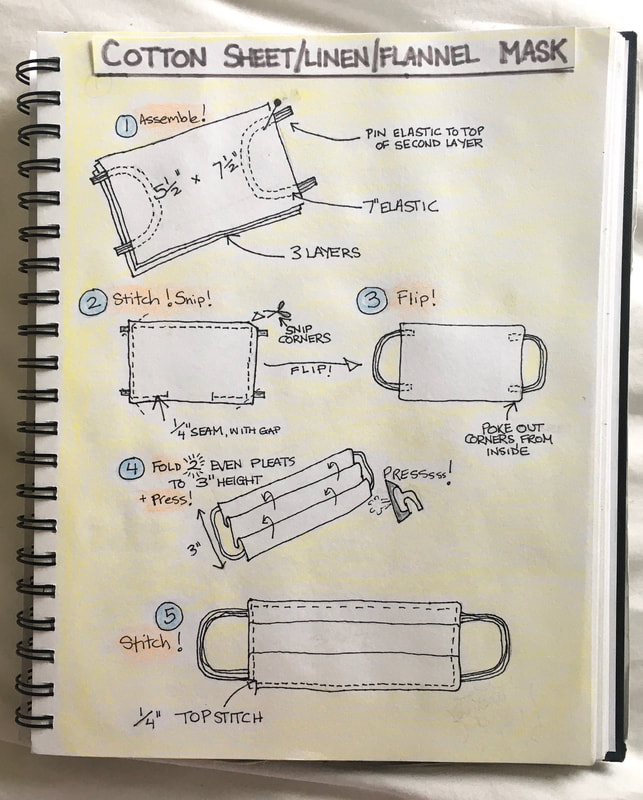
I mask up for your protection when I go out for my essential business and when I return I disinfect it, put it back in its baggie, then get back to the task at hand. See my simple three-ply pleated pattern below, or, for you non-sewcialists, check out the T-shirt version at bottom.

Picture
No sewing machine? This can be hand-stitched too (46" total stitching). No elastic? Cut 1-inch-wide strips from an old T-shirt, stretch to curl, then replace the elastic directions with two 7" strips, to be tied by user.
    Cross-posted at
    carlynyandle.substack.com

    browse by topic:

    All
    Abject
    Abstract
    Abstract Embroidery
    Abstraction
    Abstract Painting
    Abundance
    Accumulations
    Acrylic
    Activism
    Additive
    Aesthetics
    Agency
    AgentC Gallery
    Aging
    Alison Woodward
    Aluminum
    Amanda Wood
    Anxiety
    Appropriation
    Arcade Fire
    Architecture
    Arleigh Wood
    Art
    Art Activism
    Art Blog
    Art Business
    Art Discourse
    Art History
    Artifact
    Artist
    Artist Residency
    Artist Statement
    Artist Talk
    Art Marketing
    Art Quilt
    Arts And Crafts
    Art School
    Art Show
    Art Spiegelman
    Assemblage
    Author
    Banksy
    Bauhaus
    Beauty
    Betsy Greer
    Big Data
    Billy Patko
    Binding
    Blogs
    Blog Tour
    Bob Krieger
    Body Of Work
    Books
    Boro
    Braided Rug
    Braiding
    Bruce MacKinnon
    Bruce Mau
    Building
    Bull Kelp
    Burlap
    Business
    Buttons
    Canadian Artist
    Carlyn Yandle
    Caroline Eriksson
    Cartoon
    Ceca Georgieva
    Challenge
    Charley Yandle
    Children
    Christmas
    Cindy Sherman
    Circular Thinking
    Cirque Du Soleil
    City As Site
    City Planning
    Cityspace Gallery
    Clay Yandle
    Climate Change
    Cluster
    Cob
    Cob Oven
    Collaboration
    Collage
    Collection
    Colonialism
    Color
    Colour
    Commission
    Community
    Community Building
    Composition
    Conceptual Art
    Conceptual Craft
    Connection
    Connie Sabo
    Construction
    Coronavirus
    Cosplay
    Costume
    Counter Culture
    Counter-culture
    Cover
    Cover-19
    Covid
    Craft
    Craft Blogs
    Craft Camp
    Craftivism
    Crafts
    Craftsmanship
    Creative Process
    Critique
    Crochet
    Cross-stitch
    Cultural Hub
    Cultural Studies
    Culture
    Culture Jamming
    Culturejammingc9d75664fd
    Current Conditions
    Cycling
    Dafen Village
    Dallas-duobaitis
    Dance
    Data-graphic
    Data-graphic
    David Weir
    Dear Human
    Decorations
    Deep Craft
    Denim
    Denyse Thomasos
    Design
    Digital Art
    Discomforter
    Display
    Dissent
    Distraction
    Distracts
    DIY
    Doilies
    Doily
    Domestic
    Domestic Interventions
    Douglas-coupland
    Draw Down
    Drawing
    Dressed
    Drip By Drip
    DSquared2
    Dude-chilling-park
    Dyeing
    Dystopia
    Eastend
    Eastside Culture Crawl
    ECUAD
    ECUAD MFA
    Editorial
    Edward Burtynsky
    Eggbeater Creative
    Embellishment
    Embroidery
    Emily Blincoe
    Emily Carr Cozy
    Emily Carr University
    Entanglements
    Environment
    Environmental Art
    Exhibit
    Exhibition
    Expanded Painting
    Experimentation
    Exploration
    Expression
    Fabric
    Fabricating
    Fabrication
    Facebook
    Failure
    Fashion
    Fashion Revolution
    Fast Fashion
    Feminisim
    Feminist
    Feminist Art
    Festival
    Fiber
    Fiber Artist
    Fiber Arts
    Fibre
    Fibre Arts
    Film
    First Saturday Open Studios
    Flo
    Flow
    Forage
    Foraging
    Form
    Form And Function
    Foundlings
    Found Materials
    Found Objects
    Fractal
    Fracture
    Free Store
    Fuckwit
    Fuzzy Logic
    Gallery
    Gallery-row
    Garden
    Gardening
    Garment
    Gathering
    Gentrification
    Geometric Art
    Gill Benzion
    Gingerbread
    Globalization
    Glue
    Goblin Core
    Grad 2020
    Graffiti
    Grannycore
    Granny Square
    Granville-island
    Green Space
    Grid
    Grief
    Guanajuato
    Guerrilla Art
    Guerrilla Girls
    Halloween
    Handmade
    Handmaking
    Hand Stitching
    Hand-stitching
    Handwork
    Hashtags
    Haywood Bandstand
    Healing
    Health
    Hearth
    Heirloom
    Hideki-kuwajima
    Hoarding
    Homelessness
    Homemade
    Hot Art Wet City
    Housing
    Hybrid Thinking
    Ian Reid
    Ian Wallace
    Ideas
    Identity
    Images
    Imagination
    Immersive Art
    Improvisation
    Incomplete Manifesto For Growth
    Industrial Design
    Industry
    Innovation
    Inspiration
    Instagram
    Installation
    Installation Art
    Intervention
    Intrusive Thoughts
    Invention
    Irena Werning
    Ironing
    Janet Wang
    Jeans
    Jeff Wilson
    Joel Bakan
    Joseph Beuys
    Joseph-wu
    Journalism
    Joyful Making In Perilous Times
    Joyfulmakinginperiloustimes
    Judith Scott
    Kamala Harris
    Kids Art
    Kim Piper Werker
    Kimsooja
    Kintsugi
    Knitting
    Knots
    Knotting
    Kyoto
    Labor
    Labour
    LA Fires
    Landon Mackenzie
    Landscape
    Leanne Prain
    Lecture
    Lighthouse
    Linen
    Liz Magor
    Log Cabin
    Logo Sweater
    LOoW
    Lost Painting
    Lumiere Festival
    Lynda Barry
    Macrame
    Maker
    Making
    Making Is Connecting
    MakingIsConnecting
    Malcolm Gladwell
    Male Gaze
    Mapping
    Maquette
    Marie Kondo
    Marine Palette
    Marketing
    Mark Lewis
    Martha Rosler
    Martha Stewart
    Masks
    Material Exploration
    Mathematics
    Maya
    Media
    Meditation
    Meditative
    Mending
    Mend In Public Day
    Mental Health
    Metalworker
    MFA
    Mister Rogers
    Mixed Media
    Mobile Art Practice
    Monique Motut-Firth
    Monster
    Monte Clark
    Mosaic
    Motivation
    Mt. Pleasant Community Centre
    Mud Girls
    Mural
    Mushroom
    Mycelium
    Narrative
    Natalie Jeremijenko
    Nature
    Needlework
    Neon
    Net
    Network
    Networking
    Neuroplasticity
    New Forms Festival
    Newspapers
    Nick Cave
    Noah Goodis
    Nodes
    North Vancouver
    Obtrusive Thoughts
    Omer Arbel
    Online Talk
    Openings
    Organization
    Origami
    Overabundance
    #overthinking
    Paint
    Painting
    Pandemic
    Paper
    Paper Sculpture
    Papier Mache
    Parkade Quilt
    Patchwork
    Patriarchy
    Pattern
    Pecha Kucha
    Pechakucha
    Perception
    Perfectionism
    Performance
    Performance Art
    Personalispolitical
    Photography
    Playing
    Political Art
    Political Satire
    Polly-apfelbaum
    Pompidou
    Poodle
    Pop-Up
    PopUp
    Port Coquitlam
    Portrait
    Practice
    Process
    Production
    Profession
    Project
    Protest
    Protest Art
    Psychedelic
    Public Art
    Pussy Hat
    Pussy-hat
    Qr Code
    Quilt
    Quilt Block
    Quilting
    Quilt Painting
    Rachael Ashe
    Rachel Lafo
    Ravages
    Raw Materials
    Rebar
    Recycle
    Recycling
    Reflection
    Reflektor
    Reimagine
    Renewal
    Repairing Is Caring
    RepairingIsCaring
    Repetition
    Research
    Residency
    Resistance
    Resurge
    Retreat
    Re-use
    Rhonda Weppler
    Richard-tetrault
    Richmond Art Gallery
    Right Brain
    Rondle-west
    Roses Against Violence
    Rote Activity
    Rug
    Ryan-mcelhinney
    Safe Supply
    Safety
    Sampler
    Sarah-gee-miller
    Sashiko
    Saskatchewan
    Scaffolds
    Scaffolds I
    Scale
    Scraps
    Sculpture
    Seasonal Decor
    Seattle Art Museum
    Seaweed
    Seismic Rug
    Semiotics
    Sewing
    Seymour Art Gallery
    SharingIsCaring
    Sharon Kallis
    Shawn Hunt
    Shigeru Ban
    Sketchup
    Slow Craft
    Smocking
    Social Art
    Socialart
    Social Distancing
    Social Distancing Hat
    Social Engagement
    Social-engagement
    Social History
    Social Justice
    Social Media
    Soft Sculpture
    South-granville
    Space Craft
    Spore
    Stitching
    Storage
    Street Art
    Studio
    Styrophobe
    Substack
    Subversive Stitch
    Surrealism
    Surrey
    Tactical Frivolity
    Tactility
    Tagging
    Talking Art
    Tapestry
    Tatjana Mirkov-Popovicki
    Tattoo
    Teamlab
    Technology
    Terry Fox Theatre
    Text
    Textile
    Textile Art
    Textiles
    Thrifting
    Thrift Stores
    @tinypricksproject
    Tiny Pricks Project
    TJ Watt
    TO DO
    Tools
    Toronto Design Offsite
    Toybits
    Trash
    Trash Art
    Travel Art
    Trevor Mahovsky
    Trump
    Typography
    Tyvek
    Unbridled
    Unfixtures
    Unravel
    Upcycle
    Upcycling
    Urban Design
    Use Object
    Use Objects
    Utility
    Value Village
    Vancouver
    Vancouver Art Gallery
    Vancouver International Airport
    Video
    Video Tour
    Visual Artist
    Visual Field
    Visual-field
    Visual Language
    Wabi-sabi
    Wallace Stegner House
    Wall Hanging
    Waterwork
    Wearable Art
    Weaving
    William Morris
    Women's March
    Wood
    Wool
    Work Wraps
    Wrap I
    Wrap II
    Writing
    Xenobia Bailey
    Yarn Bombing
    YVR
    Zaha Hadid
    Zendoodle
    Zero Waste Art
    Zero-waste Art

    Archives

    January 2026
    December 2025
    November 2025
    September 2025
    May 2025
    April 2025
    March 2025
    January 2025
    December 2024
    November 2024
    October 2024
    September 2024
    August 2024
    July 2024
    June 2024
    October 2022
    August 2022
    June 2022
    November 2021
    April 2021
    September 2020
    April 2020
    December 2019
    November 2019
    September 2019
    August 2019
    July 2019
    June 2019
    April 2019
    November 2018
    July 2018
    May 2018
    November 2017
    September 2017
    June 2017
    April 2017
    March 2017
    February 2017
    December 2016
    November 2016
    September 2016
    July 2016
    March 2016
    February 2016
    January 2016
    December 2015
    November 2015
    October 2015
    September 2015
    June 2015
    May 2015
    April 2015
    March 2015
    February 2015
    January 2015
    December 2014
    November 2014
    October 2014
    September 2014
    August 2014
    July 2014
    June 2014
    May 2014
    April 2014
    March 2014
    February 2014
    January 2014
    December 2013
    November 2013
    October 2013
    September 2013
    August 2013
    July 2013
    June 2013
    May 2013
    April 2013
    March 2013
    February 2013
    January 2013
    December 2012
    November 2012
    October 2012
    September 2012
    August 2012
    July 2012
    June 2012
    May 2012
    April 2012
    March 2012
    February 2012
    January 2012
    December 2011
    November 2011
    October 2011
    September 2011
    August 2011
    June 2011
    May 2011
    April 2011
    March 2011

Powered by Create your own unique website with customizable templates.
Picture