carlyn yandle
  • about
  • the creative process
  • crafted objects
  • public art
  • painting
  • exhibitions
  • contact

Home isn't someone else's investment unit

9/17/2024

 
New modular building blocks create a visual for more humane density
​

I blame my dream-home fantasies on that OG influencer Martha Stewart.
​
When the thick, slick Martha Stewart Living was queen of the magazine racks I was there for the Crafts: the rustic doorstop animals made of French linen tea towels; the velvet lavender sachets for drawers and for gifts. Soon I was sucked into the glossy paper vortex of step-by-step tableaux of Martha — in cropped jeans and crisp Oxford shirt — engaged in various Good Things like washing her paned windows using vinegar from a glass sprayer or sweeping her freshly-painted porch with a birch-twig broom. I was led to believe that people who weren’t already trained pastry chefs or architects could create the Halloween gingerbread haunted mansion, and that one day I too would have a fireplace mantle to display handmade snowglobes nestled between mason jars of glittered cedar boughs dangling with tiny crocheted snowflakes. Never mind that my wreath of pinecones tied with tartan ribbon and tacked to my apartment door wasn’t adding any rustic Christmas vibes to the purple-and-teal common hallways. This was all temporary.
Picture
By the time Martha finished doing her five months for fraud, I was half way through 20 years in the same apartment, engaged in the more practical project of trying to live a creative life in a small space (sprawling in comparison to the majority of new builds in Vancouver). I ended up writing a weekly newspaper column on the subject and even partnered in a home re-vamp service that funded four years of art school. Dwelling design remains one of my Special Topics so when I heard first thing this morning (at the time of this writing) that the provincial government had released some free modular plans for small-scale multi-unit housing, I jumped onto the site for a look-see.
Picture
Streetscape concept of multi-unit integration with single-family homes, Standardized Housing Catalogue, BC Ministry of Housing
Because when it comes to affordable housing in this town, things can’t get worse (barring, of course, the imminent earthquake a.k.a. “The Big One”). According to one report, last year Vancouver’s median home price was more than 12 times the median household income, making it the third most expensive housing market in 94 cities around the world. Many of the investment units in Vancouver’s soaring glass towers are now languishing on the market, because even if they were affordable, “home” does not conjure up visions of 35 floors of stacked 500-square-foot rectangles with one wall for windows and no outdoor space.
​

The customizable building blocks are an attempt to provide an option to this modern-day warehousing of humans, a step toward addressing the missing middle between standalone houses and condo towers. They were developed following recent zoning changes that allow three or four units on the standard city lot, to the horrors of NIMBY owners in those single-family-home neighbourhoods and to cheers from developers. To curb design and construction costs and expedite the permitting process, the limited options of modular blocks are basic. One shows two bedrooms with a shared bathroom. The common-area block shows a surface that is both dining table and kitchen island with sink, with the rest of the kitchen along one wall. No balconies are indicated and there are not a lot of windows. Every unit shows stairs.
Picture
Placement options on various lot sizes, from the Standardized Housing Catalogue, BC Ministry of Housing
Picture
Common space options, Standardized Housing Catalogue, BC Ministry of Housing
Picture
Multi-family dwellings on a standard city lot, Standardized Housing Catalogue
Picture
On the upside, they are connected to the earth and integrate into established communities. They open up the possibility of having a baby, aging in place, living with or beside other relatives or families of choice. They are the kind of home that might incline a crafty type to collect pinecones from the mature trees in those longstanding neighbourhoods and glue-gun a wreath to hang on the front door. 
​
It’s a Good Thing.

Stitching a story of a final send-off

6/16/2024

 
Picture
This one’s for my brother, on his second memorial Father’s Day.​

I started the artwork just after returning from his ashes-scattering ceremony on one of the Gulf Islands, as he requested in the few weeks before his death. I had suggested a flotilla led by his “Brudderhood” of friends, on the Sabine Channel. He liked that but said, with some difficulty, They’ll never make it.

But they did, buoyed by a legendary/hazardous flotilla at one of their dads-and-kids camping trips. It was everything he would have wanted. An odd collection of watercraft was rafted together and his two teenage sons poured the ashes into the ocean, creating a cloud of what my brother would have called “a lovely turquoise.”

My sisters and I would exchange smiles whenever he described his many plans as Lovely, usually emphasized with a fluttery hand gesture. It was his signature descriptor in his otherwise utilitarian, East Van vernacular.

Picture
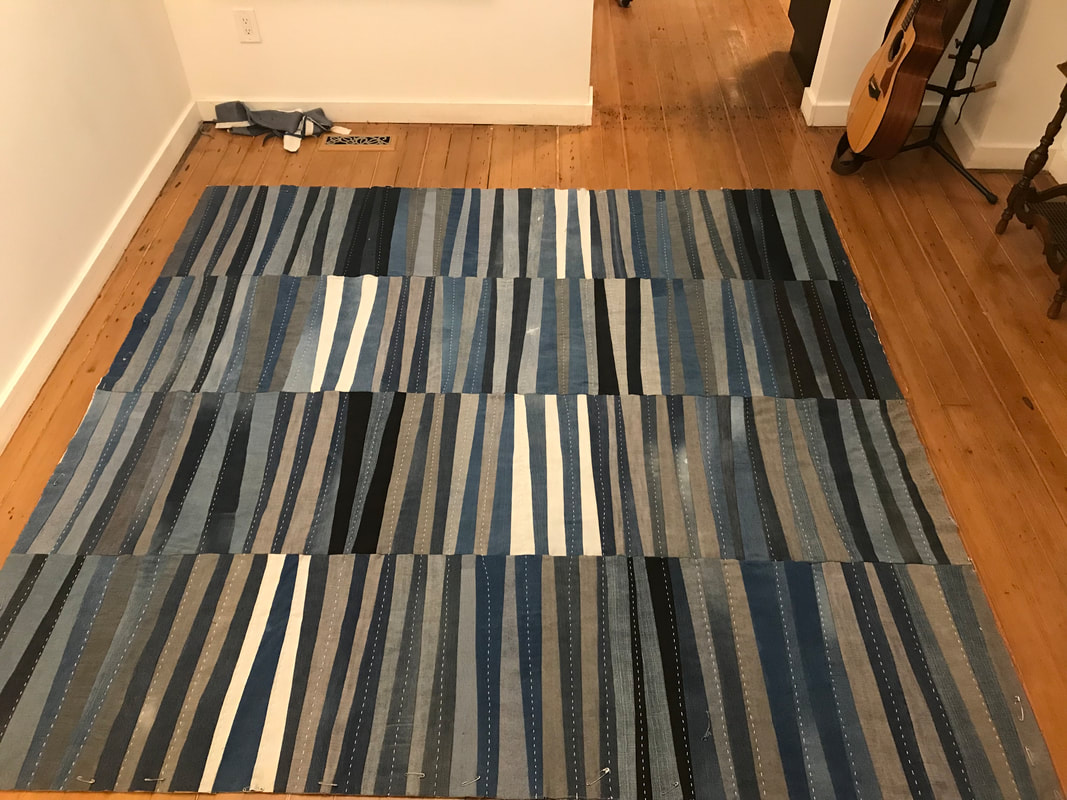
When I got back to the city and into my studio I was listless, managing only to fold and re-fold my stash of old work jeans, many of them contributed by my brother for my art purposes. The scraps of indigos and greys, rips and frays reminded me of that shoreline and those mountains and soon I was layering the pieces together in the sashiko (Japanese for “little stabs”) way, working up a boro (indigo textile repaired and reinforced through sashiko) from memory. 

The urge to use those jeans stitches up nicely with the waste-not-want-not sensibility of mottainai that has been informing my work and life since living in Japan in my early 20s. Old jeans are too rich in embedded modern culture to not use. And these particular jeans needed a new narrative.

When the chaotic patchwork became too heart-heavy I tucked it away. In the year that followed I traveled back to Japan, then Vietnam, Cambodia, Thailand, and central Mexico, where the connecting threads of narrative fibre-art fuelled new energy for the boro-project.

Stories told in cloth throughout the world are often worked up not as a pre-planned design but as a journey. This is one of those. After I stitched together the scraps of the memory landscape I traversed it with more sashiko in different blues, then added french knots for sand, and in the centre, swirls of stitches in shades of turquoise. I considered adding the kayaks, paddleboard, my skiff, his motorboat, maybe an air mattress or a driftwood log or two but decided against adding that cluttered narrative to the already raggedy, improvisational patched piece.

I chose instead to stick to the feeling of that golden moment of that lovely final goodbye.
Picture
"Lovely", 2024, Found denim, embroidery thread on stretcher, 24" x 24"
Picture
Detail of "Lovely", 2024. Found jeans, embroidery thread on stretcher, 24" x 24"
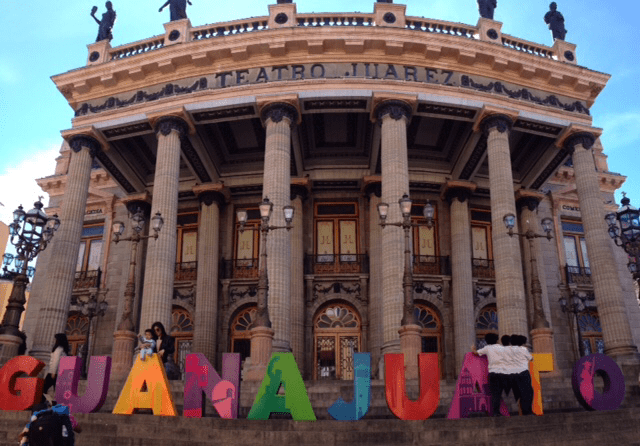
Urban design lesson for Vancouver: Life in full colour blooms in car-free streets

12/10/2016

Comments

 
Picture
The steps of the Teatro Juarez transform by day and night for the benefit of the walking public. (Carlyn Yandle photo)
A month after I landed in Guanajuato, Mexico it finally dawned on me: there are no traffic lights in this bustling city. You'd think that would be obvious from the outset but those kinds of details are not readily apparent when you're gawking at a guy hoofing it down the narrow city streets with a side of raw beef on his shoulders, or a teenage girl unfurling her frothy pink ballgown from a truck parked at the end of the pedestrian zone.
Not only are there no traffic lights, there are no pedestrian crossing signals or any restrictions on the walking public. The downtown is teeming with people but with such narrow, winding vehicle thoroughfares, topas (speed bumps) and gloriettas (large versions of Vancouver's "traffic-calming circles") you learn quickly to go with the slow flow. Pedestrians zig-zag with ease across streets, almost brushing the rear of a slow-passing car so the vehicle behind doesn't have to shift down to super-slow. This is not a town to venture into if you're a driver in a hurry. Cruising speed is such that you could start a conversation with people on the sidewalk. Road rage is inconceivable.

So how are all the goods and services delivered? Most of that happens under the plazas and winding streets in old floodwater-diverting tunnels. Parking lots are also mostly situated under or outside the city centre and on-street parking is a rarity. There are no filthy downtown back alleys dedicated to dumpsters and delivery trucks. No urban blight of parked cars flanking both sides of every street.
Picture
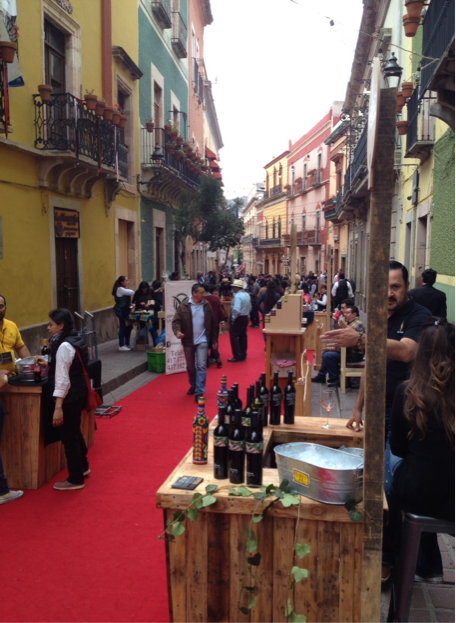
A narrow 'calle' is transformed into a weekend-long wine-tasting venue. (Carlyn Yandle photo)

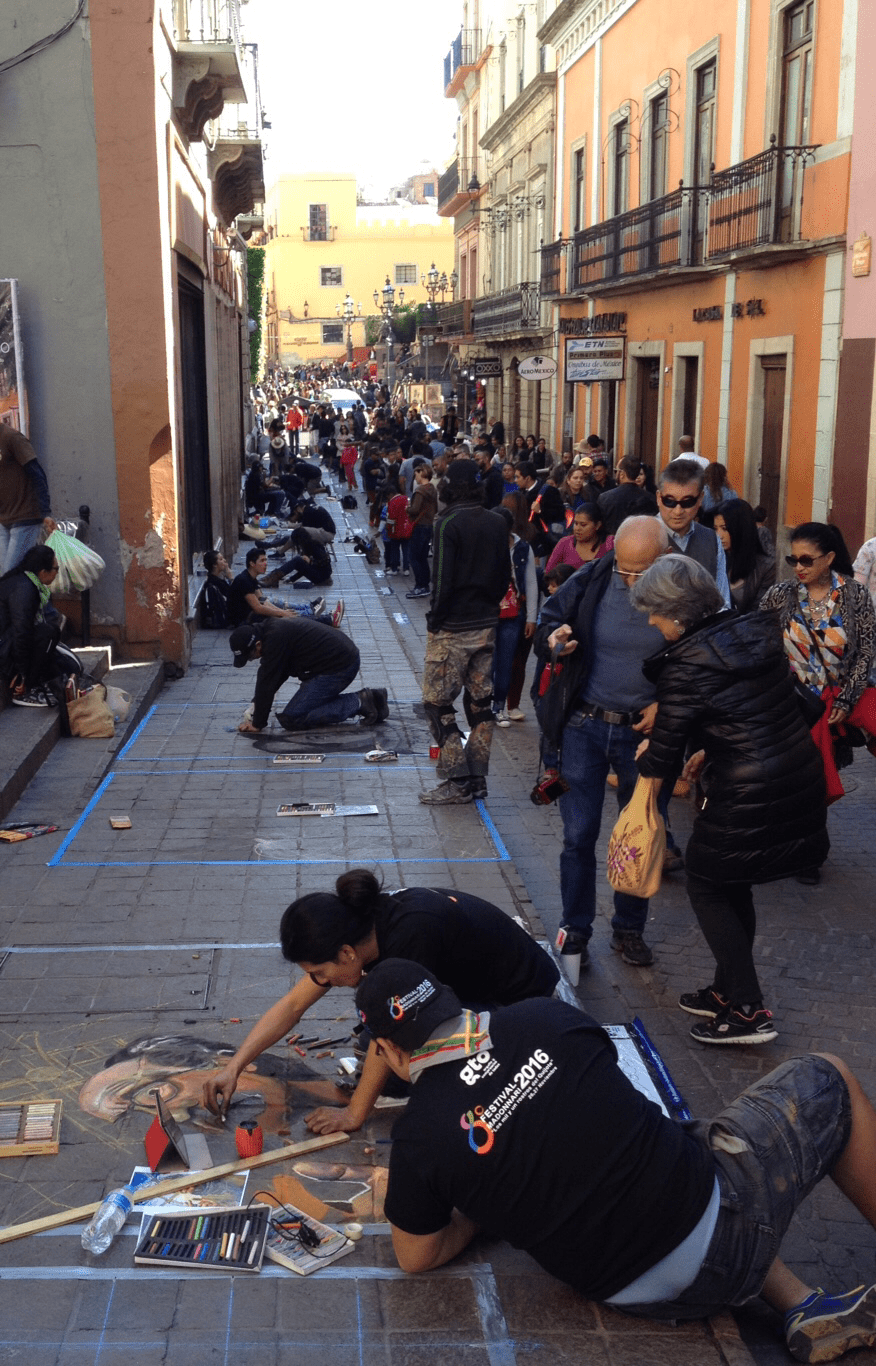
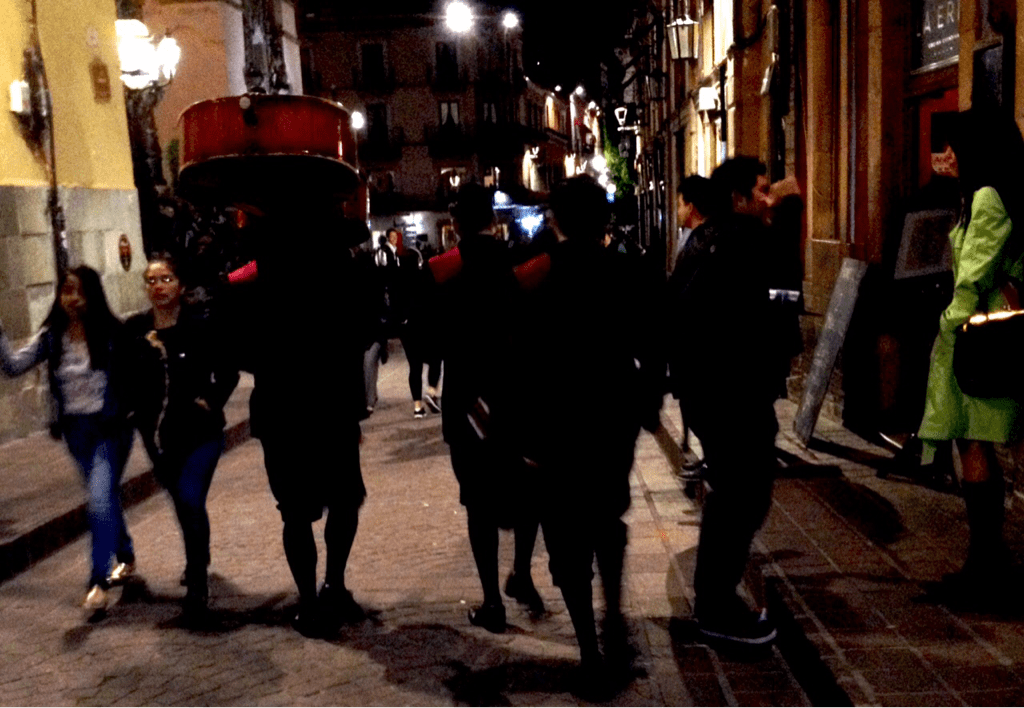
As a result, the major calles (streets) are in constant transformation, a jumble of bakeries, cafes and newsstands in the morning, market stalls in the afternoon, and music-filled evenings and special events like a recent wine-tasting weekend along a red carpet through to the historical centre. The previous weekend saw a chalk-mural draw-in where local art students were down on their knees, working their ideas into the surface near that morning's bike race finish line.

These are the possibilities for streets where pedestrians come first.
Picture
Art students take to the (permanent) car-free streets. (Carlyn Yandle and photo)
Picture
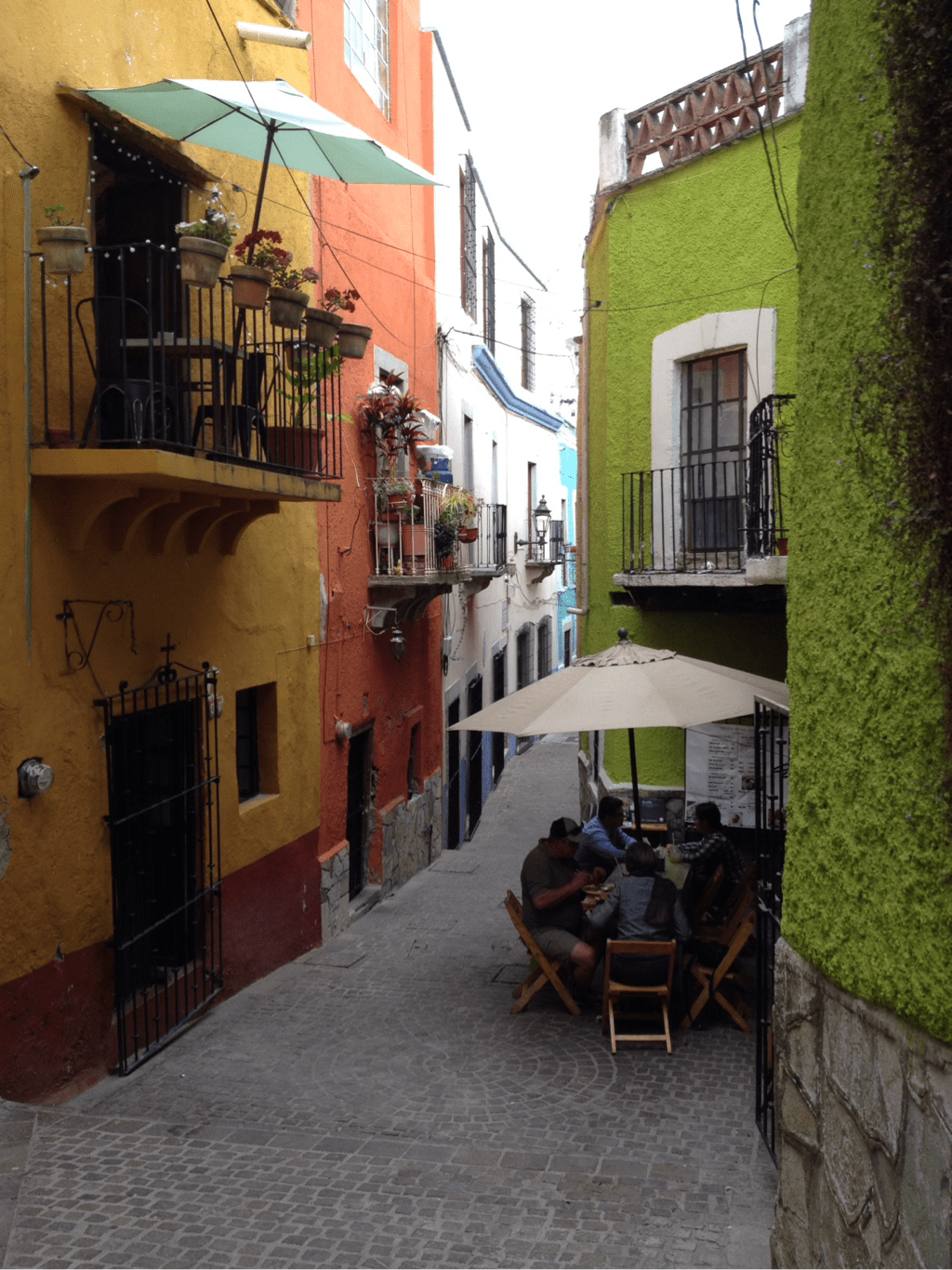
Narrow spaces invite humane activity. (Carlyn Yandle photo)
Picture
Street musicians head down to the outdoor restaurants. (Carlyn Yandle photo)
I fail to see the downside in squeezing out cars in heavily populated areas. In contrast, pricey Vancouver's sketchy, rat-infested downtown alleys and acres of meter parking look like a colossal waste of potential commercial and cultural space. How impossible would it be to conceal dumpsters in locked building bays and restrict garbage pickup to, say, 2 a.m., and then entice tiendas (street vendors) and the mom-and-pop shops that have been all but banished to the fringes due to high rents?

The more I wander and wade through all this colourful human activity the more I resent the privileged position of the private motor vehicle in North American urban "planning." Cities in their relative infancy like Vancouver could learn a lot from organic urban centres like Guanajuato that came into their own before there were cars.

​My hometown is already teetering on the edge of becoming a boring luxury resort city; a bold directive towards people and away from the private motor vehicle could pull us back from that precipice.
Picture
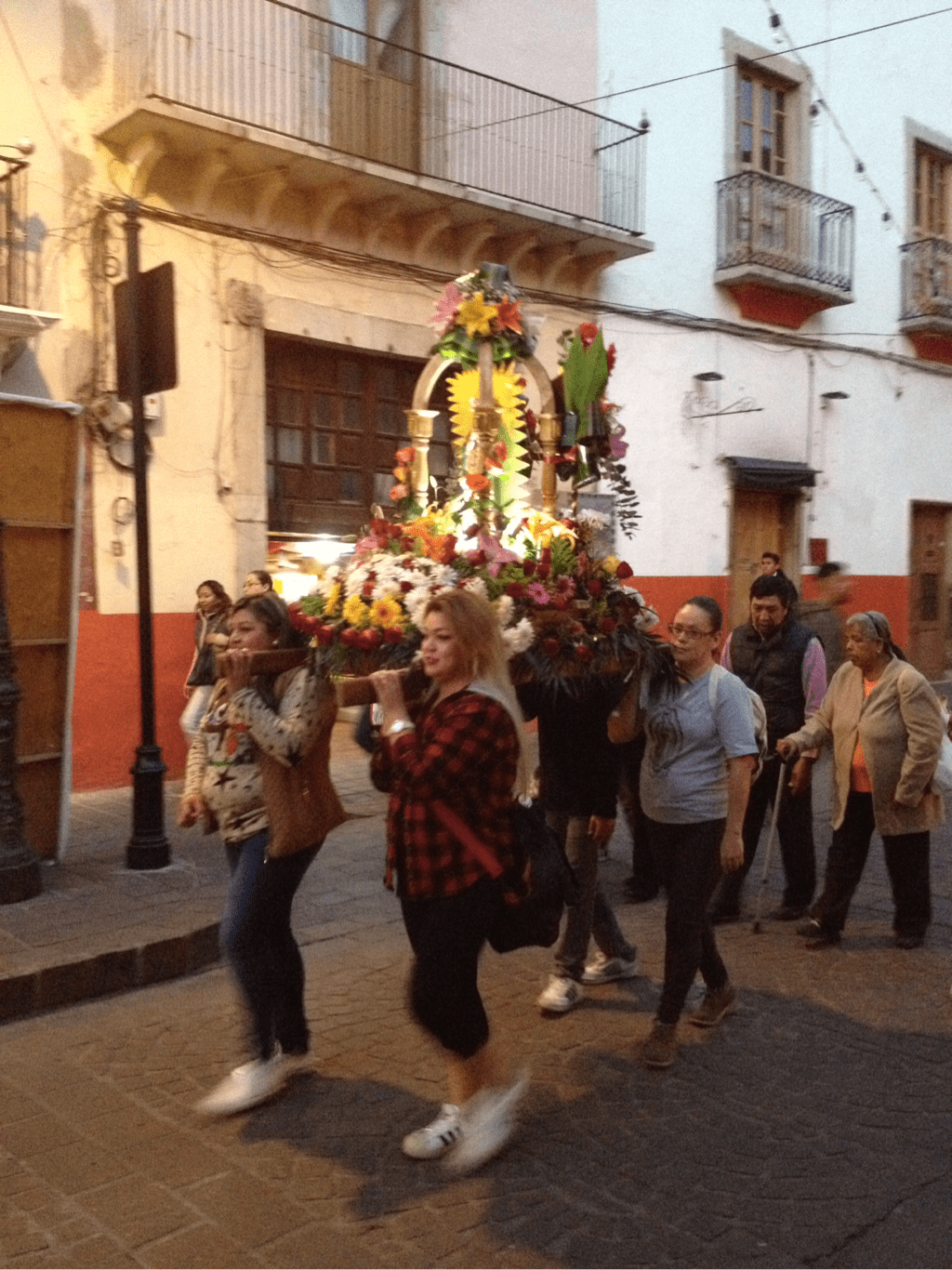
A religious procession is part of the passing cultural parade. (Carlyn Yandle photo)
Picture
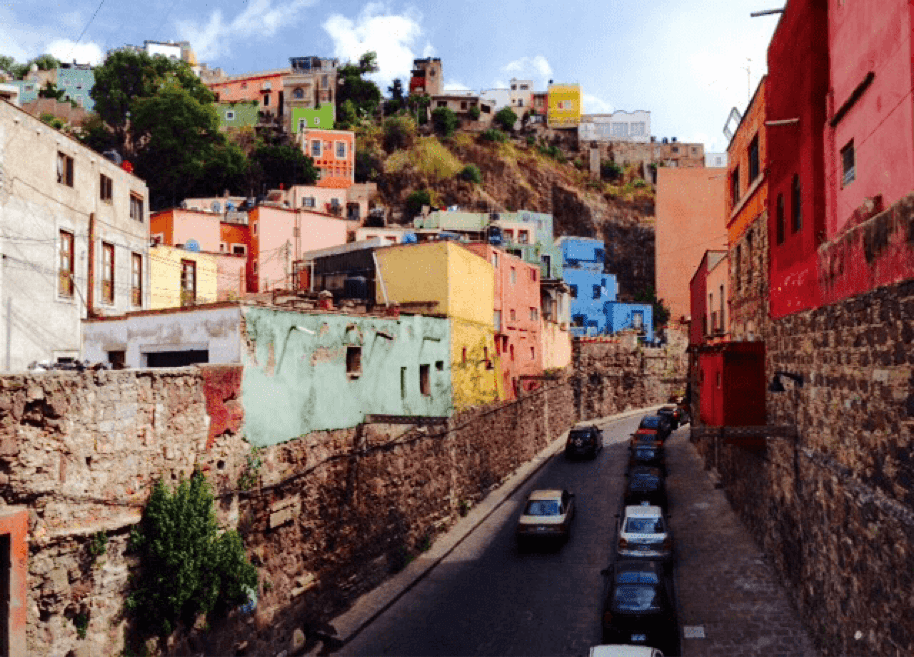
Vehicle thoroughfares and parking areas are mostly on the fringes and below the city. (Carlyn Yandle photo)
Comments

Public art tour by bike all part of the velorution

4/17/2015

Comments

 
There is a symbiotic relationship between art and cycling. For me, I don’t get to work/play in the studio if I don’t get on my bike, and I don’t get my daily dose of hard-pumping exercise if I don’t go to the studio.

My father, a career artist and devoted cyclist, has long believed a cure to what ills is Dr. Bicycle. I take that to mean not just physical aches and pains but creative lethargy. Any artist who rides will tell you that inspiration often hits while she’s flying on two wheels.
PictureThe June 2007 ride shut down Lion's Gate bridge for 30 minutes and the Stanley Park Causeway that leads to it for 60 minutes. (Tavis Ford photo)
Cycling as daily transportation is pretty much mainstream in Vancouver’s downtown core now, but it took a lot of persistence by non-conformists and idealists to get it that way.  The early Critical Mass rides through the city’s main thoroughfares on the last Friday of every month were composed of a motley crew of creative-thinkers. When that critical mass of riders was reached, the infrastructure followed, thanks to a progressive city planning department and pedal-power-driven community leaders like Mayor Gregor Robertson, Gordon Price and Peter Ladner.

The bike has been my main mode for most of my life but I still feel like I'm playing a bit of Russian roulette every time I head out, even though negotiating city streets isn’t the life-risk it used to be. It’s mighty fine seeing old folks and tykes on bikes but you know there’s been a real sea change when you see guys in their 20s and 30s cruising the city on two wheels -- or maybe that’s all due to the new craft beer joints and weed stores. Drunk and stoned cyclists in traffic: not cool.


Picture
Meanwhile, there are still quite a few art-loving folks in my world who only rarely, if ever, take to the bike paths but if there's ever a time, this is the season for it, and this weekend is the perfect time for some pedal-play.

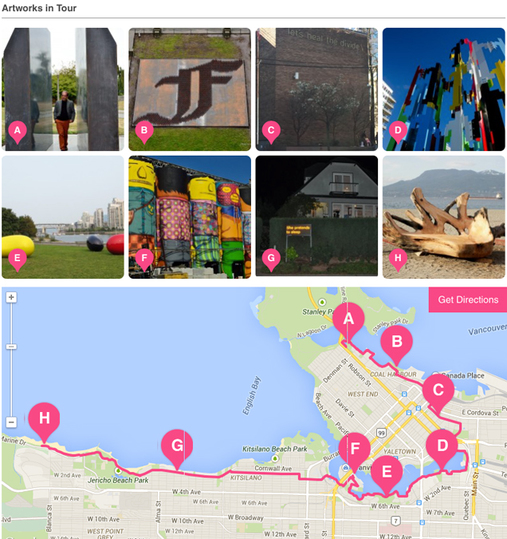
May I suggest this art-cycling combo: the self-guided bike tour of some of the city’s temporary public artworks on display for the Vancouver Biennale. (Map and key at right.) 

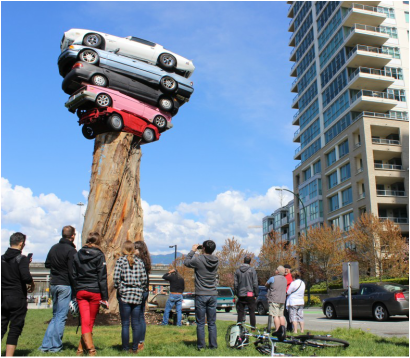
PictureVancouver artist Marcus Bowcott's Trans Am Totem
Not listed on this tour is one work that will have particular resonance to the bike-loving bunch: Trans Am Totem, by Vancouver artist Marcus Bowcott.

If the promise of fabulous spring weather this weekend won't tempt you, this call to action video will:


Comments

Inspiration from those who make it, through Crassmas

12/12/2014

Comments

 
It's not too late to say, Nay! I will not be coerced into this coming two-week commercial frenzy. I will steer my little ship into calmer waters! 

Instead of joining the throngs of harried consumers grabbing up plastic chocolate-pooping reindeer and ironic acrylic Christmas sweaters it's possible to turn all this Excessmas into Makemas — not to make gifts necessarily but just to make for the sake of it.
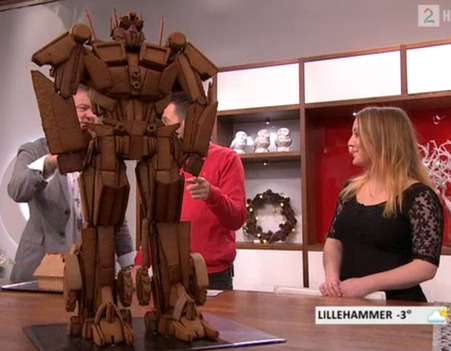
PictureEriksson's home-baked sculpture earns her a TV interview on God Morgen Norge.
Seasonal materials — gingerbread, sugar, snow and ice, fir boughs, candy, lights — get makers going. What starts with a simple plan to make, say, a gingerbread house, can develop into astonishing works.

Norwegian maker Caroline Eriksson took it to new heights last year when she devoted a week and a half of full-time making to compose this Optimus Prime (which really should have been called Insulin Prime). There are 700-800 pieces in this Pepperkokemann — which sounds really funny when you say it out loud. (via gizmodo) It's nerdy but there's something in all that cookie dough that evokes a delicious back story about a sweet gingerbread house that breaks out to lead the Autobot rebellion.

Picture
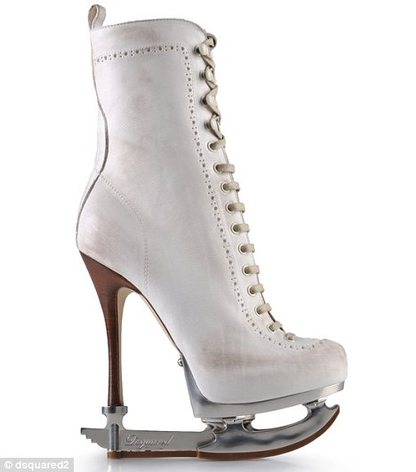
Jacking up this surrealist season is Toronto fashion shock-rockers Dean and Dan Caten(acci) of DSquared2, who created these spike-heel ice skates a couple of seasons back.

I remain captivated by this very-Canadian wearable sculpture that the makers had the nerve to put into a product line, further blurring the line between surrealism and consumption. The power it has to create so much scorn says something about a culture immersed in acquisition over contemplation of an object. Adding to the cultural weight of this object is in the potential for performance art by the user.

Picture
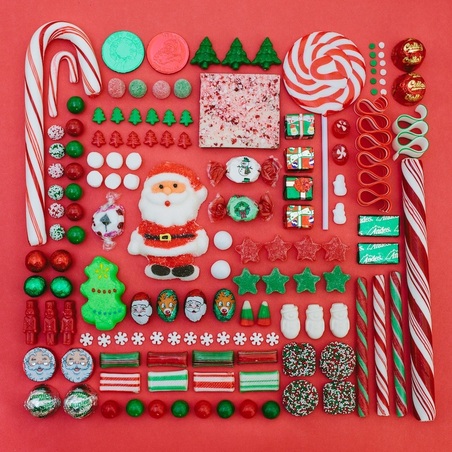
Austen, Texas artist Emily Blincoe packs a weighty punch into the empty calories of her Color Coded: Sugar Series.

A surprising recategorization of common objects or materials invites a re-think about those objects. A glut of candy organized by colour draws the viewer's attention into issues like marketing, excess, presentation. consumption and value. This fetishistic display of tooth-rotting, diabetic-seizure-inducing "food" endures as long as the no-expiration dates.

But when it's all too much (as Glaswegian Granny used to declare, on surveying the freshly unwrapped loot), we makers head for the woods. Or the beach — anywhere you won't hear the Chipmunks or Michael Buble or Mariah Carey droning seasonal mall music.

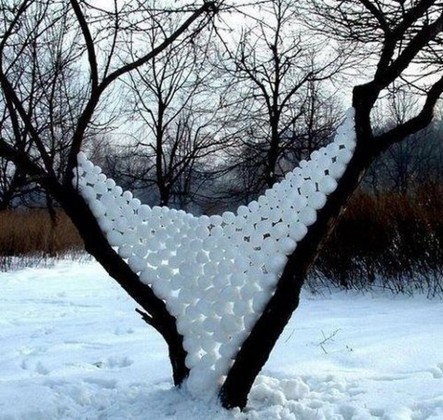
PictureA snowball installation speaks the language of textile art. (from cecageorgieva.blogspot.ca)
Making is also meditative.

Textile artist Ceca Georgieva, of Sophia, Bulgaria, works in the natural world, creating time-intensive land art pieces. This snowball installation exudes quietude and fragility, created through a repetitive process that evokes the kind of attention and meditation involved in textile art.


The impermanence of the piece, the precarious balance makes it an intriguing moment in time. Soon it will all blow over and we can start anew.


Comments

Packing it all in for the Toronto design fest

12/5/2014

Comments

 
It's getting close to a decade since I packed it all in: my needles and wool, my sewing machine and fabrics, my mid-level-management career. There was more to explore.

I've been mixing it up with a wide range of materials (and makers) ever since but even I'm surprised to find that my latest tools of choice for bushwacking new routes of making are the ol' crochet hooks, knitting needles, rug hooks and embroidery needles.

The line on the paper has always been too limiting to me; I need to pick up that line, play with it in my hands, turn it into area, then volume. I remain entranced by the possibilities of connecting something created by a silkworm or an industrial manufacturing plant to a mathematical model or a wearable with uncomfortable connotations.

The beauty of fiber is in its physical and metaphorical ability to connect the Art side to the Design side (not to mention the science side), weaving the two together until it's clear that playing with ideas cannot be put into separate boxes.
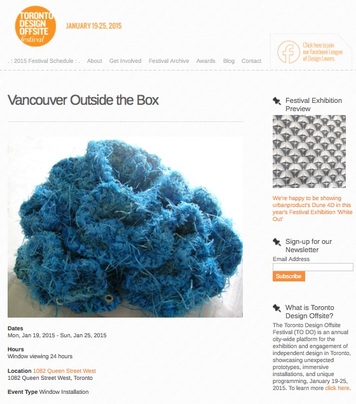
Picture'Spore' (2011) serves as promo visual for the Vancouver design group.
Except if we're talking shipping boxes, for the Toronto Design Offsite (TO DO) Festival next month.

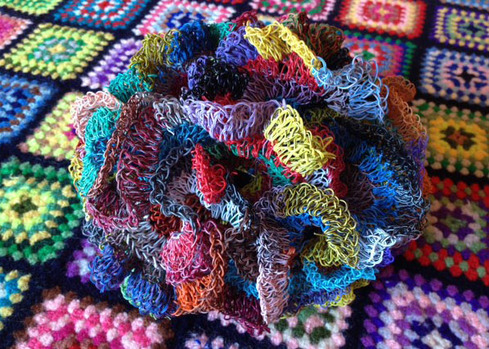
A few object-experiments from my ongoing Fuzzy Logic series will be packed in there, as part of the Vancouver group of makers, selected by the Dear Human creative studio.

It's all part of the ‘Outside the Box’ exhibits featuring works from three selected Canadian cities — Montreal, Calgary and Vancouver — and five from the U.S.: New York, Detroit, Chicago, Los Angeles and Seattle.

It's a fine way to mine local design ideas and visions through an unexpected selection of objects that are shared in various locations via specific-sized shipping boxes.

The Vancouver contribution includes nine individuals and teams who live, design and make in the greater Vancouver area. The connecting thread is a pursuit of a design practice through material exploration, according to Dear Human. "Whether through common applications of unusual materials or transcending common materials through unusual applications, exploration is evident in each of the included objects." 

Rounding out the Vancouver Outside the Box contingent are: Cathy Terepocki, Dahlhaus, Dina Gonzalez Mascaro, Hinterland Designs, Laura McKibbon, Rachael Ashe, and Studio Bup.

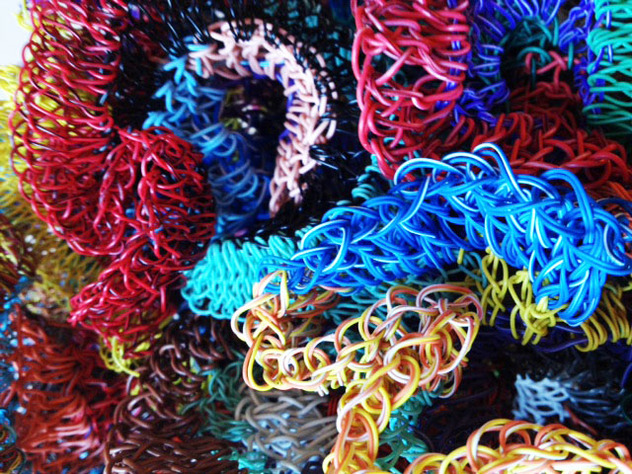
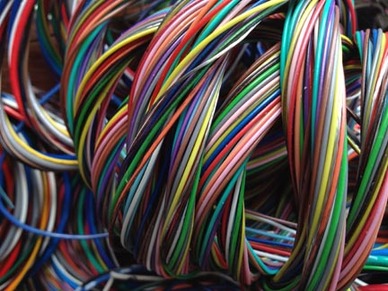
PicturePlaying with fiber optics (Photo by Carlyn Yandle)
Vancouver Outside the Box will take over the windows at 1082 Queen Street West, Toronto, from January 19-25, 2015.

TO DO is an annual city-wide not-for-profit week-long festival that celebrates and showcases the nation's design scene, providing exposure and cross-pollination of ideas and techniques. There are too many exhibits, installations, talks, parties and films to list here, so check out the full (and growing) schedule here as well as the fun promo video.

PictureDetail of Fiber Optics (Photo by Carlyn Yandle)


Comments

Is Instagram a godsend for artists, a social drug, or worse?

11/14/2014

Comments

 
I've been giving Instagram a lot of thought. And I've concluded that I'm exhausted.
Picture(Photo by Carlyn Yandle)
I realize that Instagam can turn a small-town lady with a crafty idea into an international business success story, but that's quickly eclipsed by thoughts of more insidious, multinational business antics: top-level consumer marketers who court those Grammars' "Insta-fluence": Nike, Holiday Inn, Burberry. (More at this New York Times article.)

I think about how encouraging it is to have people following you in your creative endeavours, but then I think about the shared similarities among the top social-media savvy "micro-celebrities", our exploding narcissistic culture and the easy-pickins' exploitation for big-brand profit and almost-free fame.

I realize that Instagram can open a door for artists to the big wide sharing world and that by refusing to open that door runs the risk of a lifetime of professional obscurity. Indeed, "Instagram is custom made for the art world," says New York Observer opinion-writer/billionaire financier/art collector Adam Lindemann. But he then adds: "You get a quick flash of an image with virtually no text or explanation. There’s no need to read. It’s perfect for people with zero attention span, zero education and zero interest in learning about anything—perfect, in other words, for the art collectors of today. You could go so far as to say that the successful art of this current generation must be Instagramable to succeed, and if it doesn’t look good on Instagram, it ain’t working in this instant-gratification art world: goldfish have longer attention spans than ‘grammers."

Picture(Photo by Ariel Zambelich/WIRED)
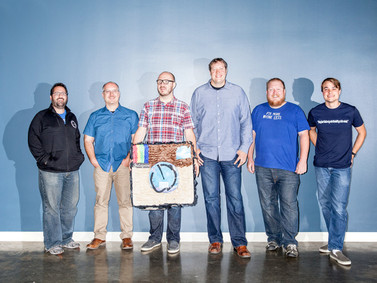
I  realize that it's free and with the help of such apps as Latergram, it's possible to keep the phone-pecking at a daily minimum, but I can't help thinking about these guys: the Instagram and Facebook engineers who recently moved all Instagram photos to Facebook's data centre, without any users the wiser, as reported by Wired. 

I realize that this is a wee worried whisper in the hell-yeah storm of 200 million mostly female, mostly under-35 Instagrammers.  And I realize that I may be overthinking the whole thing. I could be expanding my visual horizons, connecting with artists around the world, but instead I'm fixated on what becomes of the millions of bits of personal information being sucked into that data centre in Forest City, North Carolina (as suggested in the Wired article) every day, and how that data has been used and how it will be, soon enough.

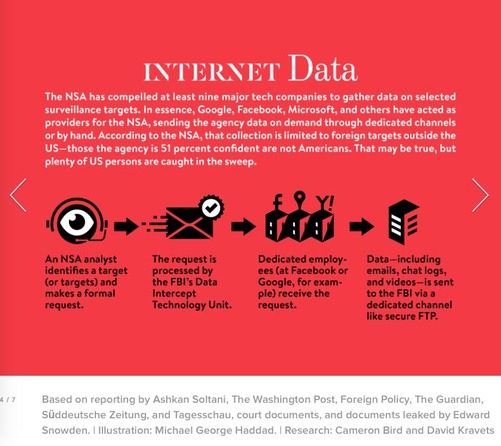
PictureA slideshow still from How the NSA Almost Killed the Internet (wired.com)
Last year the FBI and the National Security Agency were handed over the ability to suck up people's photos, videos, emails and documents, after the largest businesses online allowed the agencies access to their servers. According to a ground-shaking Washington Post article last year, "The National Security Agency is harvesting hundreds of millions of contact lists from personal e-mail and instant messaging accounts around the world, many of them belonging to Americans, according to senior intelligence officials and top-secret documents provided by former NSA contractor Edward Snowden."

I think about Instagram and I think about what's monitored, what's censored (no pubes!), what's the next app to eclipse Instagram's success (Snapchat or Bolt?).  I think about how all these social media apps contribute to the time-sucking attention to that little gadget that is now as much a part of the restaurant table as the cutlery and that has turned a busload of riders into something resembling group prayer. I think about how Rogers is a dealer, getting rich on its users' increasing dependency on data, more data.

Am I overthinking Instagram and the rest of the global social re-wiring? Yes, but I might not be thinking about it enough either.

Comments

Next stop on writers' blog tour is this space

9/26/2014

Comments

 
PictureArleigh Wood
A few weeks back, Vancouver artist-blogger Arleigh Wood asked me if I would be willing to catch the baton on an ongoing, international writers' blog tour. I'm bullish on all collaborative, non-monetizing projects involving social media so I agreed to devote one column to answering the four questions, then passing the baton myself.

Dispensing with the urge to apologize for making this all about My Process, here goes:

What are you working on?

I’ve just finished up a public artwork in Richmond, and finished writing about it, too, so I’m looking forward to re-joining the world beyond this all-consuming project. On my good days I see this as the ‘fallow’ period, when I can absorb, research, reflect, rest and socialize. Other days I see this as my ‘unemployed’ period. What I’m really working on is this idea that ‘working’ is not synonymous with ‘getting paid.’ The weekly blog — I still call this thing a column — provides structure and requires that I get out there and get informed and involved. My journalism career conditioned me to write, on deadline, and regularly. Now it’s become an unconditional part of my creative process.

Why do you do what you do?

A couple of days ago I heard a radio interview in which the guest musician said something to the effect of: “Artists can’t help themselves. They do what they have to do.” I relate to that strongly. I will do just the bare minimum of cooking, cleaning, visiting, caretaking, or travelling to buy myself more time to make. I was the kid in the classroom whose only question about the in-class assignment was, “After we do this can we go to the arts and crafts corner?” The leopard really does not change its spots.

How does your creative process work?

I used to write for a living, then make on my off hours, which sustained me for many years but at some point I knew that when it was financially possible I would have to flip the priorities. I loved the community-building that happens through reporting and writing but I was so creatively spent at the end of the day the best I could do was follow directions by Martha Stewart. I started resenting the fact that I was basically selling all my creative energy. Now I make first, write later. I still need the writing, though, because it leads to more making. That really begins with a compulsion, a need to quell my anxiety. Repetitive, often laborious work is a kind of meditation. With my muscles and motor skills engaged in a pattern of movement or a set of gestures, my brain is free to roam. Often I don’t know at the onset what I’m making but it reveals itself, the way fiction writers often talk about how they will introduce a character then watch that character develop. My making opens up possibilities for new explorations and ideas.

What makes your work/blog unique?
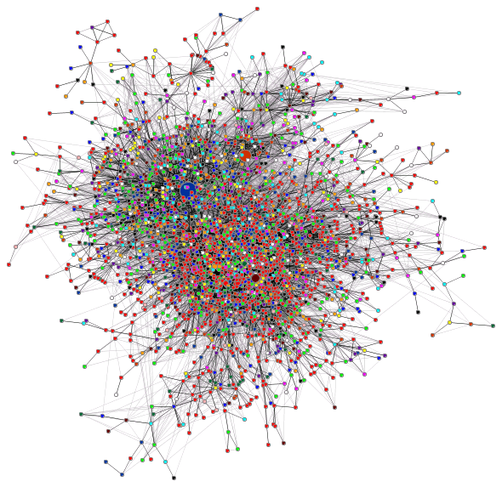
PictureCharting the blogoshphere (from datamining.typepad.com)
I have trouble with the concept of uniqueness. I see my work as a small act of participation indicative of our unique social species, one buzzy speck in the hive. I blog to take full advantage of the free opportunity (for now) to participate in the larger conversation, by sharing visually and through the written word. I am not driven by a need to amass followers or accumulate hits but more by a compulsion to create a personal record of developing creative process and culture. It may just dissolve into the ether, or maybe it will be added to the social record but at least no trees were sacrificed in the process.

Picture
Who would you like to pass the blogging baton to?

Leanne Prain is another Vancouver-based maker/writer combo and the author of the newly published Strange Material: Storytelling Through Textiles; Yarn Bombing: The Art of Crochet and Knit Graffiti (co-authored with Mandy Moore) and Hoopla: The Art of Unexpected Embroidery. She blogs about crafts (especially textiles) and the people who make them, design, art, urbanism, publishing, and her writing life. She also does public speaking and leads workshops. 

Meet Ms. Prain in person at
 Hot Wet Art City gallery on Tuesday, Oct. 7, 7:30 p.m. when she and fellow authors Betsy Greer and Kim Piper Werker tackle “The Intersection of Craft, Creativity, & Activism.”

Linking over to you, Leanne.

Comments

Fleeting acts of self-expression hold special power

8/1/2014

Comments

 
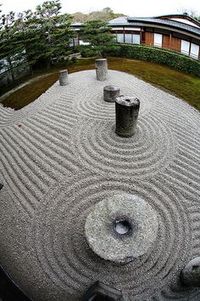
PictureZen Garden, Buddhist Temple, Japan
The first time I saw a "dry landscape" Zen garden in one of the hundreds of temples in Kyoto, my brain sort of short-circuited.

This was the mid-'80s, and here was a Zen Buddhist priest meticulously raking the gravel against a lurid neon backdrop of sudden affluence and an alarming amount of consumer waste, often un-used and in its original packaging.

Now, of course, we get it. We have been seduced by the easy acquisition of stuff, then oppressed by all our stuff as the economy contracted (and nearly collapsed in the U.S.) We realized the two-car-garage life was not for us and now we spend a lot of time and angst trying to figure out how to part with our stuff.  We have been hoodwinked by marketers who prey on and play up our inadequacies, even inventing a highly lucrative shopping 'holiday', Cyber-Monday.

PictureLeah Biggs photo
There's an entire genre of art that reflects our dis-ease with all the stuff (see 10 visuals here) and painters have had to re-think their practice (of eking out a living) now that 'original' oil paintings sell at Winner's for $39.99, straight from Dafen Village, China.

What is emerging is a conversation about what really matters, which inevitably concludes with 'experiences.' It would be nice to think this shared revelation is rooted in our own free will, but really, the marketers have shot themselves in the collective foot. A rampant, speculative real estate

PictureBeck's fleeting design at a French ski resort uses snowshoes and clotheslines.
market has forced mortgage-choked folks into smaller quarters where there is just no room for more stuff. Car-ownership is being increasingly seen as a hangover from another marketing era and self-expression is no longer synonymous with the home-decor category.  Expression is becoming a participatory practice, enhanced by that one burgeoning consumption category — the ubiquitous personal screen and all its accompanying non-object data packages, games and apps. Mobility-marketing promotes an era of impermanence. Photos are as fleeting as the gravel-raking or the daily rice-flower Kolam drawings of South Indian women (see video, at bottom) or the snowshoe-patterns created by Englishman Simon Beck (left).

PictureCarlyn Yandle photo
Retail therapy is slowly being replaced by escape therapy. We balance rocks and create Calder-esque mobiles of driftwood. We take pictures, we post them on our blogs. We have amassed nothing but memories of that mindful, meditative moment of exploring the surface and mass of natural objects. We share them and are inspired by others' sharing.

Priceless.


Comments

The pretty and the pretty awful make it into Eastside murals

4/11/2014

Comments

 
PictureUrban Crow (detail), by Richard Tetrault


I have this vague, hippie-era-soaked memory
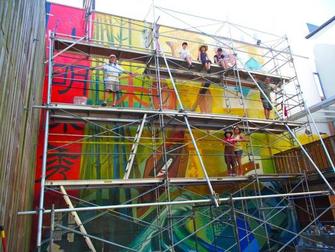
of my brother and I hanging with my father as he painted a wall alongside some other artists. Forty years later I suggested to my brother that he swing by my own mural project last summer, reminding him of those times when we were to come see the art in the making.

There's a humble history of mural-making in East Vancouver, but well-known Strathcona-based artist Richard Tetrault has taken it to new heights. Speaking in Vancouver and Richmond this week, his survey of his large-scale, collaborative, very public paintings emphasizes place and history.

His work is about layers: the often conflicting layers of histories of Vancouver's distinct communities and the layers of translucent colour that identify his painting style.

PictureIconic hydro poles and back lanes, Urban Crow (detail)
The very-Vancouver images of construction cranes, crows, and hydro wires take on symbolic meaning in his murals. But behind the expansive visuals on the sides of buildings or retaining walls is a whole other skill area: working with Eastside communities to create the content that is often contentious but necessary, he says, in moving forward. So, residential schools and the 'bad' Balmoral hotel sign are depicted, often despite some objections by those who are haunted by them, but in a way that acknowledges their impact without further torment. 

Then there is the challenge of the logistics of securing funding and handling swing stages and working while exposed to the elements. These are skills that only develop from a lifetime of experience in public mural-making, and are invisible in his slideshow of works that show, say, collaborating members of the Chinese, First Nations, and Japanese community represented in the Radius mural at the Firehall Theatre in Vancouver's Downtown Eastside (below).

PictureThe Radius mural in progress at the Firehall Theatre.
Some of that background can be seen in the short film (see YouTube clip, below) about the immense Through the Eye of the Raven collaborative mural on the Orwell Hotel.

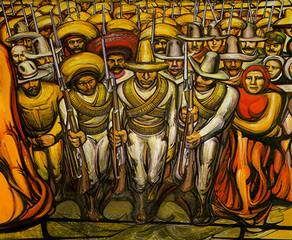
Tetrault is heavily influenced by his own early-adult years in Mexico, absorbing the social art murals by the likes of the big three — Orozco, Rivera, and Siqueiros — whose large-scale public artworks were created to speak to a largely illiterate indigenous population.

PictureSiqueiros' Revolutionaries (detail), 1957-65
What makes a good/important contemporary mural remains the subject of great debate, making this public artform fraught with issues. 

Is a mural without a message — such as to remember a history of struggle, to give rights or hope to the wronged, to call to action — mere decoration? Is colour, beauty and skill worthy enough of public funding? What are the parameters for officially sanctioning one kind of expression over another? Should the public have input into what is being funded?


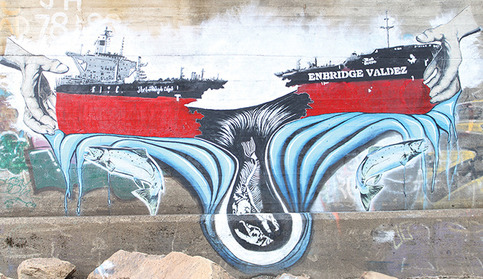
PictureOne Terrace local shares his views on the Enbridge campaign. Photo by Josh Massey
Unauthorized murals — also known as graffiti — are fleeting but can also pack a punch, as famously seen in Bansky's surreptitiously created scenes.

It can be seen in the work of my cousin in Terrace BC. (name withheld) for his anti-Enbridge art on the public property of the old Skeena Bridge and possibly painted out by now. For the people, by the people. 


***
Richard Tetrault's murals can be seen in the flesh with the help of the interactive maps in this self-guided Eastside Mural Tour.

Comments
<<Previous
    Cross-posted at
    carlynyandle.substack.com

    browse by topic:

    All
    Abject
    Abstract
    Abstract Embroidery
    Abstraction
    Abstract Painting
    Abundance
    Accumulations
    Acrylic
    Activism
    Additive
    Aesthetics
    Agency
    AgentC Gallery
    Aging
    Alison Woodward
    Aluminum
    Amanda Wood
    Anxiety
    Appropriation
    Arcade Fire
    Architecture
    Arleigh Wood
    Art
    Art Activism
    Art Blog
    Art Business
    Art Discourse
    Art History
    Artifact
    Artist
    Artist Residency
    Artist Statement
    Artist Talk
    Art Marketing
    Art Quilt
    Arts And Crafts
    Art School
    Art Show
    Art Spiegelman
    Assemblage
    Author
    Banksy
    Bauhaus
    Beauty
    Betsy Greer
    Big Data
    Billy Patko
    Binding
    Blogs
    Blog Tour
    Bob Krieger
    Body Of Work
    Books
    Boro
    Braided Rug
    Braiding
    Bruce MacKinnon
    Bruce Mau
    Building
    Bull Kelp
    Burlap
    Business
    Buttons
    Canadian Artist
    Carlyn Yandle
    Caroline Eriksson
    Cartoon
    Ceca Georgieva
    Challenge
    Charley Yandle
    Children
    Christmas
    Cindy Sherman
    Circular Thinking
    Cirque Du Soleil
    City As Site
    City Planning
    Cityspace Gallery
    Clay Yandle
    Climate Change
    Cluster
    Cob
    Cob Oven
    Collaboration
    Collage
    Collection
    Colonialism
    Color
    Colour
    Commission
    Community
    Community Building
    Composition
    Conceptual Art
    Conceptual Craft
    Connection
    Connie Sabo
    Construction
    Coronavirus
    Cosplay
    Costume
    Counter Culture
    Counter-culture
    Cover
    Cover-19
    Covid
    Craft
    Craft Blogs
    Craft Camp
    Craftivism
    Crafts
    Craftsmanship
    Creative Process
    Critique
    Crochet
    Cross-stitch
    Cultural Hub
    Cultural Studies
    Culture
    Culture Jamming
    Culturejammingc9d75664fd
    Current Conditions
    Cycling
    Dafen Village
    Dallas-duobaitis
    Dance
    Data-graphic
    Data-graphic
    David Weir
    Dear Human
    Decorations
    Deep Craft
    Denim
    Denyse Thomasos
    Design
    Digital Art
    Discomforter
    Display
    Dissent
    Distraction
    Distracts
    DIY
    Doilies
    Doily
    Domestic
    Domestic Interventions
    Douglas-coupland
    Draw Down
    Drawing
    Dressed
    Drip By Drip
    DSquared2
    Dude-chilling-park
    Dyeing
    Dystopia
    Eastend
    Eastside Culture Crawl
    ECUAD
    ECUAD MFA
    Editorial
    Edward Burtynsky
    Eggbeater Creative
    Embellishment
    Embroidery
    Emily Blincoe
    Emily Carr Cozy
    Emily Carr University
    Entanglements
    Environment
    Environmental Art
    Exhibit
    Exhibition
    Expanded Painting
    Experimentation
    Exploration
    Expression
    Fabric
    Fabricating
    Fabrication
    Facebook
    Failure
    Fashion
    Fashion Revolution
    Fast Fashion
    Feminisim
    Feminist
    Feminist Art
    Festival
    Fiber
    Fiber Artist
    Fiber Arts
    Fibre
    Fibre Arts
    Film
    First Saturday Open Studios
    Flo
    Flow
    Forage
    Foraging
    Form
    Form And Function
    Foundlings
    Found Materials
    Found Objects
    Fractal
    Fracture
    Free Store
    Fuckwit
    Fuzzy Logic
    Gallery
    Gallery-row
    Garden
    Gardening
    Garment
    Gathering
    Gentrification
    Geometric Art
    Gill Benzion
    Gingerbread
    Globalization
    Glue
    Goblin Core
    Grad 2020
    Graffiti
    Grannycore
    Granny Square
    Granville-island
    Green Space
    Grid
    Grief
    Guanajuato
    Guerrilla Art
    Guerrilla Girls
    Halloween
    Handmade
    Handmaking
    Hand Stitching
    Hand-stitching
    Handwork
    Hashtags
    Haywood Bandstand
    Healing
    Health
    Hearth
    Heirloom
    Hideki-kuwajima
    Hoarding
    Homelessness
    Homemade
    Hot Art Wet City
    Housing
    Hybrid Thinking
    Ian Reid
    Ian Wallace
    Ideas
    Identity
    Images
    Imagination
    Immersive Art
    Improvisation
    Incomplete Manifesto For Growth
    Industrial Design
    Industry
    Innovation
    Inspiration
    Instagram
    Installation
    Installation Art
    Intervention
    Intrusive Thoughts
    Invention
    Irena Werning
    Ironing
    Janet Wang
    Jeans
    Jeff Wilson
    Joel Bakan
    Joseph Beuys
    Joseph-wu
    Journalism
    Joyful Making In Perilous Times
    Joyfulmakinginperiloustimes
    Judith Scott
    Kamala Harris
    Kids Art
    Kim Piper Werker
    Kimsooja
    Kintsugi
    Knitting
    Knots
    Knotting
    Kyoto
    Labor
    Labour
    LA Fires
    Landon Mackenzie
    Landscape
    Leanne Prain
    Lecture
    Lighthouse
    Linen
    Liz Magor
    Log Cabin
    Logo Sweater
    LOoW
    Lost Painting
    Lumiere Festival
    Lynda Barry
    Macrame
    Maker
    Making
    Making Is Connecting
    MakingIsConnecting
    Malcolm Gladwell
    Male Gaze
    Mapping
    Maquette
    Marie Kondo
    Marine Palette
    Marketing
    Mark Lewis
    Martha Rosler
    Martha Stewart
    Masks
    Material Exploration
    Mathematics
    Maya
    Media
    Meditation
    Meditative
    Mending
    Mend In Public Day
    Mental Health
    Metalworker
    MFA
    Mister Rogers
    Mixed Media
    Mobile Art Practice
    Monique Motut-Firth
    Monster
    Monte Clark
    Mosaic
    Motivation
    Mt. Pleasant Community Centre
    Mud Girls
    Mural
    Mushroom
    Mycelium
    Narrative
    Natalie Jeremijenko
    Nature
    Needlework
    Neon
    Net
    Network
    Networking
    Neuroplasticity
    New Forms Festival
    Newspapers
    Nick Cave
    Noah Goodis
    Nodes
    North Vancouver
    Obtrusive Thoughts
    Omer Arbel
    Online Talk
    Openings
    Organization
    Origami
    Overabundance
    #overthinking
    Paint
    Painting
    Pandemic
    Paper
    Paper Sculpture
    Papier Mache
    Parkade Quilt
    Patchwork
    Patriarchy
    Pattern
    Pecha Kucha
    Pechakucha
    Perception
    Perfectionism
    Performance
    Performance Art
    Personalispolitical
    Photography
    Playing
    Political Art
    Political Satire
    Polly-apfelbaum
    Pompidou
    Poodle
    Pop-Up
    PopUp
    Port Coquitlam
    Portrait
    Practice
    Process
    Production
    Profession
    Project
    Protest
    Protest Art
    Psychedelic
    Public Art
    Pussy Hat
    Pussy-hat
    Qr Code
    Quilt
    Quilt Block
    Quilting
    Quilt Painting
    Rachael Ashe
    Rachel Lafo
    Ravages
    Raw Materials
    Rebar
    Recycle
    Recycling
    Reflection
    Reflektor
    Reimagine
    Renewal
    Repairing Is Caring
    RepairingIsCaring
    Repetition
    Research
    Residency
    Resistance
    Resurge
    Retreat
    Re-use
    Rhonda Weppler
    Richard-tetrault
    Richmond Art Gallery
    Right Brain
    Rondle-west
    Roses Against Violence
    Rote Activity
    Rug
    Ryan-mcelhinney
    Safe Supply
    Safety
    Sampler
    Sarah-gee-miller
    Sashiko
    Saskatchewan
    Scaffolds
    Scaffolds I
    Scale
    Scraps
    Sculpture
    Seasonal Decor
    Seattle Art Museum
    Seaweed
    Seismic Rug
    Semiotics
    Sewing
    Seymour Art Gallery
    SharingIsCaring
    Sharon Kallis
    Shawn Hunt
    Shigeru Ban
    Sketchup
    Slow Craft
    Smocking
    Social Art
    Socialart
    Social Distancing
    Social Distancing Hat
    Social Engagement
    Social-engagement
    Social History
    Social Justice
    Social Media
    Soft Sculpture
    South-granville
    Space Craft
    Spore
    Stitching
    Storage
    Street Art
    Studio
    Styrophobe
    Substack
    Subversive Stitch
    Surrealism
    Surrey
    Tactical Frivolity
    Tactility
    Tagging
    Talking Art
    Tapestry
    Tatjana Mirkov-Popovicki
    Tattoo
    Teamlab
    Technology
    Terry Fox Theatre
    Text
    Textile
    Textile Art
    Textiles
    Thrifting
    Thrift Stores
    @tinypricksproject
    Tiny Pricks Project
    TJ Watt
    TO DO
    Tools
    Toronto Design Offsite
    Toybits
    Trash
    Trash Art
    Travel Art
    Trevor Mahovsky
    Trump
    Typography
    Tyvek
    Unbridled
    Unfixtures
    Unravel
    Upcycle
    Upcycling
    Urban Design
    Use Object
    Use Objects
    Utility
    Value Village
    Vancouver
    Vancouver Art Gallery
    Vancouver International Airport
    Video
    Video Tour
    Visual Artist
    Visual Field
    Visual-field
    Visual Language
    Wabi-sabi
    Wallace Stegner House
    Wall Hanging
    Waterwork
    Wearable Art
    Weaving
    William Morris
    Women's March
    Wood
    Wool
    Work Wraps
    Wrap I
    Wrap II
    Writing
    Xenobia Bailey
    Yarn Bombing
    YVR
    Zaha Hadid
    Zendoodle
    Zero Waste Art
    Zero-waste Art

    Archives

    January 2026
    December 2025
    November 2025
    September 2025
    May 2025
    April 2025
    March 2025
    January 2025
    December 2024
    November 2024
    October 2024
    September 2024
    August 2024
    July 2024
    June 2024
    October 2022
    August 2022
    June 2022
    November 2021
    April 2021
    September 2020
    April 2020
    December 2019
    November 2019
    September 2019
    August 2019
    July 2019
    June 2019
    April 2019
    November 2018
    July 2018
    May 2018
    November 2017
    September 2017
    June 2017
    April 2017
    March 2017
    February 2017
    December 2016
    November 2016
    September 2016
    July 2016
    March 2016
    February 2016
    January 2016
    December 2015
    November 2015
    October 2015
    September 2015
    June 2015
    May 2015
    April 2015
    March 2015
    February 2015
    January 2015
    December 2014
    November 2014
    October 2014
    September 2014
    August 2014
    July 2014
    June 2014
    May 2014
    April 2014
    March 2014
    February 2014
    January 2014
    December 2013
    November 2013
    October 2013
    September 2013
    August 2013
    July 2013
    June 2013
    May 2013
    April 2013
    March 2013
    February 2013
    January 2013
    December 2012
    November 2012
    October 2012
    September 2012
    August 2012
    July 2012
    June 2012
    May 2012
    April 2012
    March 2012
    February 2012
    January 2012
    December 2011
    November 2011
    October 2011
    September 2011
    August 2011
    June 2011
    May 2011
    April 2011
    March 2011

Powered by Create your own unique website with customizable templates.
Picture