carlyn yandle
  • about
  • the creative process
  • crafted objects
  • public art
  • painting
  • exhibitions
  • contact

Taking it Outside

5/1/2025

 
Escaping the dark world of scrolling the socials

“Take it outside” was a standard parenting directive back in the 1900s, shouted at the kids when pro-wrestling or trying to extricate a running shoe from the dog’s lock-jaw or whining for no reason. Taking it outside is harder to do if you live in an apartment tower but there’s no alternative if you’re a teenager hoping for a social life.

My old high school was surrounded by condo towers and mid-rise apartment buildings that are now being razed for higher towers. Hanging out indoors was not an option for many of my friends who lived in one-bedrooms with a single parent. Instead, we migrated from one friend’s building to another, buzzing intercoms to meet them in their lobbies and then go harass some other friend on shift at the Shoppers Drug Mart or hover in front of the fish-and-chips place to try to get the cute server to notice us. We mingled outside at the mini parks and the beach until we were old enough to get inside the clubs.

The club life is a dim memory but I am still compelled to take it outside. When the pandemic lockdown hit, I switched from working in an art studio to hand-stitching a large project on my porch. As the weather improved, I brought any old small thing to stitch to the neighbourhood park, two metres apart from others. That evolved into an improvisational mobile, outdoorsy art practice that begins with a piece of found linen, usually an old stained tablecloth that nobody wants.

Before heading outside I set the linen in the hoop then do a little table work, diluting paint with water and dropping it on the linen to watch the pigments spread through the taut fibres. Sometimes I sprinkle on more water or more undiluted pigment to saturate the colour or increase the bleed, or throw on some salt or soil or a slop of my coffee and observe those effects. I let that dry. I repeat all this in different sections of the linen, maybe including some of the tablecloth design or stitching, then decide which section could use some embroidery embellishments. I cut out that one preferred area, then choose a palette of embroidery floss. My mobile art practice is ready to go wherever I go.
Picture
Embroidery-painting essentials: one 8-inch hoop with ongoing linen project, small primary-colour paint set of liquid acrylics, a mechanical pencil, one small paint brush, fold-up scissors, a bag of a embroidery floss and two embroidery needles. (This art go-bag has passed airport security many times.)
Taking it outside the studio has become my way of working when travelling or during these months of long daylight hours. It is my summer work: some are working, some are not (har-har). No matter; it’s all just practice — practice in learning embroidery stitches (heather and blanket, french knot, woven rose), traditional sashiko patterns, and the personal and social histories of found linens. It is in learning mindfulness, by breaking the habit of scrolling through the socials or fixating on iPhone games and engaging with the world.
​

Inside is for the wintery work of queen-sized quilts and hooked rugs. For the next six months the art studio is simply a storage facility for the large-scale stretched painting canvases, fibre-art hangings, and the clutter of tubes of paint, rags and brushes. This is the season for shedding all that bulk, reducing this art practice to fit into a toiletries bag that lives in the daypack that I take on bike rides all over the city. I pull it out in ferry-passenger lounges, on long bus rides, at park picnics.
Picture
An evolving mobile, outdoorsy art practice confined by materials and method.
Inside is where all the screens are, the source of the unfathomable, dark news of the dismantling of democracy and political extortion. Outside is where all the social and political action is. That includes the global Mend in Public Day last Saturday, April 26, a Fashion Revolution creative action to resist the cycle of excess, through repair and reuse. This year in Vancouver, that was at the Main Street and East 21st Avenue plaza and Granville Island.

The future is fungal

1/18/2025

 
Mushrooms and more for troubled times
When you spend a good portion of your winter cowering from the cold and the rain, it’s hard to fathom the fiery desert winds that are obliterating entire neighbourhoods just a three-hour flight south. In the near-real-time images and video only chimneys, mangled metal and concrete driveways hint at what used to be.

But then you notice the vestiges of palm trees, bougainvillea vines, laurel hedges, tufts of sisal and succulents. Before the last tendrils of smoke dissipate and the insurance battles begin, these plants hold the promise that buds and leaves will sprout and new colonizer species will emerge, boosted by an ashy soil. They are a reminder that whether it’s our perilous planet or our own contorting guts, flora heals.
​
This front line in ground recovery is below the surface, a mycelium network of fungal lace that can erupt in reproductive spores, most noticeably after wildfire as a bright orange carpet of tiny caplets.
Picture
Mapping entanglements: Crocheted cotton, acrylic on panel, 12”x12” (Carlyn Yandle)
Mycelium is all the rage these days, embraced for its regenerative properties. I may be a little disturbed by the tiny fungal ecosystem flourishing in a dark corner of my damp art studio, and mushrooms on my tongue may feel like phlegm balls, but I get excited at the news that mycelium is being explored to fight cancer cells and alleviate physical and psychological trauma.

​The earth-sustaining potential of mycelium is unlimited: just one bus-ride away from my studio, at UBC’s Biogenic Architecture Lab, bricks and other building 
materials are being made from edible fungi like oyster-mushroom mycelium; the late actor Luke Perry’s final wish was to be wrapped up in mycelium embedded in a Mushroom Death Suit for his green burial. (And he was.)
Picture
Mapping entanglements II: acrylic on panel, 12”x12” (Carlyn Yandle)
Mycelium spores, unlike seeds, are resilient to toxic compounds, high temperatures, drought and radiation — food for thought as footage of those Los Angeles homes, typically composed of and containing a wide array of synthetic polymers, go up in poisonous, cancer-causing smoke.
Picture
Spore: Acrylic and mercerized cotton thread on found linen, 12”x 9” (Carlyn Yandle)
I see mycelium as a pattern for social regeneration after natural and unnatural disaster and scorched-earth policies. Its spreading network of tendrils mirrors our innate need to connect with one another, finding and nurturing our common ground despite divisive forces. Those thickening entanglements bring comfort and joy because we are pack animals. It is in our human nature to come together; we can see it right there in the aftermath of LA fires.
​

We may be on shaky ground but I can feel the rumblings as we emerge/erupt/bloom, mycelium-like, when the conditions call for fresh energy. Bloop! Bloop!

'Foundlings': Kids' works of terrible beauty

7/2/2019

Comments

 
Picture
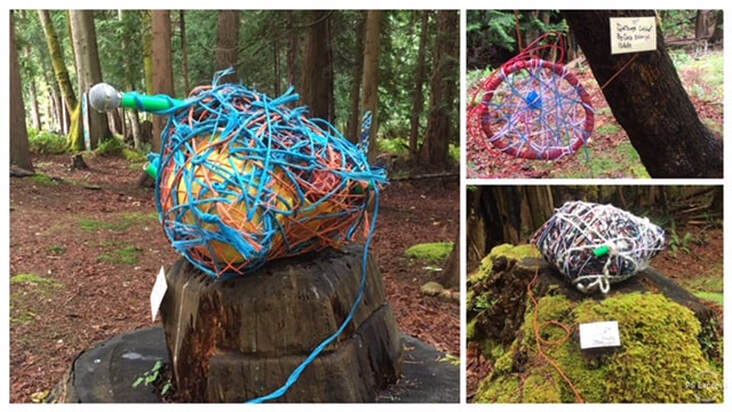
Clockwise from top left: "This Little Lump", Sylva and Shyla; "Garbage Catcher", Coco; "Little Worker", Kahlio, Basha and Ari.
Everyone is feeling that relentless creep of plastic that is threatening to consume us, the consumers. I felt myself drowning in the tsunami of stuff over this past year of grad studies at Emily Carr University. Art, as one instructor stated, is a wasteful business. 

Even as I retreated back to my green, pristine Gulf Island I was hit with it at the end of the long drive through forest to the local dump: a mountain of garbage. This, from a small off-grid community known for its environmental consciousness. 

My art practice is driven by a need to physically grapple with the unfathomable when words are not enough. In the strange way that an idea for an artwork takes hold, that sight of that mountain of petroleum-derived recycling-rejects led to my latest project: Foundlings.

For a while I’d been trying to land on a low-barrier, low-skill technique that could involve kids in the making of objects from found, non-recyclable and non-biodegradable materials. Then I landed on the work of late American sculptor Judith Scott, whose many exhibitions of her curious bound and woven fiber/found objects have led to discourse on “outsider” art, disability (she was profoundly deaf, non-verbal, and had severe Down’s Syndrome), intention, new sculpture forms and the privileged art world. 

Within a month of escaping the art institution I was driving a pickup-truckload of colourful non-recyclable, non-biodegradable bits from the home-grown garbage mountain to the island’s only elementary school.

Before we got to the making part I sat down with the students and shared some images of Scott’s work for inspiration. We talked about how this artist’s method of wrapping, binding and weaving fibre around objects adds curiosity to what is on the inside. We talked about how working with familiar objects and materials in unusual ways can lead to new ideas. And we talked about how an object can be terrible and beautiful at the same time, does not have to be a recognizable thing nor have utility.
Picture
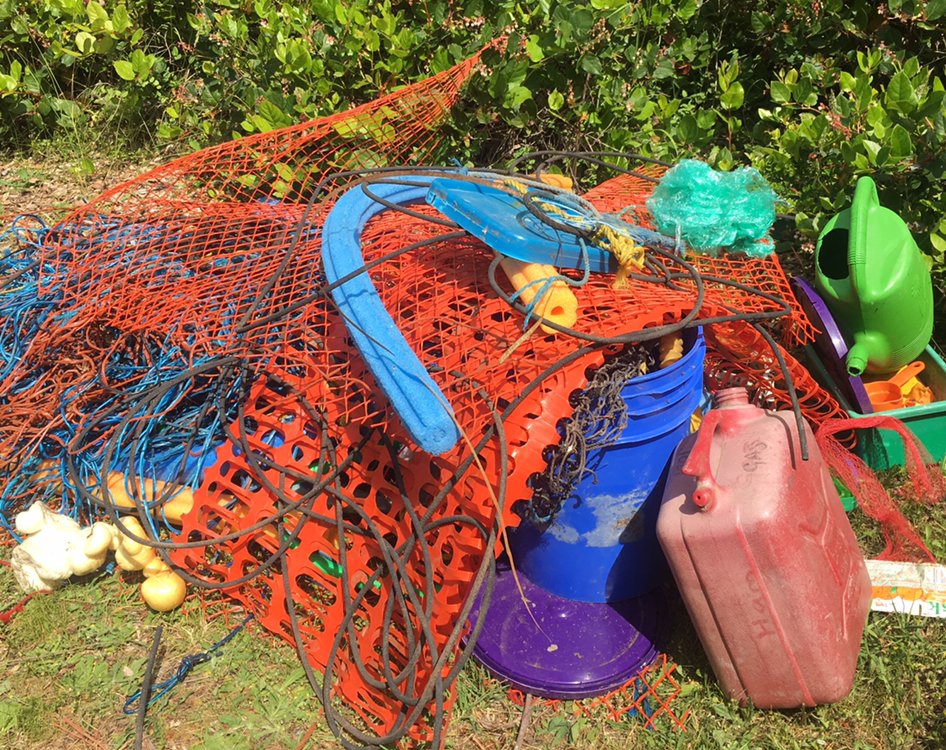
‘Curated’ materials gleaned from the island’s dump.
We worked over time on the pieces, some kids on their own and some in groups of two or three, adding even more fibre and found plastic detritus from their year-end trip to the local provincial marine park. On the final day of school I arrived to pick up the final pieces and was astounded at the creations. They were richly textured, humorous and foreboding, and proof of why I collaborate with children: they consistently demonstrate the importance of letting hands and imaginations fly.
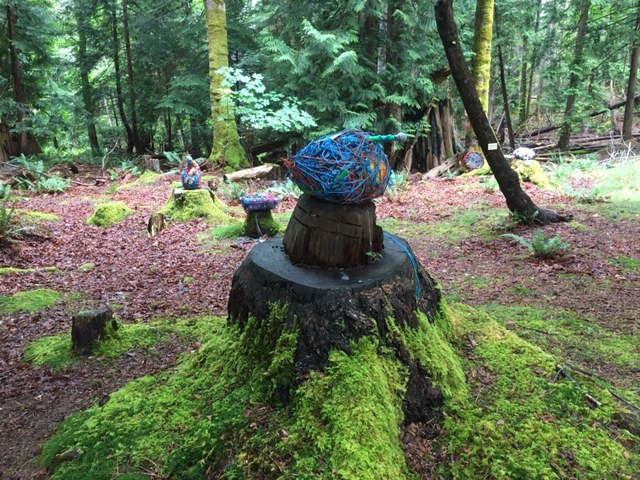
They each titled their pieces in their own hand and I installed them for exhibit on forest plinths (moss-covered stumps from the last big clearcut) in time for the annual Arts Fest. With no chance they’ll degrade in the weather they remain there, pretty and pretty disturbing: our inescapable stuff.
Picture
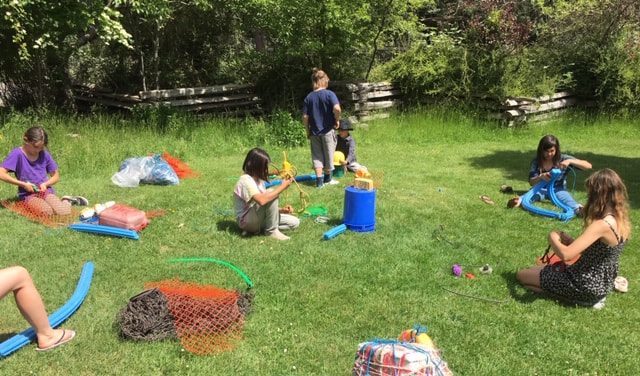
Kids assembling the armatures of their pieces in the first phase of the Foundlings project.
Picture
Part of the Foundlings project, installed in a Gulf Island forest.
Picture
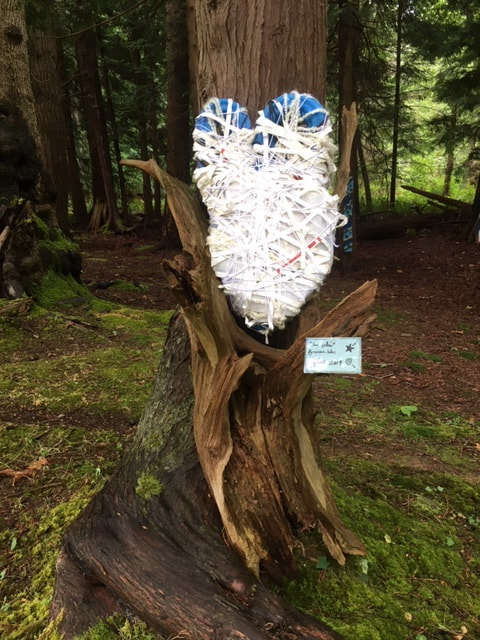
Snow Pillow, by Mikiko
Comments

Attraction, repulsion wrapped up in one sculpture project

6/5/2019

 
At first I thought all this must still be debris from the Japan tsunami. But that was eight years ago and the surf in my remote neck of the woods keeps throwing up snarls of monofilament netting, plastic shards, nylon rope, bits of fibreglass hulls, and styrofoam. So much styrofoam.

I’ve been collecting up the stuff, inspired by this Gulf island’s own Styrophobe who’s taken on what some would say is a Sisyphean task of removing even the tiny beads of polystyrene from the clefts of rock along the shoreline.

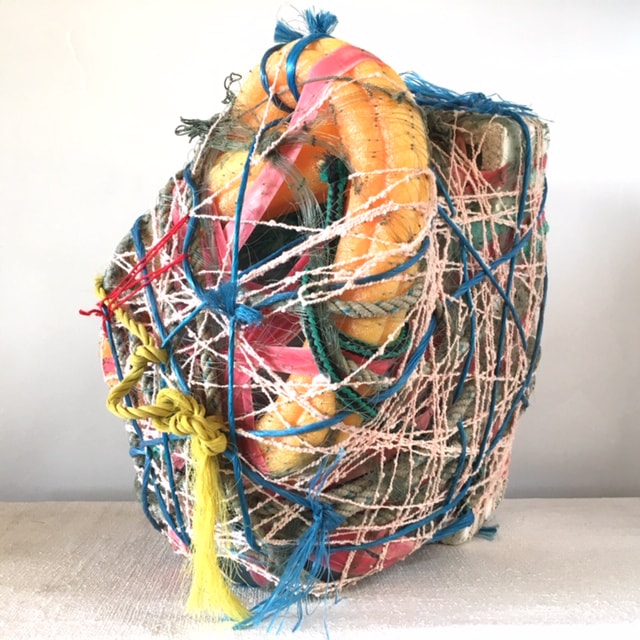
My gathering is a tiny, maybe even futile, gesture but I’m giving form to the invisible: the bits and pieces we overlook on the foreshore or in the forest that, when lashed, bound, and woven together demand attention. These small but critical masses of debris are inspired by the found-material sculptures of Judith Scott. As I lash, bind, and weave I think of how the kids in my life would like to be in on this: hunting for material, making form from their hands and imaginations.
Picture
Inspired by the sculptures by Judith Scott, this mass is texturally rich with culturally-embedded petroleum-derived materials.
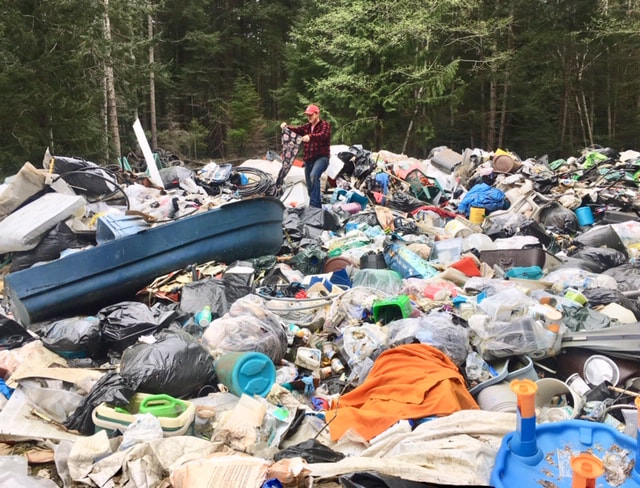
My gathering requires connecting with others to access materials. The Styrophobe, who’s also the guy in charge of the local dump, stands on the top of the garbage mountain, holding up uncertain objects for my consideration: How’s this? This stuff looks pretty good. Could you use this?

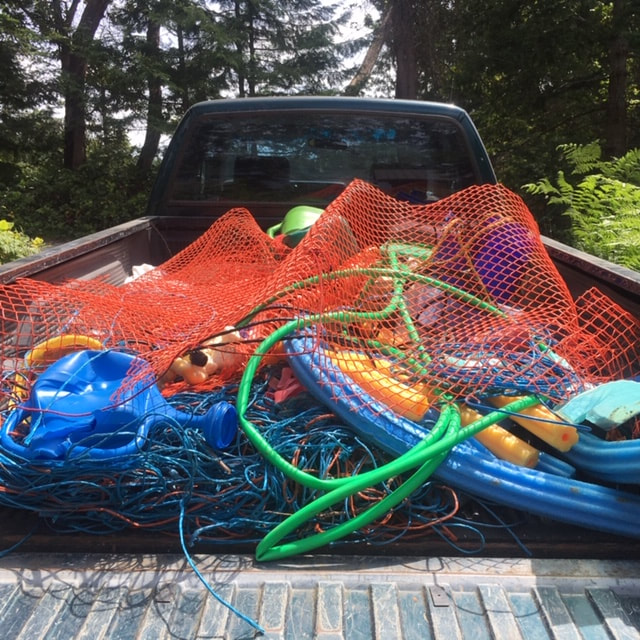
In 15 minutes I fill the back of the pickup truck with a curated collection of colourful plastic throwaways: pool noodles, watering cans, yards of orange fencing, jerrycans, twine, tape, cleaning-pad refill boxes, five-gallon buckets and lids. I fill up with purple things, red things, plastics in acid green, electric blue, hazard yellow, and caution orange — all the colours of the petrochemical rainbow.
Picture
A fan of the local Styrophobe is overwhelmed by the throwaway plastic in this garbage mountain in the forest.
Picture
A curated collection of non-biodegrable recycling rejects fills a pickup truck.
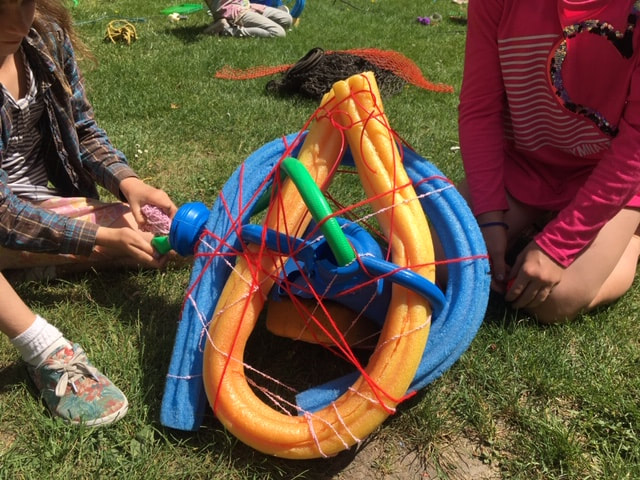
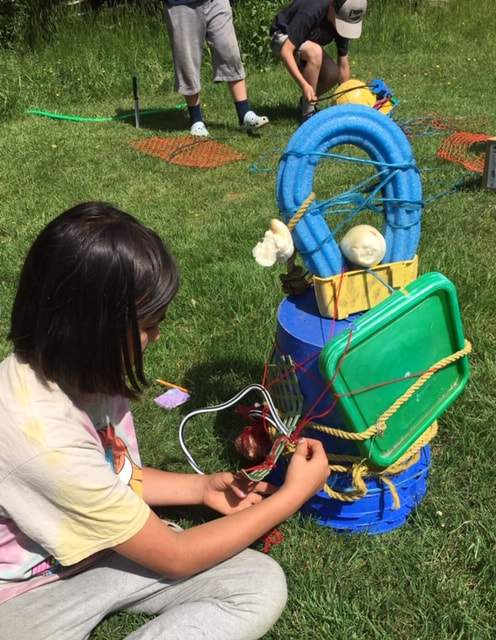
After a lot of material prep (cutting off snags and sharp bits, wiping and washing off surface debris), I haul it to the local school where the kids, teacher and I dive in and play with the unwanted stuff. We have plans and we don’t have a plan, which is the right place to be with material exploration. This is where we learn to work with each material and not against its inherent nature, a great reminder of the futility of forcing solutions. This is where we learn to follow our hands, to work on our own or collectively over days and not minutes, to consider colour, form, and techniques for putting it all together, to create something that resonates with this time and place out of nothing anybody wanted.

It’s an important start for the generation that will be forced to deal with this legacy of stuff long after the plastic-agers die off.
Picture
Kids take to the colourful cast-offs during Day One of a sculpture workshop.
Picture

Gritty beauty seen in foundations of this pretty city

2/28/2017

Comments

 
Picture
It feels like the Internet has killed the fun of taking snapshots of beautiful cities and people. So many times over the last four months in Mexico I've raised my camera (phone) to capture an impressive bronze sculpture or some baroque church facade then thought: This is pointless. A Google-image search with a few key words (Guanajuato, musicians, Don Quixote, Pipila) would produce hundreds of better-quality stock photos. We're saturated in instagrammable images. I miss those old pocket travel photo albums.

This might explain all the selfie sticks threatening to take your eye out in the crowded plazas on any given night here; putting yourself in the picture with all the famous stuff behind will guarantee a unique photo.

So I have very little in terms of a photographic record for my time here. Every view of the strolling musicians in the plazas, or the teenage girls decked in ballgowns for their quinceanera (debut) parties, the food vendors, the street singers dressed in Renaissance-style hose and puffed velvet jackets are already done. So done.

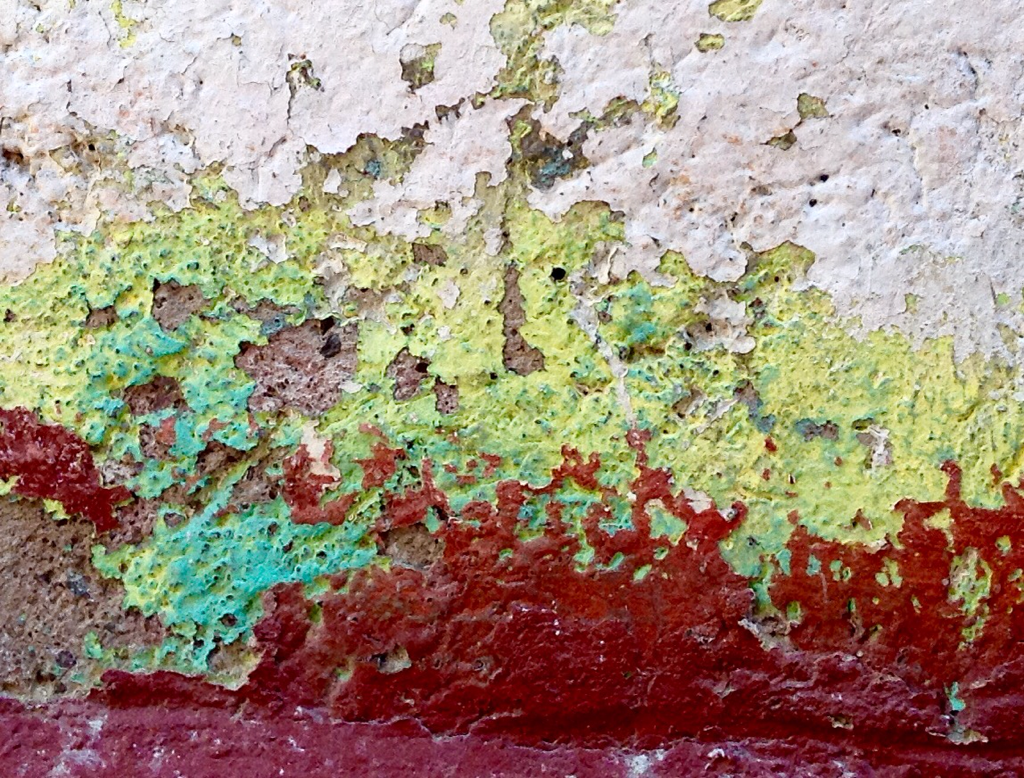
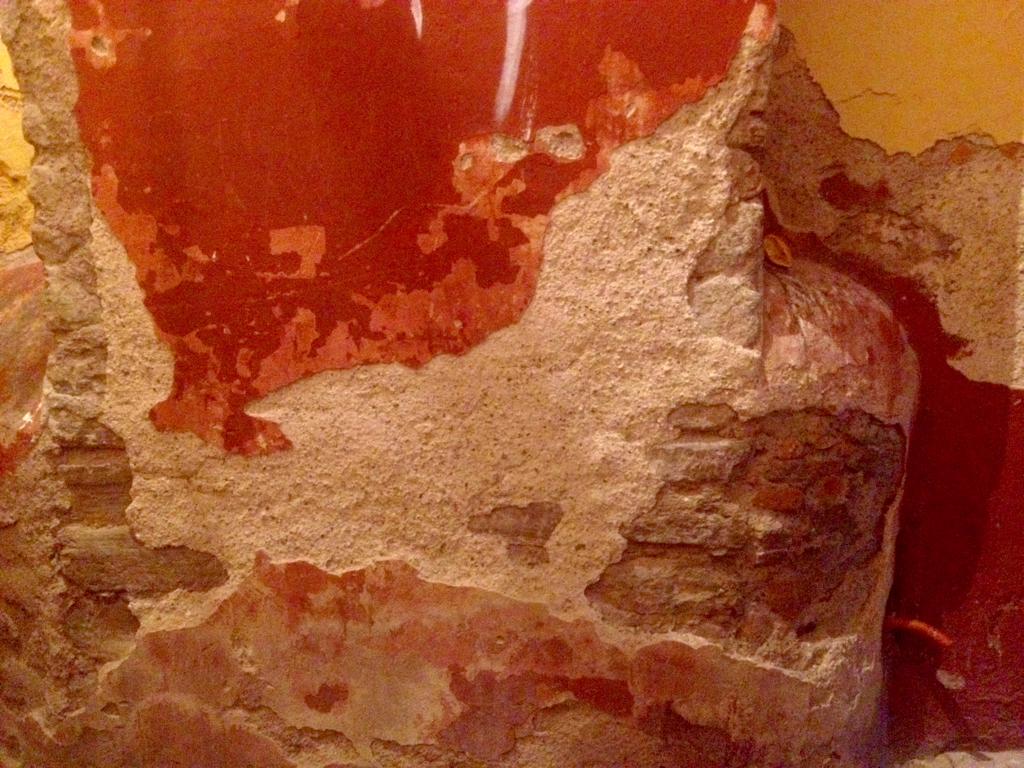
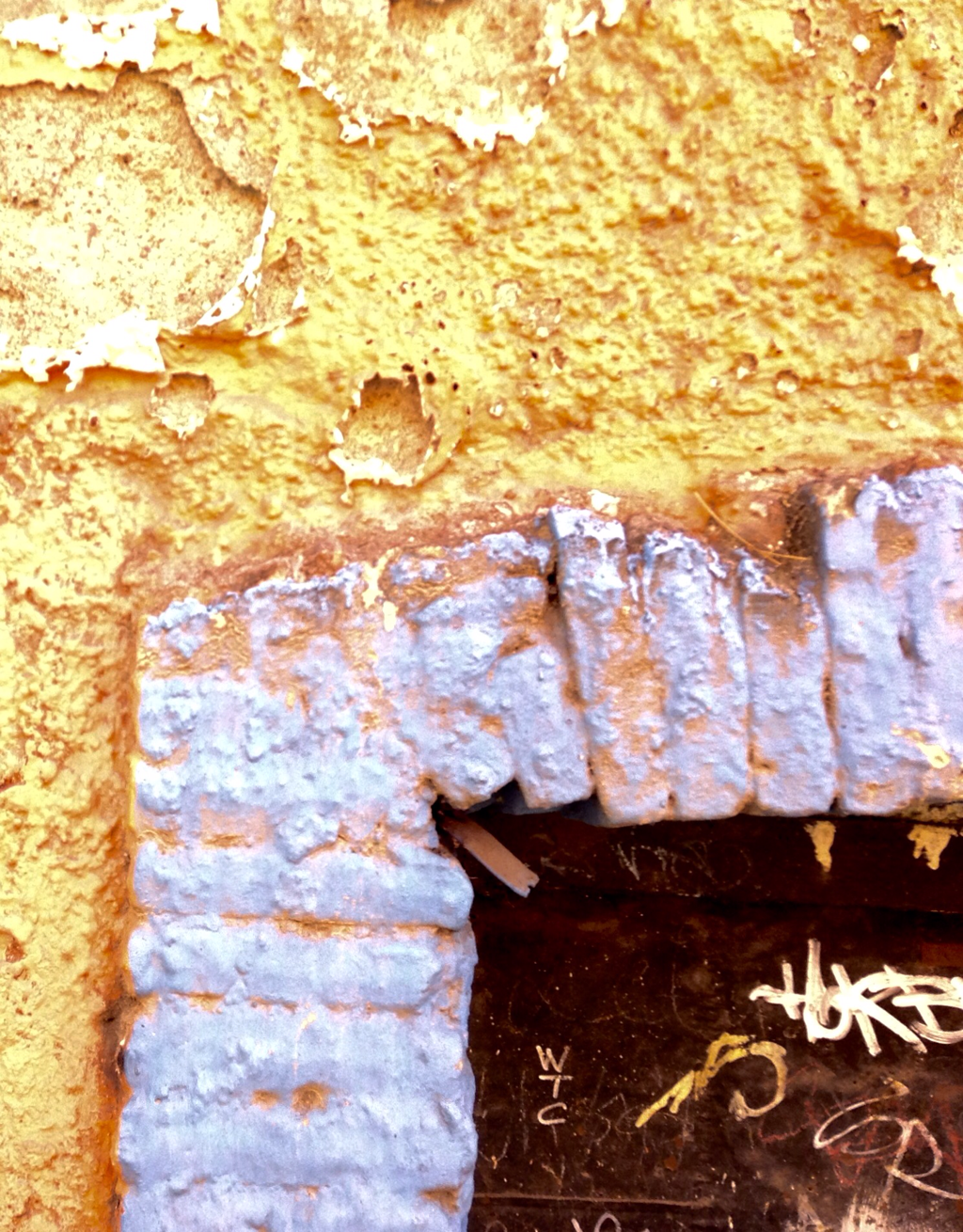
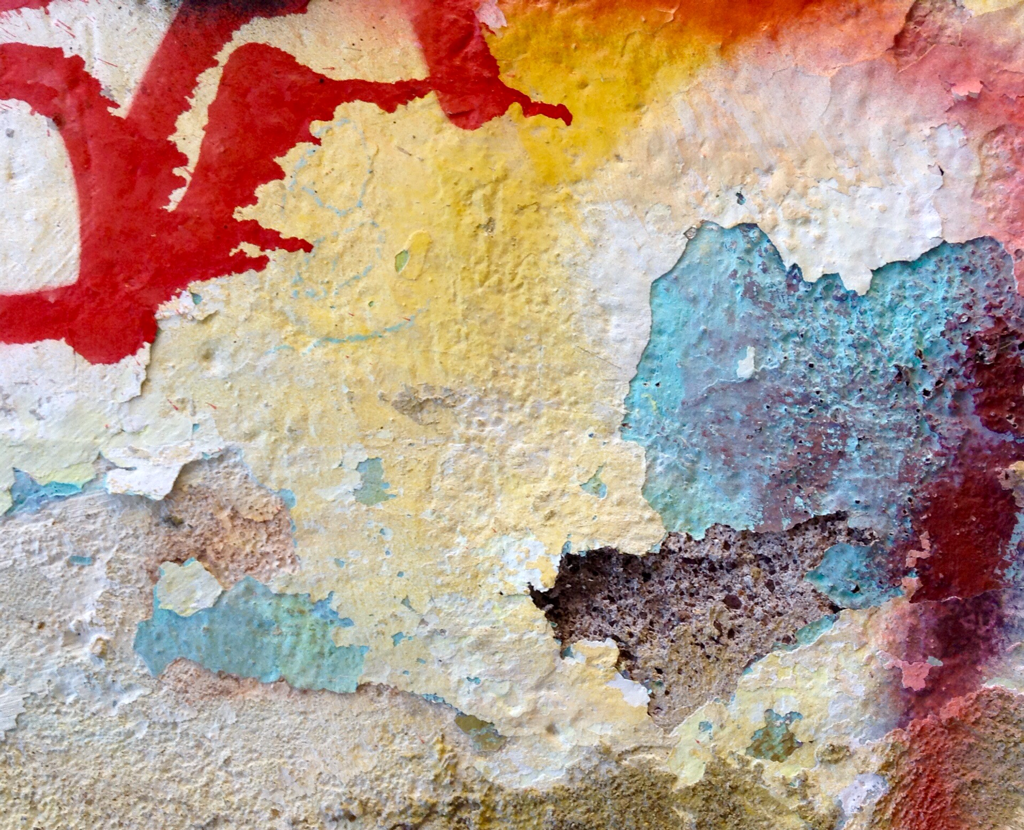
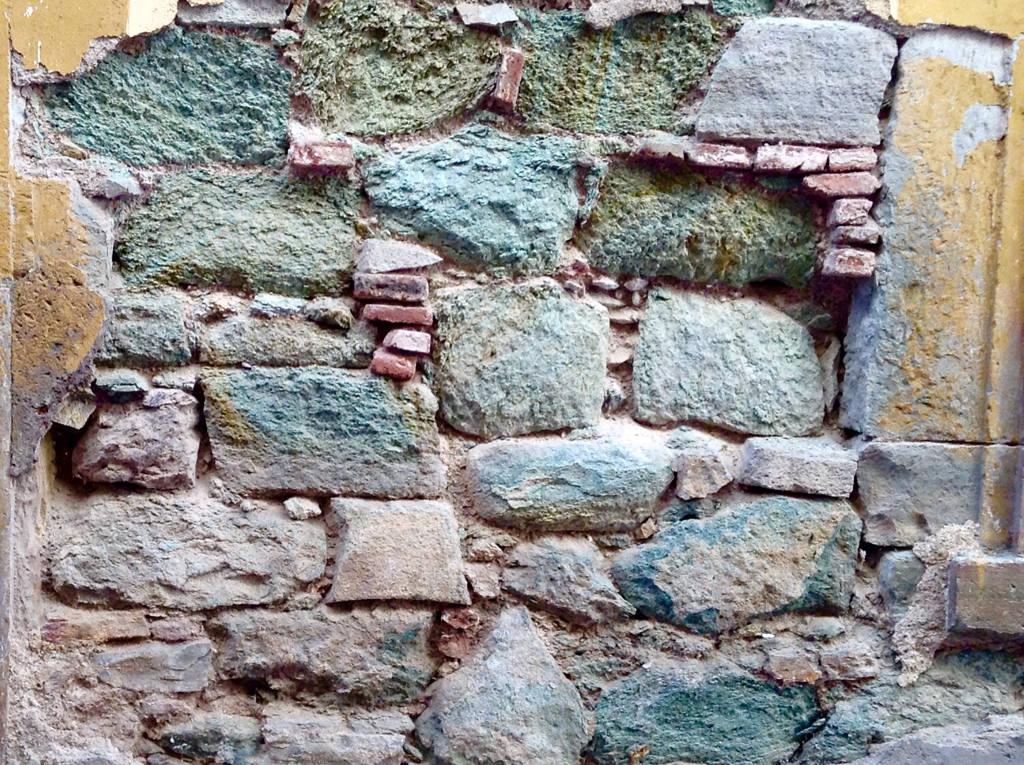
Then last week I finally started to see that the one signature-Guanajuato element that I've been captivated by is actually a worthy photo subject: the retaining walls that barely seem to be holding back the jumble of colourful, cubic houses clinging to the surrounding hills.

There's a compelling visual story in those layers of peeling paint on crumbling plaster on adobe bricks stacked on crudely cut limestone foundations. The traces of human activity in one section of wall speaks to the human habitation in this city that has its roots in the 1500s. It's quite a study in social history and handwork, an unplanned, almost invisible beauty, especially to a tourist whose port town of Vancouver has been replaced by a gleaming, pristine city of glass.

I'm seeing them as found abstracts, images of unintentional collages and mixed-media works by generations of people who work with their hands.
​
Picture
Picture
Picture
Picture
Comments

Big painting shift at little house on the prairie

9/19/2016

Comments

 
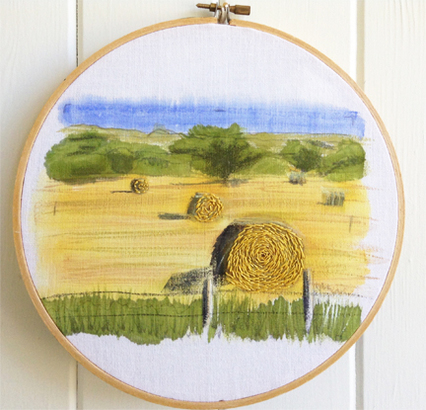
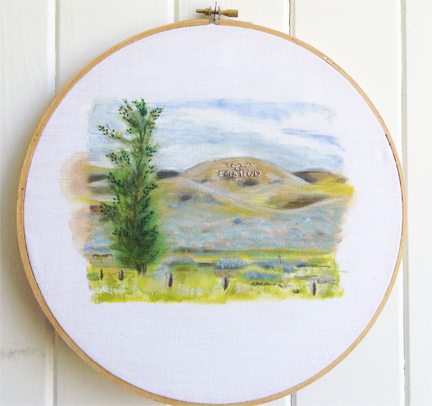
PictureDay 12 painting: Embroidered details in a scene of a newly "thrashed" hay field.
I've just returned from a month in the big country of southwest Saskatchewan: big skies, big farming operations, big empty days that were all too much at the start of my artist residency at the Wallace Stegner House.

Suddenly agoraphobic, I pulled down all the blinds and paced around that lovely century-old house, wondering what on earth possessed me to throw myself into this imposing patchwork landscape. I am not a landscape painter; that's my dad's bag.

Plus I came by plane and an eight-hour car ride, so even if I did want to paint, I didn't have my usual large stretched canvases and totes of paints. I did bring a few of my usual travel essentials: embroidery hoops, needles and floss — and an old bed sheet. I knew there was just a couple of stores in town, and none would be selling art supplies so I packed a tiny travel set of liquid acrylics, a few brushes and a pad of mixed-media cardstock.

My sketchy plan involved, well, sketching with my father, who has spent some of every summer in this tiny town of Eastend ever since he filled the Stegner House with his landscape paintings 15 years ago.

We were quite a pair: me, not at all comfortable with the whole plein-air tradition, and him, increasingly unfamiliar with his life's work of painting that involved biking into the country to sketch then returning to his basement to paint in the heat of the day. (Actually we were mostly a trio, his wife acting as facilitator for whatever this was, supplying us with water bottles, sunhats, sketch pads and willow charcoal, and generally getting us on the road.)

We circled around this vague idea of mine as we circled around this dead-quiet, struggling little town every morning. But the awkwardness turned to anguish back at my studio as I undertook the tedious pursuit of finding some interest — or even the point — in painting puffy clouds and dun-coloured hills.

A week later and out of sheer frustration at my lack of landscape-painting prowess, I resorted to dropping diluted paint on a taut scrap of bedsheet in an embroidery hoop just to watch it bleed. I threw the first painted scrap away and did another, with a little more intention, then threw that away too. Within a couple of hours I figured out the right water-to-paint ratio to create a slightly controlled bloom with each stroke. A lot of other distracted behaviour (baking apple crisps, walking by the river, venting via text to my artist friends) meant that each additional stroke was added to a dried layer and by the end of the afternoon, a landscape was emerging on a miniature stretched canvas. That one I didn't throw out. But it was still a little hazy. That's when I thought about using my stash of embroidery floss for final line work. 

I sat in the cool of the front screened porch that evening and embroidered some more information onto the painting. It was a clumsy first effort but soon I was enjoying the daily practice of biking in the morning with my father, painting something inspired by the ride in the afternoon, then embroidering some details in the evening, inviting others to join me for stitching sessions on the front porch.

I did this every day until I had 12 little paintings, each a progression from the last. I saw them as blocks for a future quilt, which led to a well-attended culminating exhibit, "Scenes from a Quilted Landscape."

But now I'm viewing them as something beyond a quilt and beyond the horizon. I'm calling them Points of Interest: something to build on and build with.


As with all creative pursuits, forcing solutions is futile. My original idea of coaxing my father back into his painting studio by getting him to share some of his process with me was a non-starter. These days he finds everyday joy in the moment, whether that is spotting a hawk while biking the backroads, playing a languid rendition of The Girl from Ipanema on piano in the hot afternoons, or watching the town's many cats on the prowl from the front porch of the Stegner House while his wife and I embroidered the summer evenings away.

I'm not sure if he knew it but he passed on to me the most valuable lesson for painting a scene: You have to actually see it.


Picture
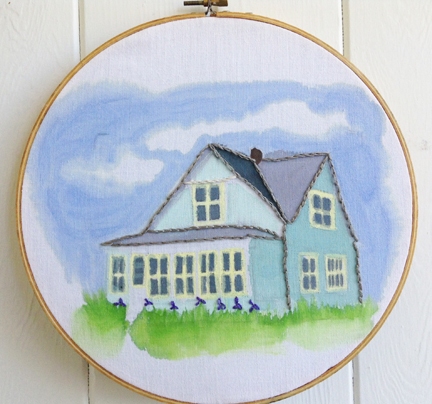
My first effort: a clunky rendition of the Wallace Stegner House
Picture
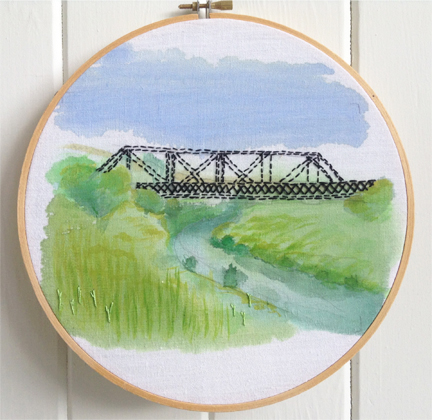
Day 2: Black bridge behind the Stegner House, in black stitches
Picture
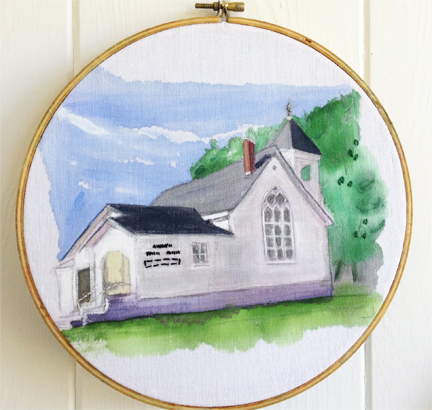
Day 3: Fun with architectural detail and embroidered lettering
Picture
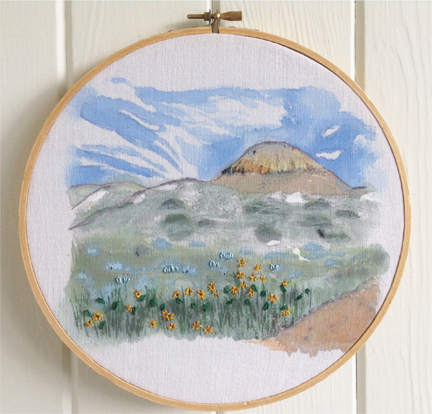
Day 4: Sky and hills and embroidered sunflowers facing the morning sun
Picture
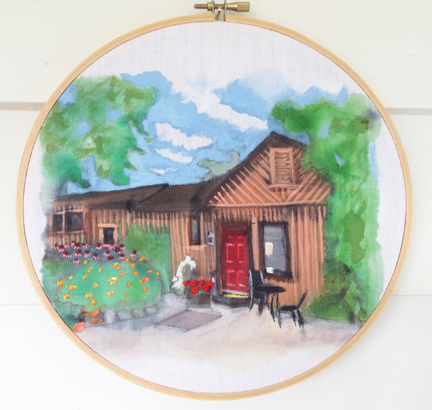
Day 5: Our hangout: coffee shop and pottery studio, surrounded by gardens
Picture
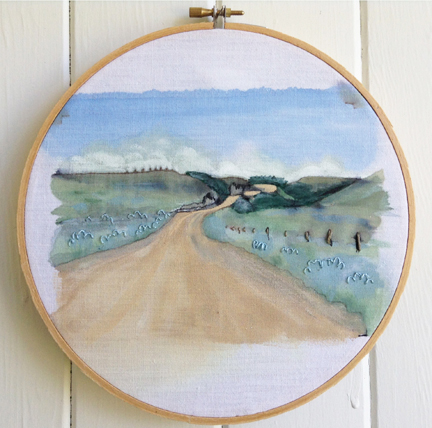
Day 6: The silty back roads, llike biking on velvet. (Wheel-seizing "gumbo" when wet)
Picture
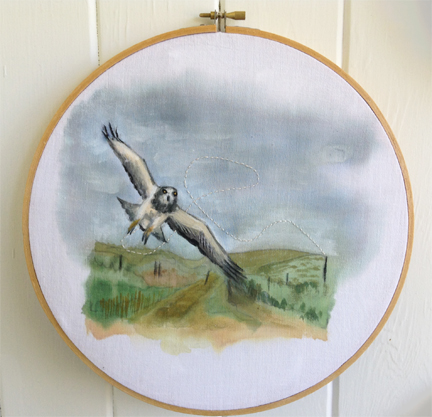
Day 7: Embroidery showing the flight path of a hostile hawk
Picture
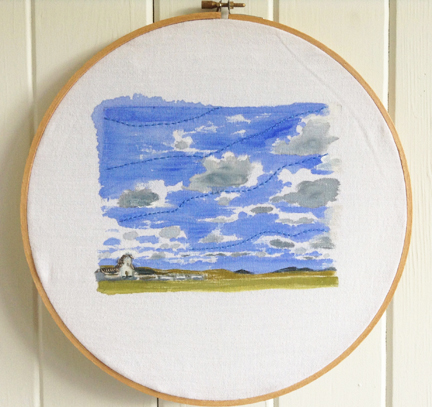
Day 8: Big skies and tiny grain elevator
Picture
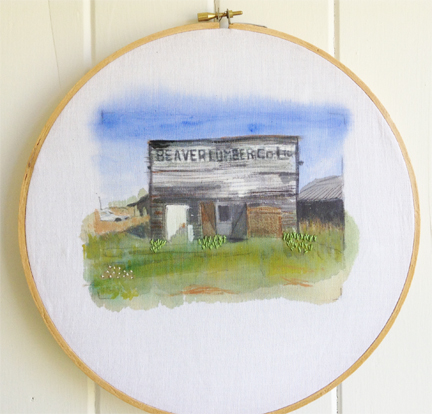
Day 9: Old Beaver Lumber building in the nearby almost-ghost town
Picture
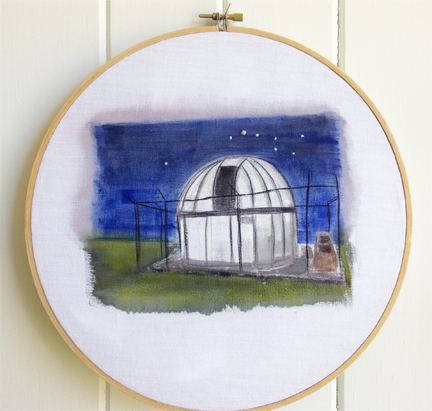
Day 10: The observatory, in some of the darkest skies in Canada
Picture
Day 11: "The Town of Eastend" rock formation in the hills, in embroidery

Slide-showing the process:

Comments
    Cross-posted at
    carlynyandle.substack.com

    browse by topic:

    All
    Abject
    Abstract
    Abstract Embroidery
    Abstraction
    Abstract Painting
    Abundance
    Accumulations
    Acrylic
    Activism
    Additive
    Aesthetics
    Agency
    AgentC Gallery
    Aging
    Alison Woodward
    Aluminum
    Amanda Wood
    Anxiety
    Appropriation
    Arcade Fire
    Architecture
    Arleigh Wood
    Art
    Art Activism
    Art Blog
    Art Business
    Art Discourse
    Art History
    Artifact
    Artist
    Artist Residency
    Artist Statement
    Artist Talk
    Art Marketing
    Art Quilt
    Arts And Crafts
    Art School
    Art Show
    Art Spiegelman
    Assemblage
    Author
    Banksy
    Bauhaus
    Beauty
    Betsy Greer
    Big Data
    Billy Patko
    Binding
    Blogs
    Blog Tour
    Bob Krieger
    Body Of Work
    Books
    Boro
    Braided Rug
    Braiding
    Bruce MacKinnon
    Bruce Mau
    Building
    Bull Kelp
    Burlap
    Business
    Buttons
    Canadian Artist
    Carlyn Yandle
    Caroline Eriksson
    Cartoon
    Ceca Georgieva
    Challenge
    Charley Yandle
    Children
    Christmas
    Cindy Sherman
    Circular Thinking
    Cirque Du Soleil
    City As Site
    City Planning
    Cityspace Gallery
    Clay Yandle
    Climate Change
    Cluster
    Cob
    Cob Oven
    Collaboration
    Collage
    Collection
    Colonialism
    Color
    Colour
    Commission
    Community
    Community Building
    Composition
    Conceptual Art
    Conceptual Craft
    Connection
    Connie Sabo
    Construction
    Coronavirus
    Cosplay
    Costume
    Counter Culture
    Counter-culture
    Cover
    Cover-19
    Covid
    Craft
    Craft Blogs
    Craft Camp
    Craftivism
    Crafts
    Craftsmanship
    Creative Process
    Critique
    Crochet
    Cross-stitch
    Cultural Hub
    Cultural Studies
    Culture
    Culture Jamming
    Culturejammingc9d75664fd
    Current Conditions
    Cycling
    Dafen Village
    Dallas-duobaitis
    Dance
    Data-graphic
    Data-graphic
    David Weir
    Dear Human
    Decorations
    Deep Craft
    Denim
    Denyse Thomasos
    Design
    Digital Art
    Discomforter
    Display
    Dissent
    Distraction
    Distracts
    DIY
    Doilies
    Doily
    Domestic
    Domestic Interventions
    Douglas-coupland
    Draw Down
    Drawing
    Dressed
    Drip By Drip
    DSquared2
    Dude-chilling-park
    Dyeing
    Dystopia
    Eastend
    Eastside Culture Crawl
    ECUAD
    ECUAD MFA
    Editorial
    Edward Burtynsky
    Eggbeater Creative
    Embellishment
    Embroidery
    Emily Blincoe
    Emily Carr Cozy
    Emily Carr University
    Entanglements
    Environment
    Environmental Art
    Exhibit
    Exhibition
    Expanded Painting
    Experimentation
    Exploration
    Expression
    Fabric
    Fabricating
    Fabrication
    Facebook
    Failure
    Fashion
    Fashion Revolution
    Fast Fashion
    Feminisim
    Feminist
    Feminist Art
    Festival
    Fiber
    Fiber Artist
    Fiber Arts
    Fibre
    Fibre Arts
    Film
    First Saturday Open Studios
    Flo
    Flow
    Forage
    Foraging
    Form
    Form And Function
    Foundlings
    Found Materials
    Found Objects
    Fractal
    Fracture
    Free Store
    Fuckwit
    Fuzzy Logic
    Gallery
    Gallery-row
    Garden
    Gardening
    Garment
    Gathering
    Gentrification
    Geometric Art
    Gill Benzion
    Gingerbread
    Globalization
    Glue
    Goblin Core
    Grad 2020
    Graffiti
    Grannycore
    Granny Square
    Granville-island
    Green Space
    Grid
    Grief
    Guanajuato
    Guerrilla Art
    Guerrilla Girls
    Halloween
    Handmade
    Handmaking
    Hand Stitching
    Hand-stitching
    Handwork
    Hashtags
    Haywood Bandstand
    Healing
    Health
    Hearth
    Heirloom
    Hideki-kuwajima
    Hoarding
    Homelessness
    Homemade
    Hot Art Wet City
    Housing
    Hybrid Thinking
    Ian Reid
    Ian Wallace
    Ideas
    Identity
    Images
    Imagination
    Immersive Art
    Improvisation
    Incomplete Manifesto For Growth
    Industrial Design
    Industry
    Innovation
    Inspiration
    Instagram
    Installation
    Installation Art
    Intervention
    Intrusive Thoughts
    Invention
    Irena Werning
    Ironing
    Janet Wang
    Jeans
    Jeff Wilson
    Joel Bakan
    Joseph Beuys
    Joseph-wu
    Journalism
    Joyful Making In Perilous Times
    Joyfulmakinginperiloustimes
    Judith Scott
    Kamala Harris
    Kids Art
    Kim Piper Werker
    Kimsooja
    Kintsugi
    Knitting
    Knots
    Knotting
    Kyoto
    Labor
    Labour
    LA Fires
    Landon Mackenzie
    Landscape
    Leanne Prain
    Lecture
    Lighthouse
    Linen
    Liz Magor
    Log Cabin
    Logo Sweater
    LOoW
    Lost Painting
    Lumiere Festival
    Lynda Barry
    Macrame
    Maker
    Making
    Making Is Connecting
    MakingIsConnecting
    Malcolm Gladwell
    Male Gaze
    Mapping
    Maquette
    Marie Kondo
    Marine Palette
    Marketing
    Mark Lewis
    Martha Rosler
    Martha Stewart
    Masks
    Material Exploration
    Mathematics
    Maya
    Media
    Meditation
    Meditative
    Mending
    Mend In Public Day
    Mental Health
    Metalworker
    MFA
    Mister Rogers
    Mixed Media
    Mobile Art Practice
    Monique Motut-Firth
    Monster
    Monte Clark
    Mosaic
    Motivation
    Mt. Pleasant Community Centre
    Mud Girls
    Mural
    Mushroom
    Mycelium
    Narrative
    Natalie Jeremijenko
    Nature
    Needlework
    Neon
    Net
    Network
    Networking
    Neuroplasticity
    New Forms Festival
    Newspapers
    Nick Cave
    Noah Goodis
    Nodes
    North Vancouver
    Obtrusive Thoughts
    Omer Arbel
    Online Talk
    Openings
    Organization
    Origami
    Overabundance
    #overthinking
    Paint
    Painting
    Pandemic
    Paper
    Paper Sculpture
    Papier Mache
    Parkade Quilt
    Patchwork
    Patriarchy
    Pattern
    Pecha Kucha
    Pechakucha
    Perception
    Perfectionism
    Performance
    Performance Art
    Personalispolitical
    Photography
    Playing
    Political Art
    Political Satire
    Polly-apfelbaum
    Pompidou
    Poodle
    Pop-Up
    PopUp
    Port Coquitlam
    Portrait
    Practice
    Process
    Production
    Profession
    Project
    Protest
    Protest Art
    Psychedelic
    Public Art
    Pussy Hat
    Pussy-hat
    Qr Code
    Quilt
    Quilt Block
    Quilting
    Quilt Painting
    Rachael Ashe
    Rachel Lafo
    Ravages
    Raw Materials
    Rebar
    Recycle
    Recycling
    Reflection
    Reflektor
    Reimagine
    Renewal
    Repairing Is Caring
    RepairingIsCaring
    Repetition
    Research
    Residency
    Resistance
    Resurge
    Retreat
    Re-use
    Rhonda Weppler
    Richard-tetrault
    Richmond Art Gallery
    Right Brain
    Rondle-west
    Roses Against Violence
    Rote Activity
    Rug
    Ryan-mcelhinney
    Safe Supply
    Safety
    Sampler
    Sarah-gee-miller
    Sashiko
    Saskatchewan
    Scaffolds
    Scaffolds I
    Scale
    Scraps
    Sculpture
    Seasonal Decor
    Seattle Art Museum
    Seaweed
    Seismic Rug
    Semiotics
    Sewing
    Seymour Art Gallery
    SharingIsCaring
    Sharon Kallis
    Shawn Hunt
    Shigeru Ban
    Sketchup
    Slow Craft
    Smocking
    Social Art
    Socialart
    Social Distancing
    Social Distancing Hat
    Social Engagement
    Social-engagement
    Social History
    Social Justice
    Social Media
    Soft Sculpture
    South-granville
    Space Craft
    Spore
    Stitching
    Storage
    Street Art
    Studio
    Styrophobe
    Substack
    Subversive Stitch
    Surrealism
    Surrey
    Tactical Frivolity
    Tactility
    Tagging
    Talking Art
    Tapestry
    Tatjana Mirkov-Popovicki
    Tattoo
    Teamlab
    Technology
    Terry Fox Theatre
    Text
    Textile
    Textile Art
    Textiles
    Thrifting
    Thrift Stores
    @tinypricksproject
    Tiny Pricks Project
    TJ Watt
    TO DO
    Tools
    Toronto Design Offsite
    Toybits
    Trash
    Trash Art
    Travel Art
    Trevor Mahovsky
    Trump
    Typography
    Tyvek
    Unbridled
    Unfixtures
    Unravel
    Upcycle
    Upcycling
    Urban Design
    Use Object
    Use Objects
    Utility
    Value Village
    Vancouver
    Vancouver Art Gallery
    Vancouver International Airport
    Video
    Video Tour
    Visual Artist
    Visual Field
    Visual-field
    Visual Language
    Wabi-sabi
    Wallace Stegner House
    Wall Hanging
    Waterwork
    Wearable Art
    Weaving
    William Morris
    Women's March
    Wood
    Wool
    Work Wraps
    Wrap I
    Wrap II
    Writing
    Xenobia Bailey
    Yarn Bombing
    YVR
    Zaha Hadid
    Zendoodle
    Zero Waste Art
    Zero-waste Art

    Archives

    January 2026
    December 2025
    November 2025
    September 2025
    May 2025
    April 2025
    March 2025
    January 2025
    December 2024
    November 2024
    October 2024
    September 2024
    August 2024
    July 2024
    June 2024
    October 2022
    August 2022
    June 2022
    November 2021
    April 2021
    September 2020
    April 2020
    December 2019
    November 2019
    September 2019
    August 2019
    July 2019
    June 2019
    April 2019
    November 2018
    July 2018
    May 2018
    November 2017
    September 2017
    June 2017
    April 2017
    March 2017
    February 2017
    December 2016
    November 2016
    September 2016
    July 2016
    March 2016
    February 2016
    January 2016
    December 2015
    November 2015
    October 2015
    September 2015
    June 2015
    May 2015
    April 2015
    March 2015
    February 2015
    January 2015
    December 2014
    November 2014
    October 2014
    September 2014
    August 2014
    July 2014
    June 2014
    May 2014
    April 2014
    March 2014
    February 2014
    January 2014
    December 2013
    November 2013
    October 2013
    September 2013
    August 2013
    July 2013
    June 2013
    May 2013
    April 2013
    March 2013
    February 2013
    January 2013
    December 2012
    November 2012
    October 2012
    September 2012
    August 2012
    July 2012
    June 2012
    May 2012
    April 2012
    March 2012
    February 2012
    January 2012
    December 2011
    November 2011
    October 2011
    September 2011
    August 2011
    June 2011
    May 2011
    April 2011
    March 2011

Powered by Create your own unique website with customizable templates.
Picture