carlyn yandle
  • about
  • the creative process
  • crafted objects
  • public art
  • painting
  • exhibitions
  • contact

The nodes know

1/30/2026

 
Hope empowers quirky denim objects

I’ve had this exchange a few times this past week:
You’re so busy. What are you working on?
Uh… hard to say. 
​

It’s hard to put into words this curious crafty endurance with a deadline. Better to just hold up my needle-scarred fingers and gnarled hands. Hand-work stuff. For exhibition.
Picture
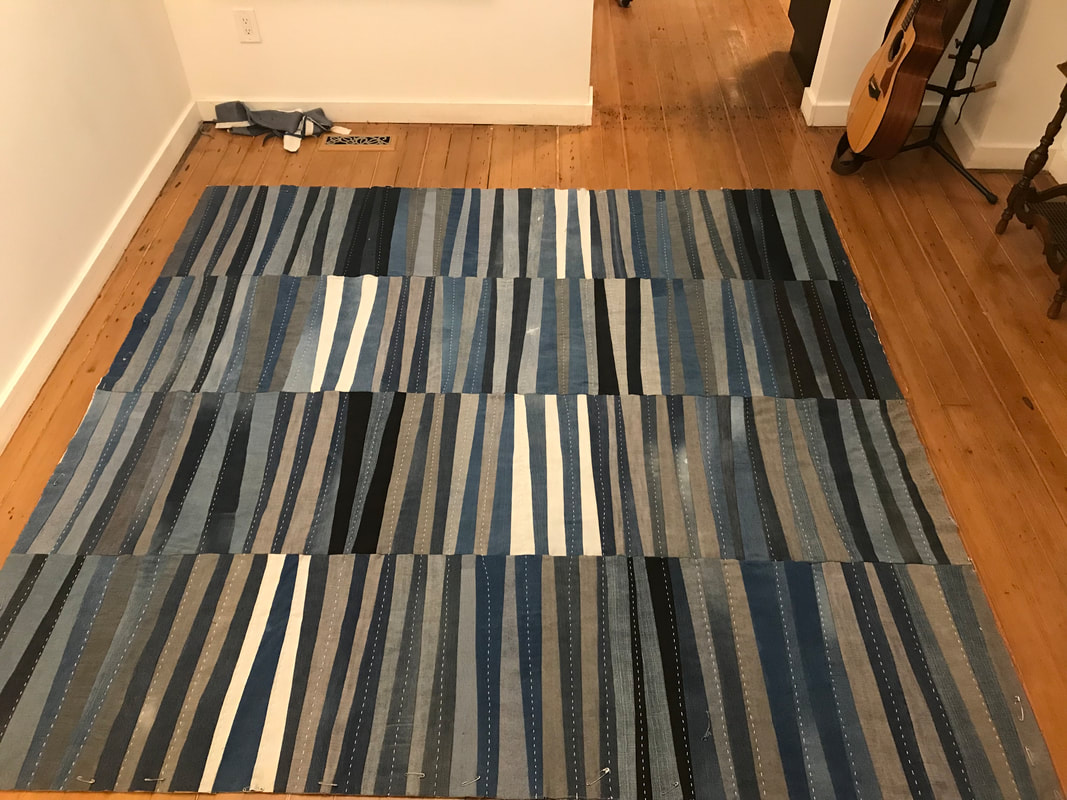
I have only myself to blame for spending these glorious foggy-sunny mid-winter days indoors cutting out seams and waistbands from discarded jeans and stitching them into quirky little coils and nodes. But they want to emerge, like characters in a novel that surprise even the author. They want to sprout like spores out of a knotted network of denim created back in the months before the global pandemic lockdown.
​
Resurge started as a compulsion during the first tempestuous Trump administration and soon after the release of an alarming report on climate change and rising sea levels. I fell into a daily rhythm of knotting and braiding a pile of discarded jeans, for the simple satisfaction of bringing new life to this particular abject material. The work revealed itself as a ground-zero eruption, an unstructured sprawl of frayed tendrils and rivulets of global brand logos in a very West Coast marine palette.
Picture
But now Resurge wants to rise above its heaviness, no longer limited to the floor but installed at a vantage point that suggests topography: a whole new world.
​

I didn’t overthink the urge to needle up a population of nodes to insert into a tumultuous water-scape. Instead I’m immersed in the material and the method, allowing the swirl of ideas and responses from local and global realities to infuse and entangle. The making is irrepressible, eclipsing my weekly writing time, as I make one benign conical object after another. Soon — hopefully — a critical mass will emerge that must be reckoned with.
Picture
In 2019, this slippery, shapeless sea of knots held space for more layers of meaning. In 2026 Resurge offers regrowth and resilience, from the fracture. I hope it will resonate in these perilous times.

​
(Cross-posted at https://carlynyandle.substack.com/)

​UNRAVEL, Mixed media works by Tatjana Mirkov-Popovicki, Amanda Wood and Carlyn Yandle runs from Feb. 3 - March 14, 2026 at Seymour Art Gallery, Deep Cove, B.C. Reception: Sunday, Feb. 8, 2 - 4 p.m.; “From Conversation to Practice” Program with Amanda Wood, Sunday, Feb. 22, 2 p.m.; “Hearth” social stitching event with Carlyn Yandle, Sunday, March 1, from 2 p.m.; artist talk with Tatiana Mirkov-Popovicki, Sunday March 8, 11 a.m.

From break to breakthrough

1/21/2026

 
Making space for the creative process, at home or away​
​

The following is a public service announcement for all those cowering from the liquid gunmetal-grey skies on this bone-chilling coast: Crank up the Vitamin D. We need 800-1000 IUs per day so pop a supplement or a teaspoon of cod liver oil, or eat wild salmon (600-1000 per 100 g or 3.5 oz.) regularly. Do it for your bones and teeth. For vegans it’s a bit trickier but here’s a fun fact: mushrooms, the only produce that contains Vitamin D, can generate a goodly dose when they’ve been exposed to sun or sunlamps — just like peoples — so feast on some UV-ray-enhanced mushrooms. Lecture over.

When other mushrooms are threatening to colonize the dark corners of my mind and between my toes, when the skies are as grey and shapeless as my sweatpants, I see these as signs that it’s time to let my skin generate some Vitamin D. I joined the throng of half of all Canadians taking winter breaks this year, with the largest percentage (30%) descending on Mexico and the Caribbean. Puerto Vallarta, just a five-hour flight south on this same west coast of North America, is lousy with Canuckleheads this year. 

I am not doing my country proud with my weak attempts to converse with the locals. Asking questions in that lovely romance language leads to answers I can’t understand so I tend to stick with agreement statements like Aquí hay mucho pollos asados. (“There are many roasted chickens here”). This is maybe why (or because) I spend most of the hot, sunny hours in the rental apartment pursuing my digital-nomad dream of making stuff and writing about it wherever I go.
​

It never works out as planned though I pack with the best intentions. My carry-on contains the usual bag of tricks: white linen cloth; a colourful selection of embroidery floss and hoop; two sashiko sewing needles (they always get through security screening); small containers of red, white, yellow and blue acrylic fluid; two thin paintbrushes; sketchbook and assorted black brush-pens.
Picture
A supplies kit for a mobile studio: paints, brushes, pens, linen, hoop in a dedicated toiletries bag. (Carlyn Yandle)
​Once I’m settled in the rental unit I set up my art supplies. I feel sort of obliged to artistically-render the luscious plants and birds, beaches and sunsets out there but I’m not really into it even if they do turn out which they rarely do. My overwrought sketches of philodendron leaves look like a waste pile of vein-y heart organs. I’m baffled at how to depict the papery folds of bougainvillia blossoms even when I try copying some online examples by other artists. The whole exercise is as onerous as Grade 6 map-colouring which also left me bad-tempered and bored. In the end, as it often happens, the paintbrush rag is more interesting than my tortured attempts.
Picture
The paintbrush rag holds more interest than the painting. (Carlyn Yandle)
It’s a wadded-up piece of two-ply paper towel from a roll I found under the sink but the paint has diffused in a way that reminds me of the surf or the jungly mountains above the Old Town so when it’s dry I smooth it out and pull apart the two bound layers into two translucent mirror images. I know these would be even more translucent if they were brushed onto a wood panel with acrylic medium and coated with a waxy finish.
​
I rummage around the kitchen and locate a glass baking dish and fill it with water to soak another half sheet from the paper-towel roll then lay each soaked sheet out on a glass shelf I removed from the refrigerator — this is the danger of renting your holiday home to artists — then drop or brush on different diluted mixed colours, adding some patterns here and there with the water-based brush pens. Soon I am as absorbed in this material exploration as the paint blooming in the soaked fibres. I set each swatch out on more paper towels to dry and when I run out of all horizontal surfaces I string them up like laundry lines across the open window frames and between chairs, laying down even more paper on the floor to catch the drips.
Picture
Experiments with different paint applications on paper towel.
​There are no photos of that creative process here. I normally make a point of posting photo-documentation but on the outside chance that the condo owner might see their vacation unit turned into a chaotic printmaking factory, that image is left up to the imagination.
Picture
A collection of tissue swatches for future consideration (Carlyn Yandle)
Now back home in this fresh, green coastal city on the foggy edge of a temperate rainforest my brain is still humming with ideas for collaging those test tissues as backgrounds for sketches of patterns captured in morning and evening walks through the streets of the Old Town.
Picture
Patterns from the streets of Puerto Vallarta’s Old Town, Mexico (Carlyn Yandle)
That stack of painted papers holds the creative energy for a new artwork series: the best souvenir of any travels.


Originally posted on Substack, Jan. 11, 2026

Circular thinking can be a flow state too

6/2/2024

 
Picture
I opened up my studio yesterday to the public to get some general feedback on a new series of paintings. Because even though I’m compelled to keep working on it and even though I’m enjoying a growing proficiency in this mash-up of stitching and painting I’m having trouble articulating why — or if — they’re not just pretty faces. Mostly I've been answering their questions with questions of my own.

“Why” has always been the trouble. Also aggravating: Why ask why?
This is the reason I’ve named this growing collection of paintings that all basically follow my own set of rules of engagement Circular Thinking. The connotation is negative but hear me out.

Asking ourselves existential questions while we create is infuriating (Shut the hell up, Inner Critic) but it’s also part of a process that can guide us to where we want to land. I would like to be settled with the obvious reason that it’s my route into flow, or actual, real fun. (The “so fun” episode of the We Can Do Hard Things podcast here was recommended to me by my sister.) And they do get me there: into the flow of playing with colours and opacities, of focusing on one stitch at a time, watching how each layer of paint or stitching changes perception.

But I can’t settle with just what’s in it for me. Making is my way of connecting with the world. Much of my work is collaborative, so those involved naturally have a stake in the final projects. Often that’s in the gathering of abject materials, or the actual simple hand-working methods that bring folks together. So it’s easy to see the ‘why’ in these crafted objects and fields; beyond their own resonance they stand as an archive of the social interaction, an artifact of the engagement with materials.

The Circular Thinking series has none of that. Each painting is a singular, intimate effort. It does not reveal any agency embedded in unwanted/useless materials and objects. So in the making, despite the flow part, I feel a whisper of guilt and shame that many women of a certain age might also hear when not doing for others: selfish, self-indulgent, self-absorbed.

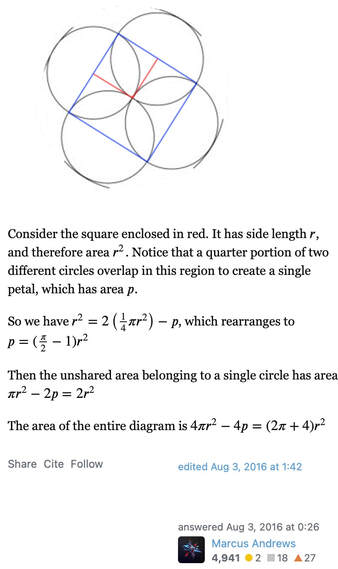
There is definitely something in the ‘self’ there that is the driving force in these improvisational, unpredictable and unsettling paintings: self-care. I ache for solid, reliable ground in these perilous times so I start with a grid, like the criss-cross of rebar that sets the concrete footings in every new tower crowding the Vancouver skyline, or a typical nine-patch quilt block. Nine eight-inch-diameter circles in a 24" x 24" "block" anchor to that grid and then I’m off, free of all straight lines, off-setting those circles by half in paint, offsetting again with more layers of colour in paint or thread until I arrive at an attractive/distractive done-ness. It is an improvisational process of revealing and concealing (repeat!) petal-like sections of circles, creating unsettling, kaleidoscopic fields. It is the kind of all-consuming process that reduces hours to minutes, that absorbs all attention, a safe space away from the visual onslaught of social media, yet reflective of our ‘everything is awesome’ screen-field of vision.

​It might be easier to eat this elephant one bite at a time by knocking down specific why-questions:
​

Why paint?
Colour-play. Especially important in this watery corner of the world. It can also act as a dye/stain.

Why canvas?
It’s fabric, with so much possibility for exploring its essential characteristics.
​
Why the wood stretcher?
Another fibre product that is a natural with fabric. It's basically a quilt frame or embroidery hoop for painters. Building stretchers and stretching the canvas is an investment in the project ahead (a trick I learned from my father @dennisyandle).

Why the stitching?
I like to needle at the hierarchy of painting over craft processes. Each stitch feels like I’m sticking it to convention. Stitching into painting offers the digestible label of “expanded painting practice.”

Why all the quilt references?
The geometry of quilt designs is fascinating, mesmerizing. I have little aptitude but a lot of respect for the beauty of mathematics. The tactility of that geometry connects to present and past makers of objects that exist as art pieces or as items of comfort, utility and gifts, an expression of love. This is a less-digestible "expanded quilting practice": improvisational, mixed-media works with none of that cushy filling.
Picture
The geometry of circular quilt designs remains a beautiful, captivating mystery.
Why this scale?
24" x 24” is my standard sample-block size. I dream of an exhibit of all my sample blocks blanketing white-cube gallery walls. 

Why two-dimensional?
Closer inspection reveals the third dimension, in the stitching. Also, the aforementioned sample-block dream show is a three-dimensional, immersive space of pattern and colour chaos. (I want to go to there.)
​
Circular Thinking is both the name of this latest series of grid paintings and shorthand for how I approach every new project: 
play, think, write, share, think, research, share, write, repeat.

Through this writing part of that feedback loop I can see I just might stop torturing myself with the existential Why and get back into that flow.

@carlynyandle
Picture

'Foundlings': Kids' works of terrible beauty

7/2/2019

Comments

 
Picture
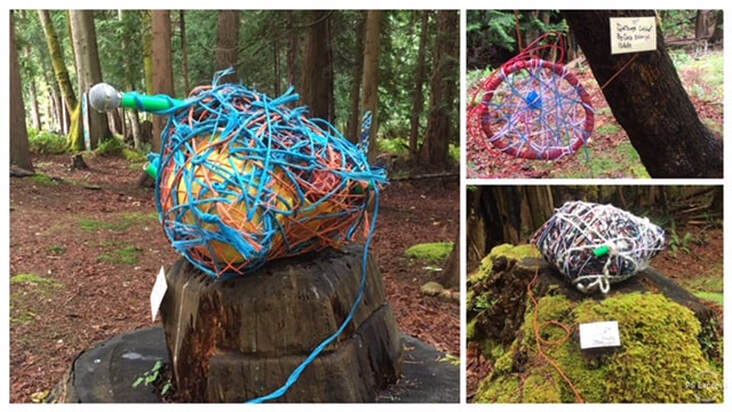
Clockwise from top left: "This Little Lump", Sylva and Shyla; "Garbage Catcher", Coco; "Little Worker", Kahlio, Basha and Ari.
Everyone is feeling that relentless creep of plastic that is threatening to consume us, the consumers. I felt myself drowning in the tsunami of stuff over this past year of grad studies at Emily Carr University. Art, as one instructor stated, is a wasteful business. 

Even as I retreated back to my green, pristine Gulf Island I was hit with it at the end of the long drive through forest to the local dump: a mountain of garbage. This, from a small off-grid community known for its environmental consciousness. 

My art practice is driven by a need to physically grapple with the unfathomable when words are not enough. In the strange way that an idea for an artwork takes hold, that sight of that mountain of petroleum-derived recycling-rejects led to my latest project: Foundlings.

For a while I’d been trying to land on a low-barrier, low-skill technique that could involve kids in the making of objects from found, non-recyclable and non-biodegradable materials. Then I landed on the work of late American sculptor Judith Scott, whose many exhibitions of her curious bound and woven fiber/found objects have led to discourse on “outsider” art, disability (she was profoundly deaf, non-verbal, and had severe Down’s Syndrome), intention, new sculpture forms and the privileged art world. 

Within a month of escaping the art institution I was driving a pickup-truckload of colourful non-recyclable, non-biodegradable bits from the home-grown garbage mountain to the island’s only elementary school.

Before we got to the making part I sat down with the students and shared some images of Scott’s work for inspiration. We talked about how this artist’s method of wrapping, binding and weaving fibre around objects adds curiosity to what is on the inside. We talked about how working with familiar objects and materials in unusual ways can lead to new ideas. And we talked about how an object can be terrible and beautiful at the same time, does not have to be a recognizable thing nor have utility.
Picture
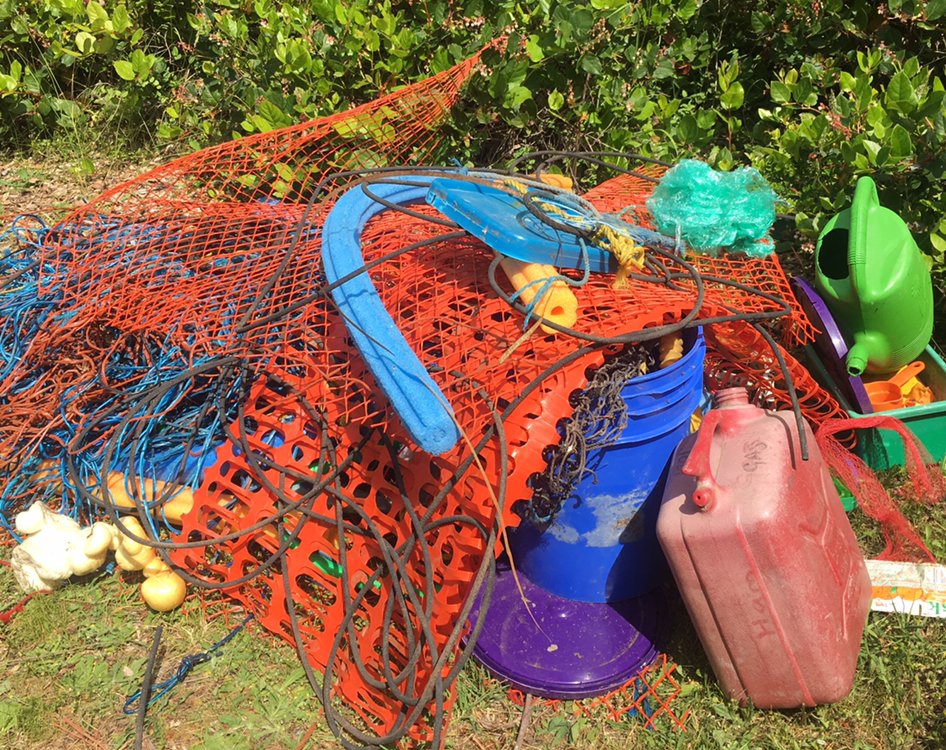
‘Curated’ materials gleaned from the island’s dump.
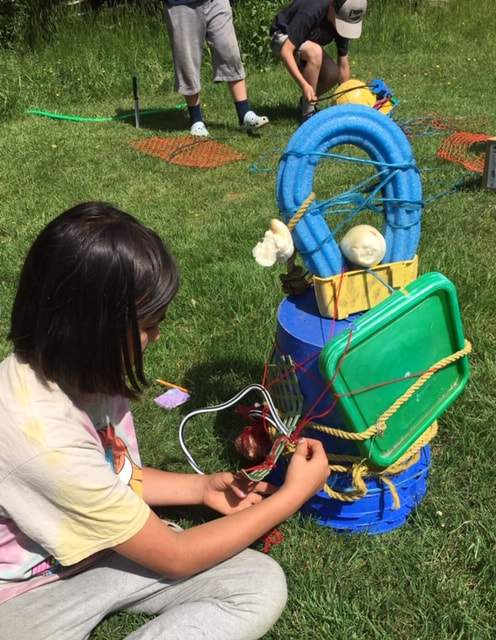
We worked over time on the pieces, some kids on their own and some in groups of two or three, adding even more fibre and found plastic detritus from their year-end trip to the local provincial marine park. On the final day of school I arrived to pick up the final pieces and was astounded at the creations. They were richly textured, humorous and foreboding, and proof of why I collaborate with children: they consistently demonstrate the importance of letting hands and imaginations fly.
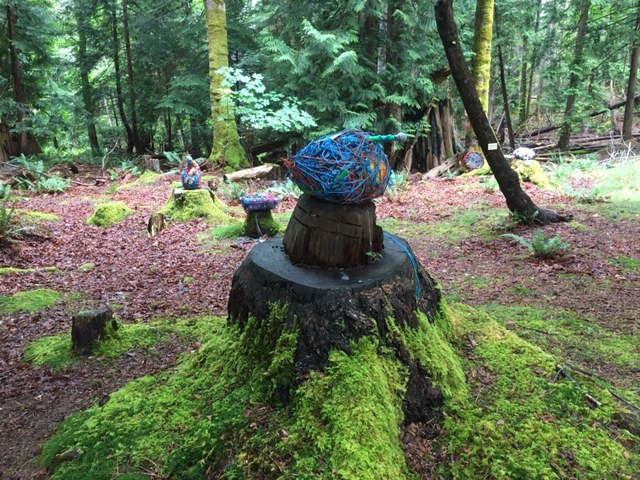
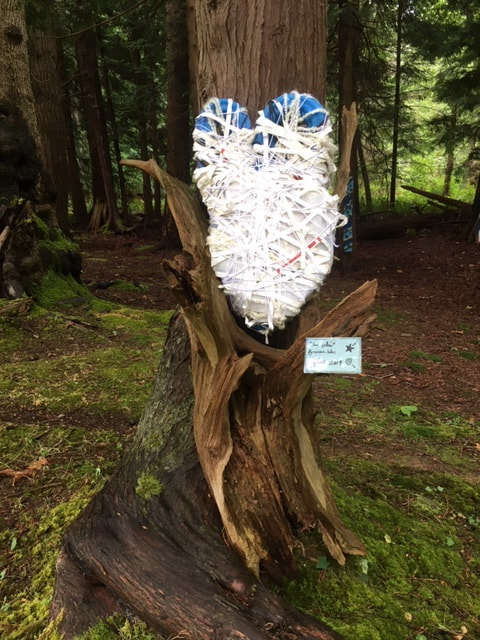
They each titled their pieces in their own hand and I installed them for exhibit on forest plinths (moss-covered stumps from the last big clearcut) in time for the annual Arts Fest. With no chance they’ll degrade in the weather they remain there, pretty and pretty disturbing: our inescapable stuff.
Picture
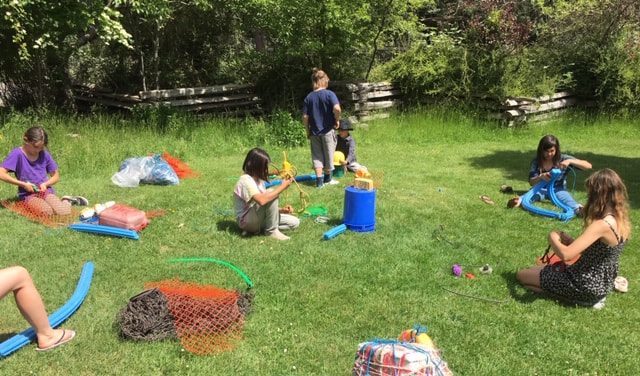
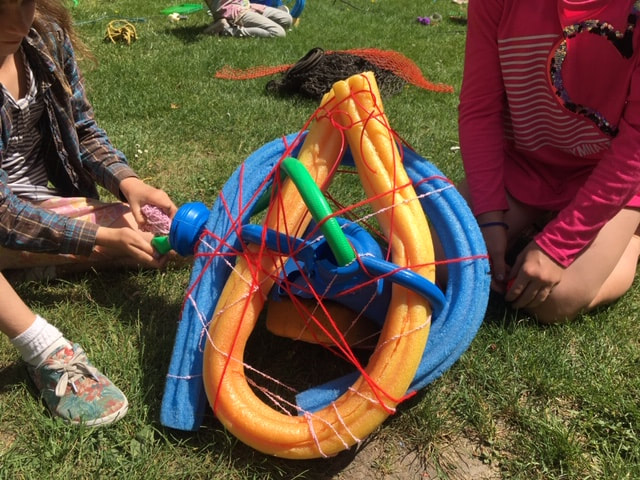
Kids assembling the armatures of their pieces in the first phase of the Foundlings project.
Picture
Part of the Foundlings project, installed in a Gulf Island forest.
Picture
Snow Pillow, by Mikiko
Comments

Attraction, repulsion wrapped up in one sculpture project

6/5/2019

 
At first I thought all this must still be debris from the Japan tsunami. But that was eight years ago and the surf in my remote neck of the woods keeps throwing up snarls of monofilament netting, plastic shards, nylon rope, bits of fibreglass hulls, and styrofoam. So much styrofoam.

I’ve been collecting up the stuff, inspired by this Gulf island’s own Styrophobe who’s taken on what some would say is a Sisyphean task of removing even the tiny beads of polystyrene from the clefts of rock along the shoreline.

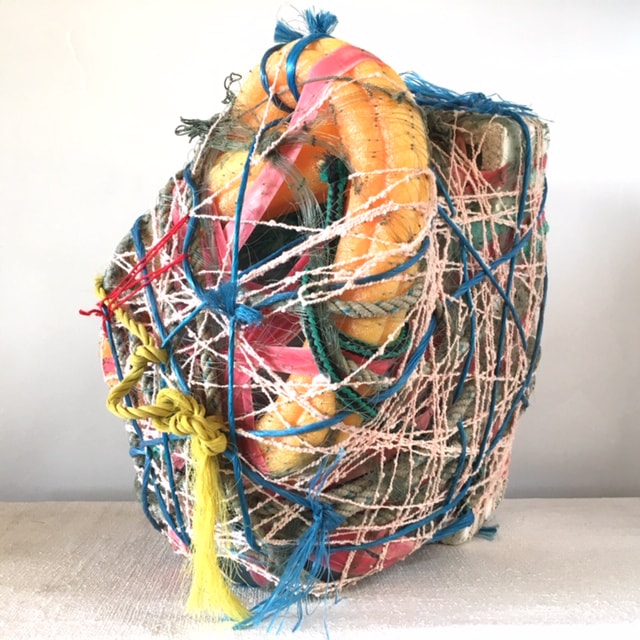
My gathering is a tiny, maybe even futile, gesture but I’m giving form to the invisible: the bits and pieces we overlook on the foreshore or in the forest that, when lashed, bound, and woven together demand attention. These small but critical masses of debris are inspired by the found-material sculptures of Judith Scott. As I lash, bind, and weave I think of how the kids in my life would like to be in on this: hunting for material, making form from their hands and imaginations.
Picture
Inspired by the sculptures by Judith Scott, this mass is texturally rich with culturally-embedded petroleum-derived materials.
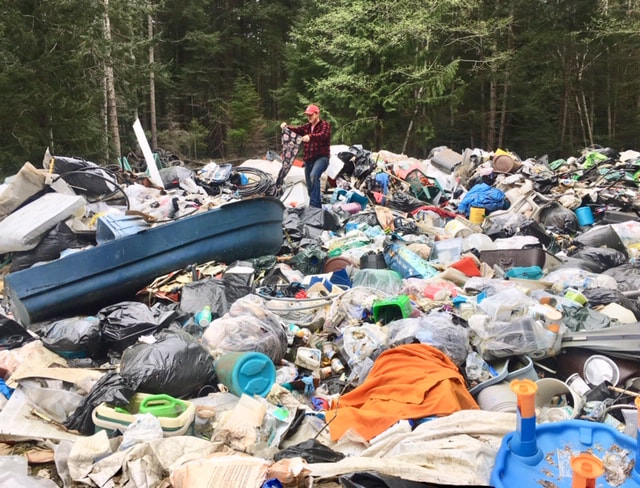
My gathering requires connecting with others to access materials. The Styrophobe, who’s also the guy in charge of the local dump, stands on the top of the garbage mountain, holding up uncertain objects for my consideration: How’s this? This stuff looks pretty good. Could you use this?

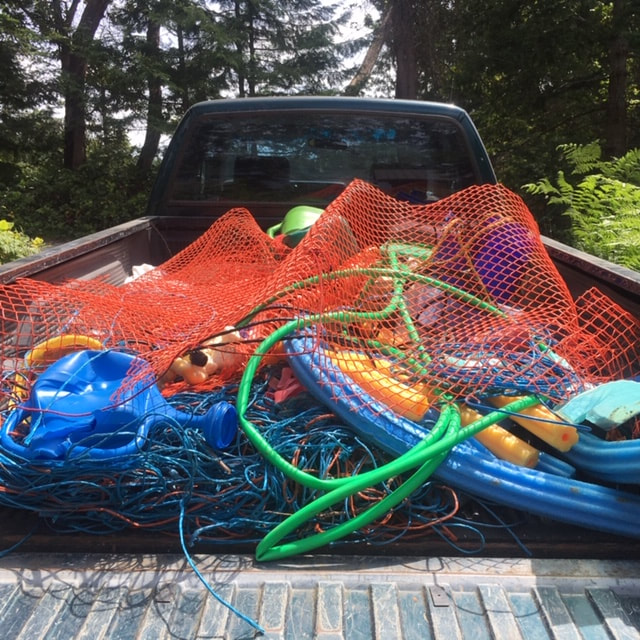
In 15 minutes I fill the back of the pickup truck with a curated collection of colourful plastic throwaways: pool noodles, watering cans, yards of orange fencing, jerrycans, twine, tape, cleaning-pad refill boxes, five-gallon buckets and lids. I fill up with purple things, red things, plastics in acid green, electric blue, hazard yellow, and caution orange — all the colours of the petrochemical rainbow.
Picture
A fan of the local Styrophobe is overwhelmed by the throwaway plastic in this garbage mountain in the forest.
Picture
A curated collection of non-biodegrable recycling rejects fills a pickup truck.
After a lot of material prep (cutting off snags and sharp bits, wiping and washing off surface debris), I haul it to the local school where the kids, teacher and I dive in and play with the unwanted stuff. We have plans and we don’t have a plan, which is the right place to be with material exploration. This is where we learn to work with each material and not against its inherent nature, a great reminder of the futility of forcing solutions. This is where we learn to follow our hands, to work on our own or collectively over days and not minutes, to consider colour, form, and techniques for putting it all together, to create something that resonates with this time and place out of nothing anybody wanted.

It’s an important start for the generation that will be forced to deal with this legacy of stuff long after the plastic-agers die off.
Picture
Kids take to the colourful cast-offs during Day One of a sculpture workshop.
Picture

Big painting shift at little house on the prairie

9/19/2016

Comments

 
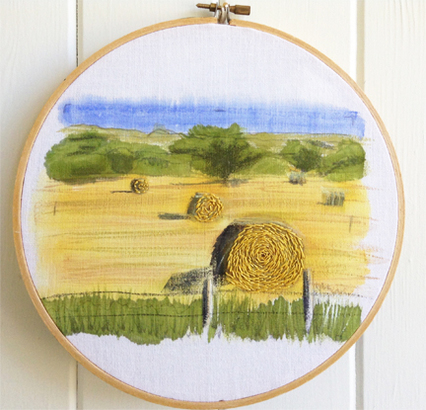
PictureDay 12 painting: Embroidered details in a scene of a newly "thrashed" hay field.
I've just returned from a month in the big country of southwest Saskatchewan: big skies, big farming operations, big empty days that were all too much at the start of my artist residency at the Wallace Stegner House.

Suddenly agoraphobic, I pulled down all the blinds and paced around that lovely century-old house, wondering what on earth possessed me to throw myself into this imposing patchwork landscape. I am not a landscape painter; that's my dad's bag.

Plus I came by plane and an eight-hour car ride, so even if I did want to paint, I didn't have my usual large stretched canvases and totes of paints. I did bring a few of my usual travel essentials: embroidery hoops, needles and floss — and an old bed sheet. I knew there was just a couple of stores in town, and none would be selling art supplies so I packed a tiny travel set of liquid acrylics, a few brushes and a pad of mixed-media cardstock.

My sketchy plan involved, well, sketching with my father, who has spent some of every summer in this tiny town of Eastend ever since he filled the Stegner House with his landscape paintings 15 years ago.

We were quite a pair: me, not at all comfortable with the whole plein-air tradition, and him, increasingly unfamiliar with his life's work of painting that involved biking into the country to sketch then returning to his basement to paint in the heat of the day. (Actually we were mostly a trio, his wife acting as facilitator for whatever this was, supplying us with water bottles, sunhats, sketch pads and willow charcoal, and generally getting us on the road.)

We circled around this vague idea of mine as we circled around this dead-quiet, struggling little town every morning. But the awkwardness turned to anguish back at my studio as I undertook the tedious pursuit of finding some interest — or even the point — in painting puffy clouds and dun-coloured hills.

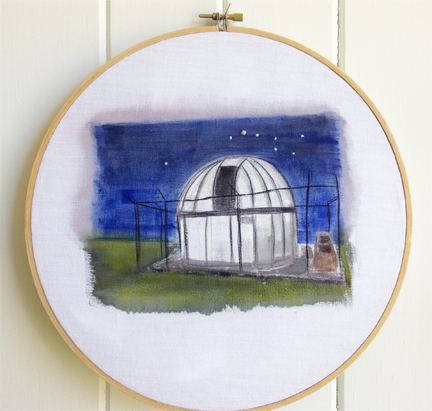
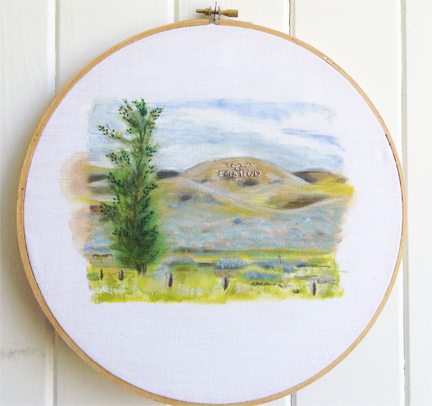
A week later and out of sheer frustration at my lack of landscape-painting prowess, I resorted to dropping diluted paint on a taut scrap of bedsheet in an embroidery hoop just to watch it bleed. I threw the first painted scrap away and did another, with a little more intention, then threw that away too. Within a couple of hours I figured out the right water-to-paint ratio to create a slightly controlled bloom with each stroke. A lot of other distracted behaviour (baking apple crisps, walking by the river, venting via text to my artist friends) meant that each additional stroke was added to a dried layer and by the end of the afternoon, a landscape was emerging on a miniature stretched canvas. That one I didn't throw out. But it was still a little hazy. That's when I thought about using my stash of embroidery floss for final line work. 

I sat in the cool of the front screened porch that evening and embroidered some more information onto the painting. It was a clumsy first effort but soon I was enjoying the daily practice of biking in the morning with my father, painting something inspired by the ride in the afternoon, then embroidering some details in the evening, inviting others to join me for stitching sessions on the front porch.

I did this every day until I had 12 little paintings, each a progression from the last. I saw them as blocks for a future quilt, which led to a well-attended culminating exhibit, "Scenes from a Quilted Landscape."

But now I'm viewing them as something beyond a quilt and beyond the horizon. I'm calling them Points of Interest: something to build on and build with.


As with all creative pursuits, forcing solutions is futile. My original idea of coaxing my father back into his painting studio by getting him to share some of his process with me was a non-starter. These days he finds everyday joy in the moment, whether that is spotting a hawk while biking the backroads, playing a languid rendition of The Girl from Ipanema on piano in the hot afternoons, or watching the town's many cats on the prowl from the front porch of the Stegner House while his wife and I embroidered the summer evenings away.

I'm not sure if he knew it but he passed on to me the most valuable lesson for painting a scene: You have to actually see it.


Picture
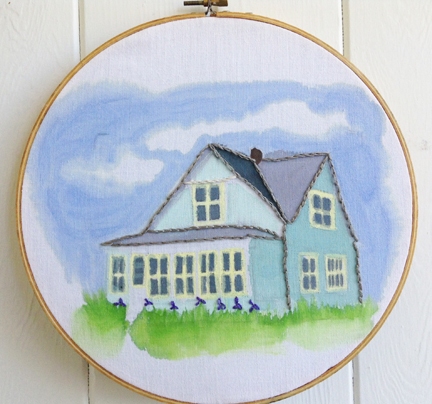
My first effort: a clunky rendition of the Wallace Stegner House
Picture
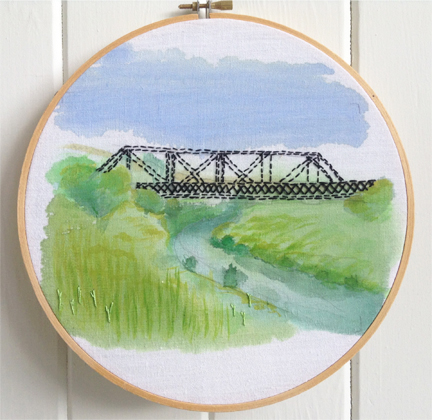
Day 2: Black bridge behind the Stegner House, in black stitches
Picture
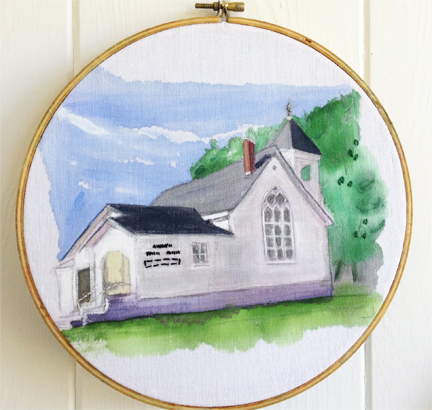
Day 3: Fun with architectural detail and embroidered lettering
Picture
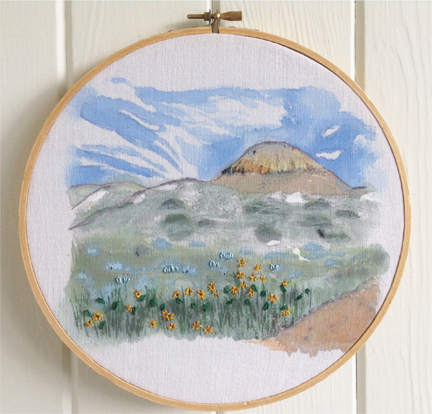
Day 4: Sky and hills and embroidered sunflowers facing the morning sun
Picture
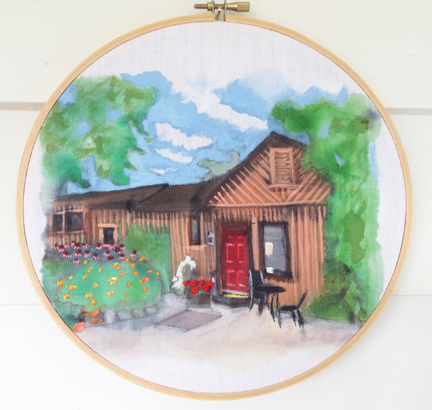
Day 5: Our hangout: coffee shop and pottery studio, surrounded by gardens
Picture
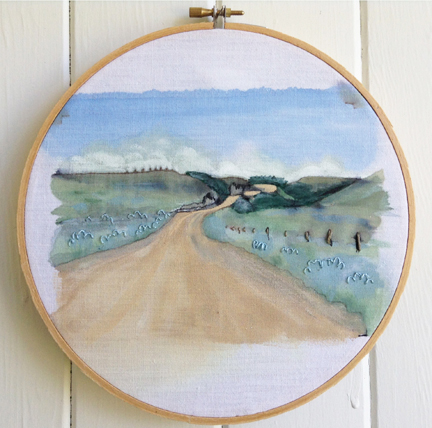
Day 6: The silty back roads, llike biking on velvet. (Wheel-seizing "gumbo" when wet)
Picture
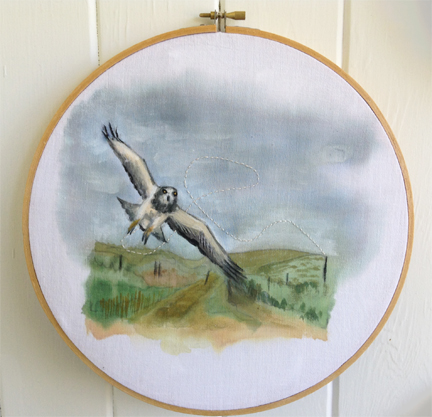
Day 7: Embroidery showing the flight path of a hostile hawk
Picture
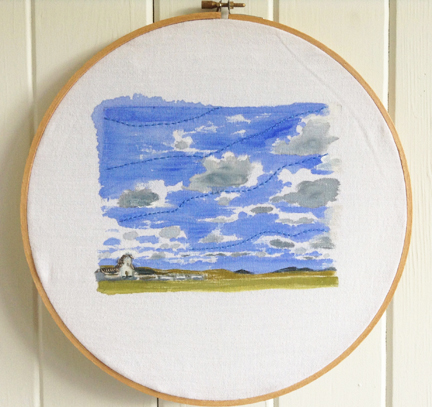
Day 8: Big skies and tiny grain elevator
Picture
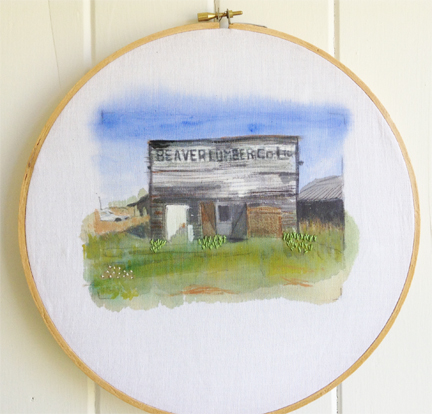
Day 9: Old Beaver Lumber building in the nearby almost-ghost town
Picture
Day 10: The observatory, in some of the darkest skies in Canada
Picture
Day 11: "The Town of Eastend" rock formation in the hills, in embroidery

Slide-showing the process:

Comments

Mad Max movie inspires big thinking on broken toy sculptures

9/19/2015

Comments

 
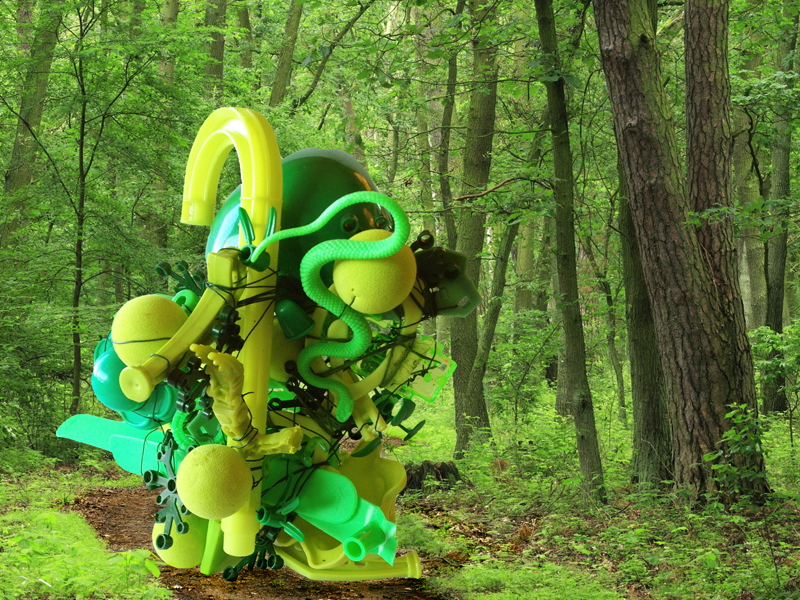
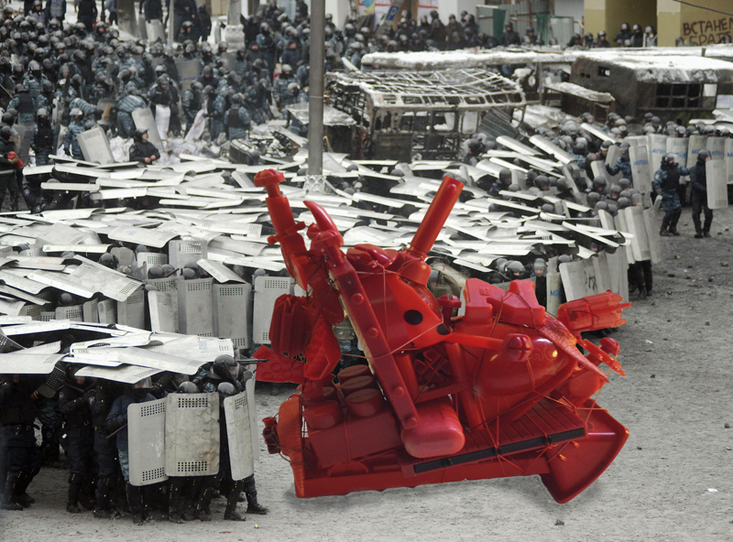
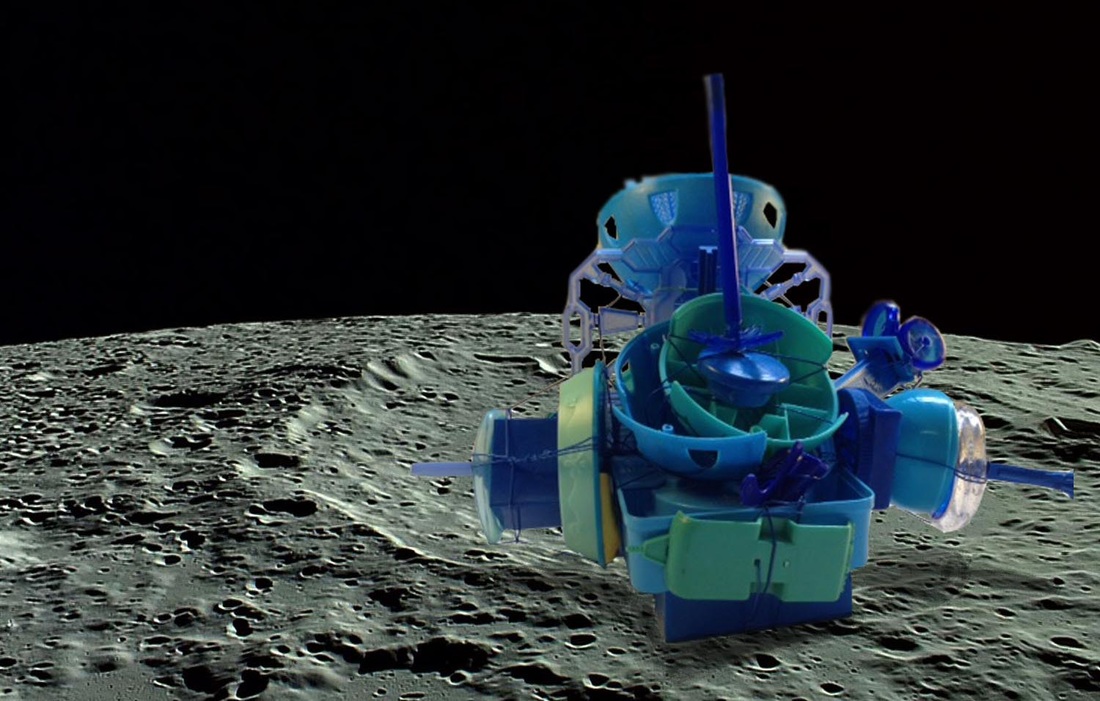
Just for the record, my Toybits were created far, far before Mad Max: Fury Road hit the theatres — although the resemblance of those Metallica-esque assault vehicles to my small sculptures is uncanny. 

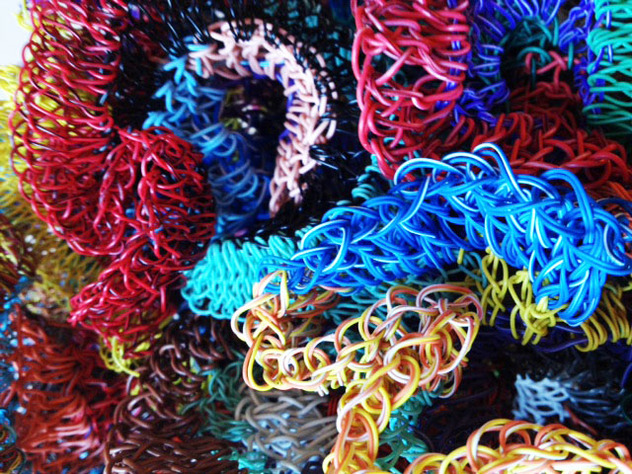
For some inexplicable reason (even to myself) I have been collecting the toy fragments that appear to follow in the wake of my Lego-loving nephews (and one pint-sized niece) for some years now. I sorted them by colour and last year started binding them together with found fiber-optic wiring of the same colour. The right size seems to be about 14 inches wide or high. Any more and the inner bits become obscured; any less and they seem unfinished.

I imagined these colour assemblages as live models for abstract painting — which would make those paintings not abstracts at all, but figurative works. That inherent contradiction adds to the confoundedness of these pieces that are actually put together like puzzles, with each piece added as they 'fit' onto the plastic mass.

After I inhaled the visually delicious Mad Max movie, I wondered how the Toybits series, six of which are now on display at Port Moody Arts Centre gallery until Sept. 28, would look at a fearsome scale. 

I made a playdate with Mr. Photoshop in some new virtual landscapes. Voila....
Picture
Picture
Picture
Comments

One bit, two bits, green bits, black bits

3/13/2015

Comments

 
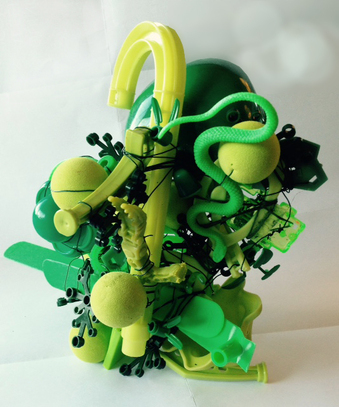
PictureToybits (green) - made from broken toys (Carlyn Yandle photo)
This may be the third or fourth column/post I've written that could come under the headline, 'Overthinking will be the death of me.' There is definitely a book in there somewhere about the power of overthinking to sabotage the creative process.

My latest overthinking sabotage occurred as I was experimenting with binding up broken toy bits (consciously not overthinking why).

I was taking care of my sister's kids while idly binding one green toy remnant to another. At some point, the curious object appeared to be done. And it was good.

It's an intriguing object but when photographed is also a visually absorbing abstract. It has richness in its ability to conflate the second and third dimensions. It is heavy with cultural reference yet lightly humorous.

I was onto something.

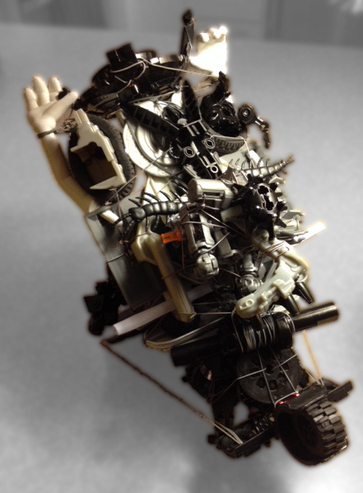
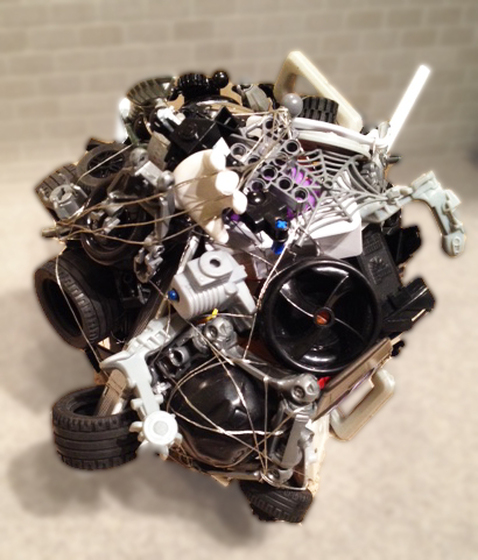
PictureToybits (black) - final version (Carlyn Yandle photo)
After a couple of hours I quit because it clearly would have no logical endpoint. But if there's one thing I've learned about the creative process it's to let the failures hang around and stink up the joint for a while. In my experience, the only way to get to the source of the stench is to keep it in the periphery. And a couple of days later it came to me: I was so hell-bent on the outcome I had completely negated the making, which, when referring back to the green toy-bits cluster, was the essence of the thing: play. 

I took it all apart, then started over, finding the fit between one bit to another bit, then adding one bit where it fit. (Maybe the book should be in Dr. Seuss language).

It had a beginning and an end, and the entire process was an adventure without a map. The result is a sculptural object with implied power that appears as part engine, part vehicle, part robot. It has composition, balance, architecture, intriguing sight lines and varying perspectives. It has something to tell me: Your instincts are good, keep going.

From the junk of life emerges new life.

You can see it in the above photo; it's a mess. Even as I was binding it I thought, This is not working, this is not working. Why is this not working? It has no balance, no composition. it is artless. And it was a chore from the get-go.
PictureToybits (black): first attempt (Carlyn Yandle photo)
So, like every creative I know,  the ol' mental processor starting whirring away in the background, rolling over this concept. Friends and I talk about this slightly obsessive stage when developing a new work. You're still functional in your daily routine but that whirring puts you in a slightly distracted state. It's sort of like falling in love; there's always something there to remind you of that growing passion. And when I fall in love with an idea, I fall hard. I'm consumed by the topic like the Paul Rudd character in The 40-Year-Old Virgin who can't stop talking about Amy or The Big Lebowski's John Goodman character who links any conversation to his days in 'Nam.

I've been seeing toy-bits inspiration everywhere, including in a car column in the morning newspaper. The picture of an engine reminded me of the toy-bits clusters and suddenly I was shoving aside breakfast dishes and breakfasting people and dumping my hoard of broken toys onto the table.
I will make that engine-y thing, I said. And therein lies the fatal flaw.

Comments

3 artworks a day for 5 days -- and an extra challenge

2/20/2015

Comments

 
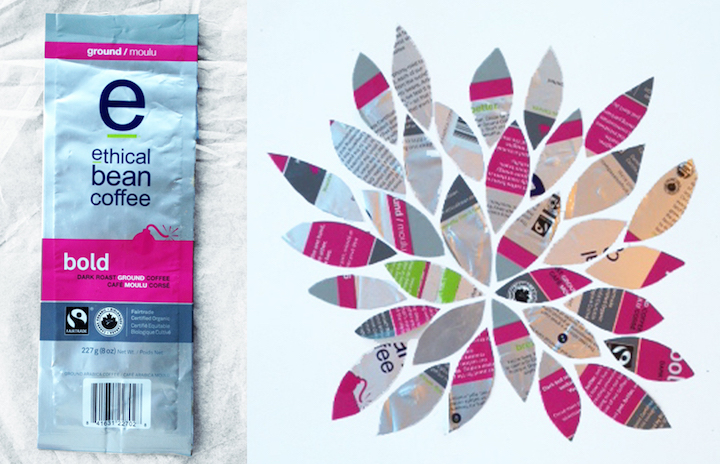
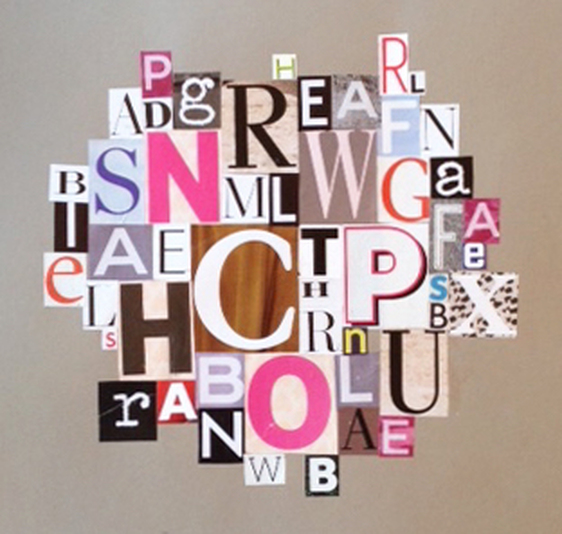
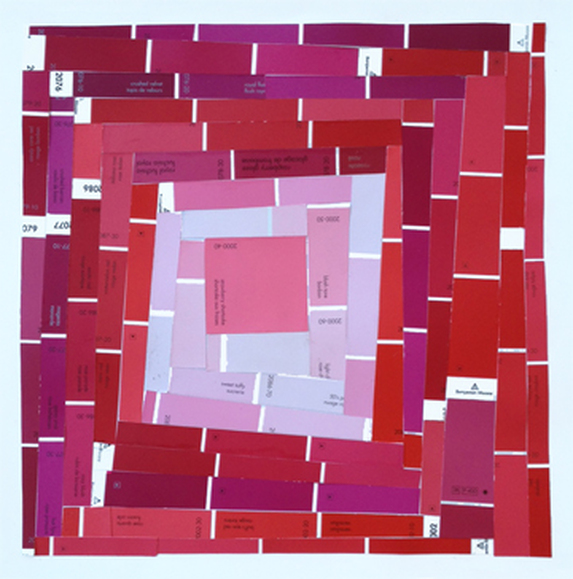
Vancouver artist Connie Sabo threw the current Facebook challenge (three artworks a day for five days) to me this week. I'm taking on the challenge for the chance to create three art experimentations per day, as opposed to sharing three artworks on each of those five days. Because there's nothing like a daily deadline of three new works to eliminate my usual obsessiveness and overworking, while pushing in new directions. I call it Fun with Failure.

And just to ensure there will be no preciousness in the program I added another element to my personal challenge: none of the materials used may be new.  I'm using stuff that's already had a first use.

Here then is Day 1 of my Nothing New 3 Artworks in 5 days mission. The rest will be posted on Facebook for the next four days, culminating in a look at the outcomes of the challenge next Friday in this space.
Picture
Coffee bag collage, 1 coffee bag, gluestick, paper, 12" x 12" (Carlyn Yandle photo)
Picture
Typography cluster, discarded magazines, gluestick on paper, 12" x 12" (Carlyn Yandle photo)
Picture
Paint-chip block, paint chips, gluestick on paper, 12" x 12" (Carlyn Yandle photo)
Comments

Packing it all in for the Toronto design fest

12/5/2014

Comments

 
It's getting close to a decade since I packed it all in: my needles and wool, my sewing machine and fabrics, my mid-level-management career. There was more to explore.

I've been mixing it up with a wide range of materials (and makers) ever since but even I'm surprised to find that my latest tools of choice for bushwacking new routes of making are the ol' crochet hooks, knitting needles, rug hooks and embroidery needles.

The line on the paper has always been too limiting to me; I need to pick up that line, play with it in my hands, turn it into area, then volume. I remain entranced by the possibilities of connecting something created by a silkworm or an industrial manufacturing plant to a mathematical model or a wearable with uncomfortable connotations.

The beauty of fiber is in its physical and metaphorical ability to connect the Art side to the Design side (not to mention the science side), weaving the two together until it's clear that playing with ideas cannot be put into separate boxes.
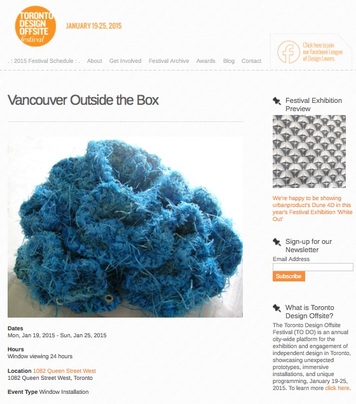
Picture'Spore' (2011) serves as promo visual for the Vancouver design group.
Except if we're talking shipping boxes, for the Toronto Design Offsite (TO DO) Festival next month.

A few object-experiments from my ongoing Fuzzy Logic series will be packed in there, as part of the Vancouver group of makers, selected by the Dear Human creative studio.

It's all part of the ‘Outside the Box’ exhibits featuring works from three selected Canadian cities — Montreal, Calgary and Vancouver — and five from the U.S.: New York, Detroit, Chicago, Los Angeles and Seattle.

It's a fine way to mine local design ideas and visions through an unexpected selection of objects that are shared in various locations via specific-sized shipping boxes.

The Vancouver contribution includes nine individuals and teams who live, design and make in the greater Vancouver area. The connecting thread is a pursuit of a design practice through material exploration, according to Dear Human. "Whether through common applications of unusual materials or transcending common materials through unusual applications, exploration is evident in each of the included objects." 

Rounding out the Vancouver Outside the Box contingent are: Cathy Terepocki, Dahlhaus, Dina Gonzalez Mascaro, Hinterland Designs, Laura McKibbon, Rachael Ashe, and Studio Bup.

PicturePlaying with fiber optics (Photo by Carlyn Yandle)
Vancouver Outside the Box will take over the windows at 1082 Queen Street West, Toronto, from January 19-25, 2015.

TO DO is an annual city-wide not-for-profit week-long festival that celebrates and showcases the nation's design scene, providing exposure and cross-pollination of ideas and techniques. There are too many exhibits, installations, talks, parties and films to list here, so check out the full (and growing) schedule here as well as the fun promo video.

PictureDetail of Fiber Optics (Photo by Carlyn Yandle)


Comments
<<Previous
    Cross-posted at
    carlynyandle.substack.com

    browse by topic:

    All
    Abject
    Abstract
    Abstract Embroidery
    Abstraction
    Abstract Painting
    Abundance
    Accumulations
    Acrylic
    Activism
    Additive
    Aesthetics
    Agency
    AgentC Gallery
    Aging
    Alison Woodward
    Aluminum
    Amanda Wood
    Anxiety
    Appropriation
    Arcade Fire
    Architecture
    Arleigh Wood
    Art
    Art Activism
    Art Blog
    Art Business
    Art Discourse
    Art History
    Artifact
    Artist
    Artist Residency
    Artist Statement
    Artist Talk
    Art Marketing
    Art Quilt
    Arts And Crafts
    Art School
    Art Show
    Art Spiegelman
    Assemblage
    Author
    Banksy
    Bauhaus
    Beauty
    Betsy Greer
    Big Data
    Billy Patko
    Binding
    Blogs
    Blog Tour
    Bob Krieger
    Body Of Work
    Books
    Boro
    Braided Rug
    Braiding
    Bruce MacKinnon
    Bruce Mau
    Building
    Bull Kelp
    Burlap
    Business
    Buttons
    Canadian Artist
    Carlyn Yandle
    Caroline Eriksson
    Cartoon
    Ceca Georgieva
    Challenge
    Charley Yandle
    Children
    Christmas
    Cindy Sherman
    Circular Thinking
    Cirque Du Soleil
    City As Site
    City Planning
    Cityspace Gallery
    Clay Yandle
    Climate Change
    Cluster
    Cob
    Cob Oven
    Collaboration
    Collage
    Collection
    Colonialism
    Color
    Colour
    Commission
    Community
    Community Building
    Composition
    Conceptual Art
    Conceptual Craft
    Connection
    Connie Sabo
    Construction
    Coronavirus
    Cosplay
    Costume
    Counter Culture
    Counter-culture
    Cover
    Cover-19
    Covid
    Craft
    Craft Blogs
    Craft Camp
    Craftivism
    Crafts
    Craftsmanship
    Creative Process
    Critique
    Crochet
    Cross-stitch
    Cultural Hub
    Cultural Studies
    Culture
    Culture Jamming
    Culturejammingc9d75664fd
    Current Conditions
    Cycling
    Dafen Village
    Dallas-duobaitis
    Dance
    Data-graphic
    Data-graphic
    David Weir
    Dear Human
    Decorations
    Deep Craft
    Denim
    Denyse Thomasos
    Design
    Digital Art
    Discomforter
    Display
    Dissent
    Distraction
    Distracts
    DIY
    Doilies
    Doily
    Domestic
    Domestic Interventions
    Douglas-coupland
    Draw Down
    Drawing
    Dressed
    Drip By Drip
    DSquared2
    Dude-chilling-park
    Dyeing
    Dystopia
    Eastend
    Eastside Culture Crawl
    ECUAD
    ECUAD MFA
    Editorial
    Edward Burtynsky
    Eggbeater Creative
    Embellishment
    Embroidery
    Emily Blincoe
    Emily Carr Cozy
    Emily Carr University
    Entanglements
    Environment
    Environmental Art
    Exhibit
    Exhibition
    Expanded Painting
    Experimentation
    Exploration
    Expression
    Fabric
    Fabricating
    Fabrication
    Facebook
    Failure
    Fashion
    Fashion Revolution
    Fast Fashion
    Feminisim
    Feminist
    Feminist Art
    Festival
    Fiber
    Fiber Artist
    Fiber Arts
    Fibre
    Fibre Arts
    Film
    First Saturday Open Studios
    Flo
    Flow
    Forage
    Foraging
    Form
    Form And Function
    Foundlings
    Found Materials
    Found Objects
    Fractal
    Fracture
    Free Store
    Fuckwit
    Fuzzy Logic
    Gallery
    Gallery-row
    Garden
    Gardening
    Garment
    Gathering
    Gentrification
    Geometric Art
    Gill Benzion
    Gingerbread
    Globalization
    Glue
    Goblin Core
    Grad 2020
    Graffiti
    Grannycore
    Granny Square
    Granville-island
    Green Space
    Grid
    Grief
    Guanajuato
    Guerrilla Art
    Guerrilla Girls
    Halloween
    Handmade
    Handmaking
    Hand Stitching
    Hand-stitching
    Handwork
    Hashtags
    Haywood Bandstand
    Healing
    Health
    Hearth
    Heirloom
    Hideki-kuwajima
    Hoarding
    Homelessness
    Homemade
    Hot Art Wet City
    Housing
    Hybrid Thinking
    Ian Reid
    Ian Wallace
    Ideas
    Identity
    Images
    Imagination
    Immersive Art
    Improvisation
    Incomplete Manifesto For Growth
    Industrial Design
    Industry
    Innovation
    Inspiration
    Instagram
    Installation
    Installation Art
    Intervention
    Intrusive Thoughts
    Invention
    Irena Werning
    Ironing
    Janet Wang
    Jeans
    Jeff Wilson
    Joel Bakan
    Joseph Beuys
    Joseph-wu
    Journalism
    Joyful Making In Perilous Times
    Joyfulmakinginperiloustimes
    Judith Scott
    Kamala Harris
    Kids Art
    Kim Piper Werker
    Kimsooja
    Kintsugi
    Knitting
    Knots
    Knotting
    Kyoto
    Labor
    Labour
    LA Fires
    Landon Mackenzie
    Landscape
    Leanne Prain
    Lecture
    Lighthouse
    Linen
    Liz Magor
    Log Cabin
    Logo Sweater
    LOoW
    Lost Painting
    Lumiere Festival
    Lynda Barry
    Macrame
    Maker
    Making
    Making Is Connecting
    MakingIsConnecting
    Malcolm Gladwell
    Male Gaze
    Mapping
    Maquette
    Marie Kondo
    Marine Palette
    Marketing
    Mark Lewis
    Martha Rosler
    Martha Stewart
    Masks
    Material Exploration
    Mathematics
    Maya
    Media
    Meditation
    Meditative
    Mending
    Mend In Public Day
    Mental Health
    Metalworker
    MFA
    Mister Rogers
    Mixed Media
    Mobile Art Practice
    Monique Motut-Firth
    Monster
    Monte Clark
    Mosaic
    Motivation
    Mt. Pleasant Community Centre
    Mud Girls
    Mural
    Mushroom
    Mycelium
    Narrative
    Natalie Jeremijenko
    Nature
    Needlework
    Neon
    Net
    Network
    Networking
    Neuroplasticity
    New Forms Festival
    Newspapers
    Nick Cave
    Noah Goodis
    Nodes
    North Vancouver
    Obtrusive Thoughts
    Omer Arbel
    Online Talk
    Openings
    Organization
    Origami
    Overabundance
    #overthinking
    Paint
    Painting
    Pandemic
    Paper
    Paper Sculpture
    Papier Mache
    Parkade Quilt
    Patchwork
    Patriarchy
    Pattern
    Pecha Kucha
    Pechakucha
    Perception
    Perfectionism
    Performance
    Performance Art
    Personalispolitical
    Photography
    Playing
    Political Art
    Political Satire
    Polly-apfelbaum
    Pompidou
    Poodle
    Pop-Up
    PopUp
    Port Coquitlam
    Portrait
    Practice
    Process
    Production
    Profession
    Project
    Protest
    Protest Art
    Psychedelic
    Public Art
    Pussy Hat
    Pussy-hat
    Qr Code
    Quilt
    Quilt Block
    Quilting
    Quilt Painting
    Rachael Ashe
    Rachel Lafo
    Ravages
    Raw Materials
    Rebar
    Recycle
    Recycling
    Reflection
    Reflektor
    Reimagine
    Renewal
    Repairing Is Caring
    RepairingIsCaring
    Repetition
    Research
    Residency
    Resistance
    Resurge
    Retreat
    Re-use
    Rhonda Weppler
    Richard-tetrault
    Richmond Art Gallery
    Right Brain
    Rondle-west
    Roses Against Violence
    Rote Activity
    Rug
    Ryan-mcelhinney
    Safe Supply
    Safety
    Sampler
    Sarah-gee-miller
    Sashiko
    Saskatchewan
    Scaffolds
    Scaffolds I
    Scale
    Scraps
    Sculpture
    Seasonal Decor
    Seattle Art Museum
    Seaweed
    Seismic Rug
    Semiotics
    Sewing
    Seymour Art Gallery
    SharingIsCaring
    Sharon Kallis
    Shawn Hunt
    Shigeru Ban
    Sketchup
    Slow Craft
    Smocking
    Social Art
    Socialart
    Social Distancing
    Social Distancing Hat
    Social Engagement
    Social-engagement
    Social History
    Social Justice
    Social Media
    Soft Sculpture
    South-granville
    Space Craft
    Spore
    Stitching
    Storage
    Street Art
    Studio
    Styrophobe
    Substack
    Subversive Stitch
    Surrealism
    Surrey
    Tactical Frivolity
    Tactility
    Tagging
    Talking Art
    Tapestry
    Tatjana Mirkov-Popovicki
    Tattoo
    Teamlab
    Technology
    Terry Fox Theatre
    Text
    Textile
    Textile Art
    Textiles
    Thrifting
    Thrift Stores
    @tinypricksproject
    Tiny Pricks Project
    TJ Watt
    TO DO
    Tools
    Toronto Design Offsite
    Toybits
    Trash
    Trash Art
    Travel Art
    Trevor Mahovsky
    Trump
    Typography
    Tyvek
    Unbridled
    Unfixtures
    Unravel
    Upcycle
    Upcycling
    Urban Design
    Use Object
    Use Objects
    Utility
    Value Village
    Vancouver
    Vancouver Art Gallery
    Vancouver International Airport
    Video
    Video Tour
    Visual Artist
    Visual Field
    Visual-field
    Visual Language
    Wabi-sabi
    Wallace Stegner House
    Wall Hanging
    Waterwork
    Wearable Art
    Weaving
    William Morris
    Women's March
    Wood
    Wool
    Work Wraps
    Wrap I
    Wrap II
    Writing
    Xenobia Bailey
    Yarn Bombing
    YVR
    Zaha Hadid
    Zendoodle
    Zero Waste Art
    Zero-waste Art

    Archives

    January 2026
    December 2025
    November 2025
    September 2025
    May 2025
    April 2025
    March 2025
    January 2025
    December 2024
    November 2024
    October 2024
    September 2024
    August 2024
    July 2024
    June 2024
    October 2022
    August 2022
    June 2022
    November 2021
    April 2021
    September 2020
    April 2020
    December 2019
    November 2019
    September 2019
    August 2019
    July 2019
    June 2019
    April 2019
    November 2018
    July 2018
    May 2018
    November 2017
    September 2017
    June 2017
    April 2017
    March 2017
    February 2017
    December 2016
    November 2016
    September 2016
    July 2016
    March 2016
    February 2016
    January 2016
    December 2015
    November 2015
    October 2015
    September 2015
    June 2015
    May 2015
    April 2015
    March 2015
    February 2015
    January 2015
    December 2014
    November 2014
    October 2014
    September 2014
    August 2014
    July 2014
    June 2014
    May 2014
    April 2014
    March 2014
    February 2014
    January 2014
    December 2013
    November 2013
    October 2013
    September 2013
    August 2013
    July 2013
    June 2013
    May 2013
    April 2013
    March 2013
    February 2013
    January 2013
    December 2012
    November 2012
    October 2012
    September 2012
    August 2012
    July 2012
    June 2012
    May 2012
    April 2012
    March 2012
    February 2012
    January 2012
    December 2011
    November 2011
    October 2011
    September 2011
    August 2011
    June 2011
    May 2011
    April 2011
    March 2011

Powered by Create your own unique website with customizable templates.
Picture